

Table of Contents
ToggleLiving rooms have evolved from static showpieces into flexible spaces that need to work harder than ever. The furniture trends dominating 2026 reflect this shift, pieces that blend sculptural design with real functionality, materials that prioritize sustainability without sacrificing style, and silhouettes that make bold statements while remaining livable. Whether starting from scratch or refreshing an existing setup, understanding what’s driving current design trends helps homeowners make smarter purchasing decisions that won’t feel dated in two years. Here’s what’s actually showing up in well-designed living spaces right now.
Key Takeaways
- Trendy living room furniture in 2026 prioritizes modular sofas with deep seats (36-40 inches), curved designs, and performance fabrics in warm tones like terracotta and sage green over cool neutrals.
- Multifunctional pieces—lift-top coffee tables, nesting tables, and storage consoles—are essential as living rooms now serve multiple purposes from work to entertaining.
- Quality construction matters most for statement sofas and accent chairs: look for kiln-dried hardwood frames, eight-way hand-tied springs, and high-density foam (minimum 1.8 rating) to ensure durability.
- Sustainable materials like FSC-certified wood, reclaimed wood, and hand-woven rattan are moving beyond niche aesthetics into mainstream trendy living room furniture designs.
- Visual interest comes from mixing wood tones, metal finishes, and fabric textures rather than matching furniture sets—limiting metallic finishes to two per room prevents visual chaos.
- Accent chairs with sculptural shapes, wingbacks with exposed wood legs, and swivel bases provide personality and flexibility without overhauling an entire room layout.
Statement Sofas That Define Modern Living
The sofa anchors every living room layout, and 2026’s iterations go far beyond the standard three-cushion rectangle. Designers and manufacturers are pushing proportions, rethinking traditional lines, and creating pieces that function as sculptural focal points.
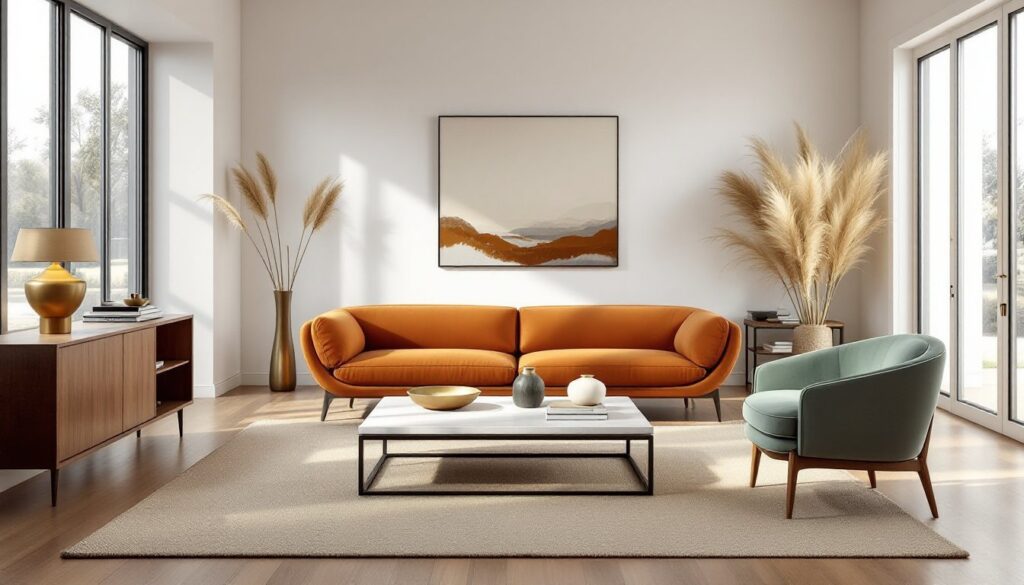
Modular configurations continue to dominate because they adapt to different room shapes and household needs. Look for systems with deep seats (36-40 inches) and low-profile backs that create a lounge-like feel without overwhelming smaller spaces. Many current designs feature chaise extensions or ottomans that can be rearranged, practical for homeowners who move frequently or like seasonal layout changes.
Color-wise, the beige-and-gray monopoly is breaking. Terracotta, sage green, and warm cognac tones are replacing cooler neutrals, often in performance fabrics that resist stains and wear. For families with kids or pets, look for upholstery labeled with a double-rub count above 30,000, that’s the Wyzenbeek abrasion test rating that indicates serious durability.
Curved and Sculptural Designs
Curved sofas have moved from Instagram novelty to mainstream availability. The appeal is both visual and practical: rounded silhouettes soften angular rooms and improve traffic flow in open-concept layouts. Unlike sectionals with sharp corners, curved designs naturally encourage conversation and create intimate seating clusters.
When shopping for a curved sofa, measure doorways and staircases carefully. Many sculptural pieces arrive in one or two large sections rather than multiple small modules, making delivery logistics trickier. Ask retailers about return policies if the piece won’t fit through a 32-inch doorway (standard residential width).
Construction matters more with unconventional shapes. Look for kiln-dried hardwood frames, eight-way hand-tied springs, and high-density foam cores (minimum 1.8 density rating). Curved frames put stress on joinery in different ways than straight designs, so skip particleboard or stapled construction, those won’t hold up.
Multifunctional Coffee Tables and Side Tables
Coffee tables aren’t just surfaces anymore, they’re storage hubs, workspace extensions, and design statements rolled into one. The trend toward lift-top mechanisms and hidden compartments reflects how living rooms now serve multiple functions throughout the day.
Lift-top tables raise to dining or laptop height (typically 24-28 inches) via gas pistons or spring-loaded hinges. They’re particularly useful in small spaces or studio apartments where a dedicated desk isn’t feasible. Check the weight capacity before loading one up: quality mechanisms should handle at least 50 pounds when raised.
Nesting tables remain popular for their flexibility. Three-piece sets in graduated sizes tuck together when not needed but spread out for entertaining. Look for sets with at least ¾-inch clearance between sizes so they nest smoothly without scraping finishes. Metal frames with powder-coated finishes resist scratches better than painted wood when tables slide together repeatedly.
Oversized square coffee tables (42-48 inches per side) work well in large, sectional-dominated rooms, providing surface area proportional to the seating. Rectangular tables still suit traditional sofa-and-chairs arrangements, but current iterations feature mixed materials, stone tops with metal bases, or wood frames with tempered glass inserts. Avoid coffee tables taller than 18 inches: they create visual barriers and awkward reach angles from standard seat heights of 17-19 inches.
Those considering online furniture shopping should pay special attention to dimensional specs since coffee table proportions dramatically affect room flow.
Accent Chairs That Add Personality
Accent chairs offer the easiest path to injecting personality without overhauling an entire room. Current trends favor bold silhouettes over bold patterns, sculptural shapes in solid colors rather than busy prints.
Barrel chairs and pod chairs with enclosed, curved backs create cozy reading nooks and work especially well flanking fireplaces or in room corners. Their enveloping shape provides a psychological sense of shelter that makes them feel more comfortable than open-armed designs. Look for seat depths of at least 22 inches if the chair’s primarily for relaxing: shallower depths (18-20 inches) suit dining or desk use.
Wingback chairs are experiencing a modern revival, but contemporary versions pare down the traditional bulk. Slimmed-down wings and exposed wood legs replace heavy upholstery and skirted bases, making them work in transitional and modern spaces. The high backs still provide lumbar support and draft protection, both originally functional features that remain relevant.
Swivel accent chairs add flexibility in media rooms or conversational seating arrangements. Quality swivel bases use ball-bearing mechanisms rather than simple friction plates, test the rotation in-store if possible. A smooth 360-degree turn without wobble or resistance indicates proper construction. According to design resources like Homedit, swivel functionality is becoming a standard expectation rather than a premium feature.
When selecting accent chairs, consider arm height relative to existing furniture. Arms should clear the sofa or table edge they’ll be paired with by at least 2 inches to allow tucking in when not in use.
Storage Solutions That Double as Design Features
Built-in-looking storage without the renovation commitment defines this category. Freestanding pieces now mimic millwork quality while providing flexibility that permanent cabinetry can’t match.
Credenzas and media consoles with mid-century modern proportions suit contemporary spaces better than bulky entertainment centers. Look for units at least 60 inches wide for TVs 55 inches and larger, the screen should never overhang the furniture base. Proper ventilation matters for electronics: rear panel cutouts or open-back designs prevent heat buildup that shortens component lifespan.
Adjustable shelving beats fixed shelves in storage cabinets. Standard shelf-pin spacing is every 32mm (about 1.25 inches), allowing fine-tuning for book heights, equipment dimensions, or decorative objects. Solid wood or plywood shelves spanning more than 36 inches should be at least ¾-inch thick to prevent sagging under weight.
Bookcases with mixed open and closed storage provide display space while hiding clutter. Current designs often feature asymmetrical layouts, alternating door and open sections rather than uniform rows. This creates visual interest and allows homeowners to balance displayed items with concealed storage based on what they actually own.
Consider cabinet door styles beyond aesthetics. Soft-close hinges (recognizable by the damper mechanism) extend cabinet life by reducing slam damage and typically add $3-5 per hinge in cost. Push-to-open doors eliminate hardware but require more precise installation to work reliably. For unique furniture pieces that serve as storage, construction quality matters more than decorative details.
Sustainable and Natural Material Furniture
Sustainability claims flood furniture marketing, but meaningful distinctions exist between genuine eco-friendly construction and greenwashing. Understanding material certifications and manufacturing processes helps identify legitimately sustainable pieces.
FSC-certified wood (Forest Stewardship Council) comes from responsibly managed forests with verified chain-of-custody. This certification addresses deforestation concerns and typically adds 10-15% to material costs. Reclaimed wood offers another eco-friendly option, though it requires more careful inspection for structural soundness. Check for metal fasteners, embedded nails, or rot that could compromise integrity or create safety hazards during machining.
Rattan, cane, and woven seagrass furniture has surged beyond boho-style interiors into mainstream designs. These fast-growing materials regenerate quickly, but quality varies dramatically. Hand-woven pieces with visible joinery typically outlast machine-woven alternatives. Look for frames made from solid wood or metal rather than particle board, the frame determines longevity while the weaving provides aesthetics.
Upholstered furniture sustainability depends on both fill materials and frame construction. Natural latex foam offers an alternative to petroleum-based polyurethane, though it costs roughly 30-40% more. Down and feather fills are renewable but require regular fluffing and aren’t suitable for people with allergies. High-quality synthetic fills (like Dacron or polyester fiberfill) actually outlast natural alternatives in high-use applications.
Finishes matter too. Water-based stains and low-VOC sealers reduce indoor air quality impacts compared to traditional solvent-based products. This especially matters for households with children, elderly residents, or anyone with respiratory sensitivities. Many manufacturers now list VOC content in product specifications, making comparisons easier.
Mixing Textures and Finishes for a Layered Look
Visual interest comes from contrast, not matching sets. The coordinated-suite approach that furniture stores push rarely creates spaces with any personality. Instead, mixing wood tones, metal finishes, and fabric textures produces depth and prevents showroom sterility.
Wood mixing works when pieces share either undertone or grain pattern. Warm woods (walnut, cherry, oak) coordinate with each other even though different species, while cool woods (maple, ash) group similarly. Avoid mixing warm and cool in equal proportions, pick a dominant temperature and add the other as an accent. Varying the wood finish (matte, satin, high-gloss) adds another layer while keeping tones harmonious.
Metal finishes require more restraint. Limit metallic finishes to two per room, any more creates visual chaos. Popular combinations include brass with black metal, chrome with warm bronze, or brushed nickel with matte black. The key is contrast in sheen rather than mixing similar mid-range finishes that read as mismatched rather than intentional.
Fabric and material layering prevents monotony in neutral rooms. Pair smooth leather with nubby linen, velvet with rough-sawn wood, or polished metal with natural fiber rugs. Each texture catches light differently, creating visual movement even in monochromatic spaces. According to interior design publications like Elle Decor, successful texture mixing relies on varying both tactile feel and visual weight.
Those seeking to balance luxury furniture with more accessible pieces can use texture mixing as a leveling strategy, an expensive leather sofa paired with budget-friendly wood side tables reads as curated rather than cheap.
Scale variation reinforces textural layering. Mix chunky, substantial pieces with delicate ones, a heavy wood coffee table with spindly metal accent chairs, or a deep sectional with a light-looking glass console. This prevents rooms from feeling either too heavy or too insubstantial. Designers featured on platforms like Dwell consistently emphasize proportion mixing as critical to successful furniture arrangements.
When layering finishes, keep permanent decisions (flooring, built-ins) neutral and introduce trend-forward finishes through replaceable furniture. This allows updating the look without major renovation when matte black or brass inevitably shifts out of peak popularity.