

Table of Contents
ToggleSetting up an outdoor bar area isn’t just about dropping a few stools on the deck and calling it a day. Done right, it transforms underused patio space into a gathering spot that pulls people outdoors from spring through fall. Whether someone’s planning casual weekend hangouts or full-blown backyard entertaining, the right bar furniture turns a basic outdoor area into a functional, comfortable zone worth lingering in. This guide breaks down what matters, from choosing materials that won’t rot or rust after one season to layout strategies that maximize space without professional help.
Key Takeaways
- Outdoor patio bar furniture creates a defined entertainment zone that encourages interaction and makes efficient use of compact spaces, with bar-height tables (40-42 inches) improving accessibility and ergonomics compared to standard patio sets.
- Choose weather-resistant materials like powder-coated aluminum, teak, synthetic resin wicker, or stainless steel to ensure longevity, and avoid untreated wood, particle board, or MDF cores that absorb moisture and cause rot within a season.
- Match bar stool seat height to your table height (28-30 inches for 42-inch bars, 24-26 inches for 36-inch counters) and prioritize models with footrests and back support for comfort during extended use.
- Design your outdoor bar layout to avoid blocking foot traffic, maintain 36 inches of clearance behind stools and 48 inches from the grill to prevent heat damage and ensure guest safety.
- Maintain outdoor patio bar furniture with seasonal cleaning, annual wood resealing, regular hardware tightening, and proper winter storage to maximize lifespan across all material types.
- End-of-season sales offer budget-friendly opportunities to purchase outdoor bar furniture, though inspect floor models carefully for sun damage or loose joints before committing to a purchase.
Why Outdoor Patio Bar Furniture Transforms Your Outdoor Space
Bar-height furniture does something standard patio sets can’t: it creates a defined entertainment zone that changes how people use outdoor space. The elevation alone shifts the vibe from “sitting around” to “gathering at the bar,” which encourages more movement and interaction.
From a practical standpoint, bar furniture makes efficient use of compact areas. A 36-inch round bar table seats four comfortably while taking up less footprint than a traditional dining set. That matters on smaller patios, balconies, or deck corners where square footage is tight.
The counter height (typically 40-42 inches for bar tables, 34-36 inches for counter height) also keeps food and drinks at a more accessible level during standing conversations. No more bending down to grab a beer or balancing a plate on your knee. It’s a small ergonomic win that adds up over the course of an afternoon cookout.
Plus, bar setups naturally separate cooking and dining zones. Position the bar near the grill or outdoor kitchen, and it becomes a serving station that keeps guests engaged with whoever’s manning the tongs rather than isolated at a distant table.
Types of Outdoor Patio Bar Furniture to Consider
Bar Tables and Counter-Height Dining Sets
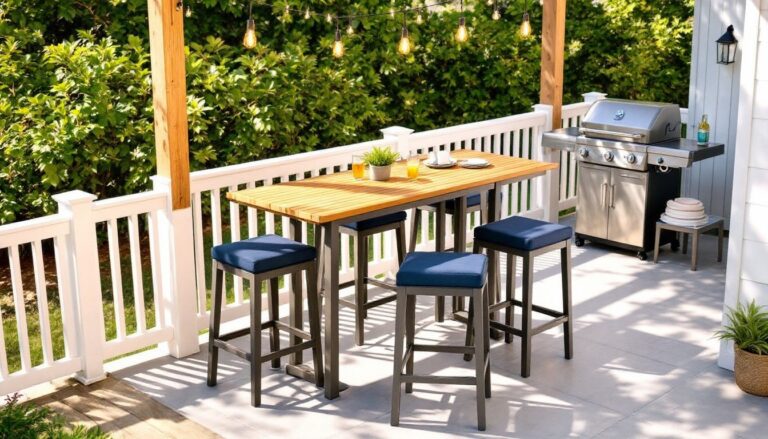
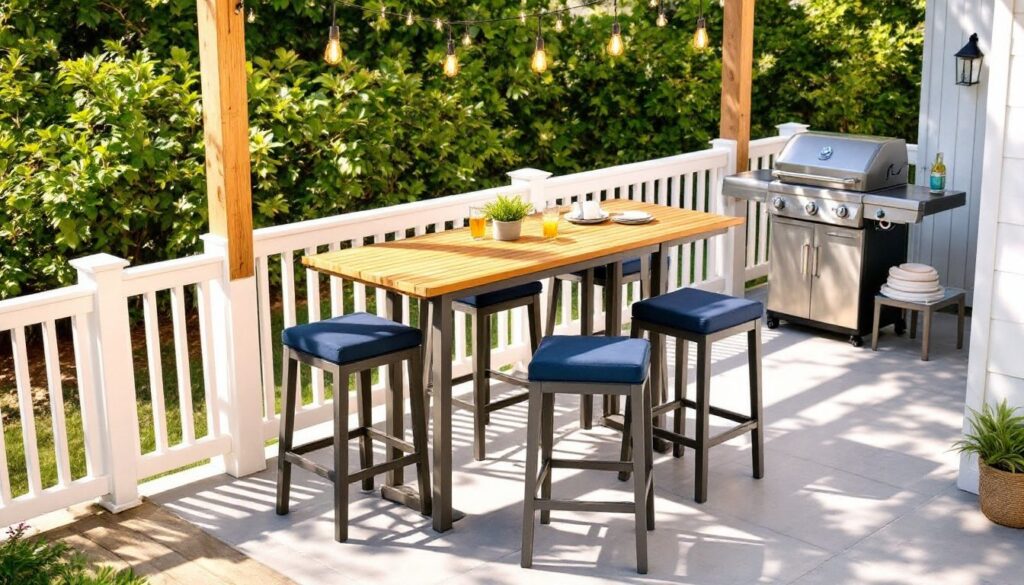
Bar tables come in three main footprints: round, square, and rectangular. Round tables (36-42 inches diameter) work best in tight corners or when encouraging equal conversation flow, no head of the table dynamic. Square and rectangular models (typically 48-72 inches long) offer more surface area for food spreads and fit neatly against railings or walls.
Counter-height dining sets split the difference between standard patio tables and full bar height. At 34-36 inches, they’re easier for kids and older adults to access while still delivering that elevated feel. These sets often include built-in footrests, which full bar-height pieces sometimes skip.
Look for tables with slatted tops rather than solid surfaces. Slatted designs allow rainwater to drain instead of pooling, which prevents warping in wood and reduces standing water that attracts mosquitoes. Some models include umbrella holes (usually 1.5-2 inches diameter) centered or offset, measure your umbrella pole before assuming it’ll fit.
For DIY builds, a bar table can be framed with 2×4 pressure-treated lumber for the base and topped with composite decking boards or exterior-grade plywood sealed with marine varnish. Standard bar height is 42 inches: subtract the thickness of your top material when cutting leg lengths.
Bar Stools and High Seating Options
Seating height must match table height, or everyone’s elbows end up at awkward angles. For 42-inch bar tables, use 28-30 inch seat-height stools. For 36-inch counter tables, drop to 24-26 inch seats. Measure from the floor to the underside of the table, then subtract 10-12 inches to land in the comfort zone.
Backless stools tuck completely under the table and work well in space-constrained setups, but they’re harder on the lower back during long sits. Low-back or full-back stools add lumbar support and feel more like real seating, though they require clearance behind each seat, figure 18-24 inches of pull-out space.
Footrests aren’t optional. Without them, legs dangle and circulation suffers after 20 minutes. Metal and wood stools typically include built-in rungs: if building custom seating, add a rung or crossbar 6-8 inches below seat level.
Swivel stools add convenience but introduce a failure point. The swivel mechanism can seize up from moisture exposure, especially in coastal or high-humidity areas. If going with swivel seats, look for stainless steel or sealed ball-bearing mechanisms and apply a spray lubricant annually.
For all-weather durability, resin wicker or powder-coated aluminum frames beat wrought iron, which rusts through protective coatings in wet climates. Seat cushions should use solution-dyed acrylic fabric (like Sunbrella) over polyester: the color won’t fade as fast and the material resists mildew better.
Materials That Stand Up to the Elements
Material choice makes or breaks outdoor furniture longevity. Each has trade-offs in durability, maintenance, and cost.
Powder-coated aluminum is lightweight, rust-proof, and low-maintenance. It won’t rot, splinter, or need annual sealing. The powder coating resists UV fade better than paint, though cheaper finishes can chip if scratched. Aluminum dents more easily than steel but won’t develop surface rust at the ding sites. Expect to pay mid-range pricing.
Teak and eucalyptus are naturally weather-resistant hardwoods thanks to high oil content. Left untreated, they age to a silver-gray patina. To maintain the original honey color, apply teak oil or sealer twice per season. Both woods resist rot and insect damage without chemical treatment, though they’re pricey. Eucalyptus offers similar performance at about 60% of teak’s cost. Many cedar furniture options provide comparable durability at more accessible price points.
Poly lumber (recycled HDPE plastic) mimics wood grain but requires zero maintenance. It won’t crack, fade, or absorb moisture. The material is heavy, a plus for wind resistance, but lacks the warmth of real wood. Color options have improved: modern poly comes in convincing wood tones beyond basic white and brown.
Wicker and rattan: Natural wicker deteriorates outdoors within two seasons. Synthetic resin wicker (polyethylene or PVC woven over aluminum frames) stands up to sun and rain indefinitely. Check that the weave is UV-stabilized: cheaper versions turn brittle and crack after a year of sun exposure.
Steel (powder-coated or stainless): Powder-coated steel offers strength at lower cost than stainless, but any chip in the coating invites rust. Stainless steel (304 or 316 grade) resists corrosion even in salt air, making it the best choice within five miles of coastlines. It’s the most expensive metal option by a wide margin.
Avoid furniture with untreated pine, particle board, or MDF cores, even with exterior paint, moisture seeps in through joints and fastener holes, causing rot and delamination within one wet season. If building custom pieces, use pressure-treated lumber rated for ground contact (.40 or .60 CCA retention) for any components touching decking or concrete.
Design Styles and Layout Ideas for Your Patio Bar
Style choice should match the home’s exterior architecture and existing outdoor finishes. Mixing too many themes creates visual clutter.
Modern/Contemporary: Clean lines, monochromatic palettes (black, white, gray), and metal or poly materials. Pair powder-coated aluminum stools with a rectangular composite-top table. Skip ornate details. This style works well in urban settings and complements concrete, stucco, and horizontal siding.
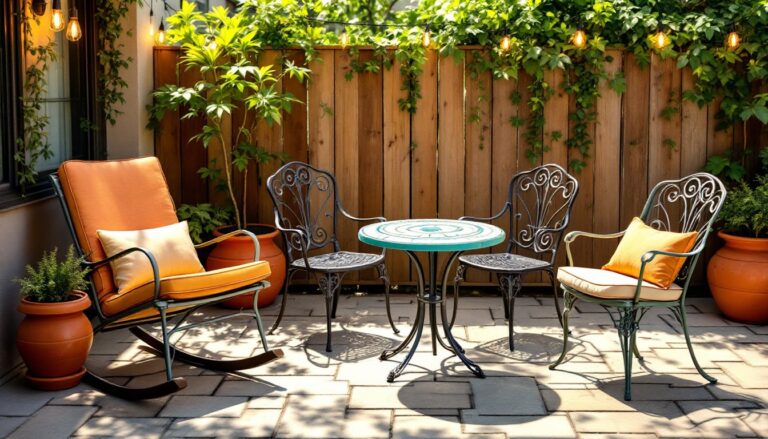
Rustic/Farmhouse: Reclaimed wood (or distressed finishes), wrought iron accents, and warm tones. Combine teak or eucalyptus tables with cross-back metal stools in matte black or bronze. For a full country-inspired outdoor setup, add galvanized metal planters and Edison-bulb string lights. This pairs well with stone patios and wood-sided homes.
Coastal/Nautical: Whitewashed wood, rope details, and blue or aqua accents. Poly lumber in white or driftwood gray paired with navy cushions delivers the look without the maintenance headaches of painted wood in humid climates. Avoid literal anchors and life preservers, subtle nods work better.
Industrial: Exposed metal frames, concrete or butcher-block tops, and utilitarian hardware. Combine steel-frame bar stools with a live-edge wood or concrete-topped table. This style fits loft-style homes and urban patios with brick or metal railings.
Layout considerations matter as much as style. Position the bar to avoid blocking foot traffic between the house and yard. On narrow decks, align the table parallel to the railing rather than perpendicular, it preserves walking space.
For corner installations, an L-shaped bar maximizes seating without monopolizing the patio. Use two rectangular tables or build a custom frame. Leave 36 inches minimum clearance behind stools for seated guests to slide out without standing.
If the bar’s near the grill, keep 48 inches separation to prevent heat damage to furniture finishes and keep guests out of the cook’s workspace. Integrate the bar into broader patio design projects by coordinating materials with pergolas, fire pits, or built-in seating.
Adding a bar cart extends serving capacity without permanent installation. Look for models with locking wheels (to prevent rolling on sloped surfaces) and slatted or perforated shelves that won’t collect water. Designers at Gardenista highlight outdoor bar solutions that blend function with style.
Maintenance and Care Tips for Long-Lasting Furniture
Even weather-resistant materials need basic upkeep to hit their expected lifespan.
Cleaning: Wash all outdoor furniture with mild dish soap and water at the start and end of each season. Use a soft-bristle brush (not wire brushes, which scratch protective coatings). For tough grime on metal or plastic, mix 1 part white vinegar to 3 parts water. Rinse thoroughly, soap residue attracts dirt.
Wood care: Sand and reseal wooden furniture annually. Use 120-grit sandpaper to smooth rough spots and open the grain, then apply exterior-grade spar varnish or teak oil in thin coats. Let each coat dry 24 hours before adding the next. Skip this, and wood dries out, cracks, and splinters.
Metal maintenance: Inspect powder-coated pieces for chips. Touch up with matching powder-coat paint (available from manufacturers) or rust-inhibiting enamel. For stainless steel, wipe with stainless cleaner or mineral oil to prevent water spots and maintain the finish.
Wicker/poly care: Hose down synthetic wicker monthly to prevent dirt buildup in the weave. For stubborn mold, scrub with a 10:1 water-to-bleach solution, then rinse well. Check frame joints annually, loose screws or separating weave points indicate the piece is nearing end of life.
Cushion storage: Even solution-dyed fabrics last longer stored indoors during winter or extended rain. If leaving cushions out, stand them on edge to promote airflow and prevent mildew in the foam core. Replace cushions when the foam no longer rebounds after compression, usually after 3-5 seasons of outdoor use.
Winter prep: In freeze-thaw climates, store lightweight furniture indoors or under breathable covers (not plastic tarps, which trap condensation). For heavy pieces, flip tables upside down to prevent water pooling in screw holes and joints. Remove any glass tabletops, they can crack if water freezes in the mounting hardware.
Hardware checks: Tighten bolts and screws every spring. Outdoor furniture shifts with temperature changes, and hardware loosens over time. Apply marine-grade lubricant to moving parts (swivels, folding joints) to prevent seizing.
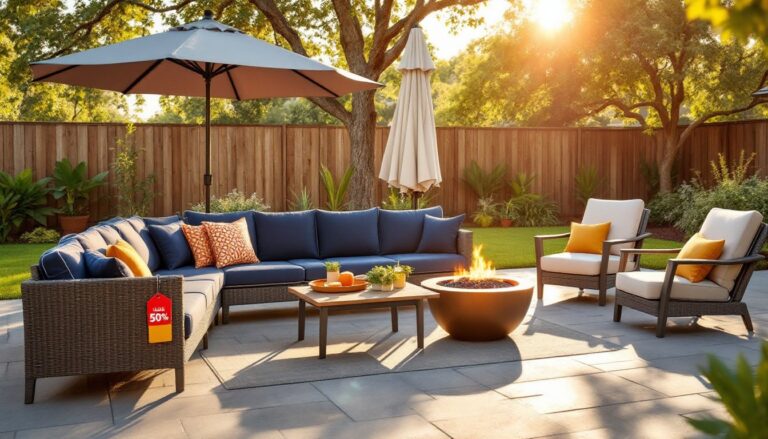
Budget shoppers often find significant savings during end-of-season clearance events, though it’s worth inspecting floor models closely for sun damage or loose joints before buying. For design inspiration beyond the basics, resources like Homedit showcase creative outdoor furniture arrangements and material pairings.