

Table of Contents
ToggleAshley Furniture has built a solid reputation around accessible, well-constructed furniture that fits real homes and real budgets. Their sleeper sofas are no exception, they’ve carved out a niche in the dual-purpose furniture market by balancing comfort, durability, and price point. Whether you’re furnishing a guest room that doubles as an office, outfitting a basement rec room, or maximizing space in a studio apartment, a sleeper sofa needs to perform well in both roles. That means a frame that won’t sag after a dozen fold-outs, a mattress guests can actually sleep on, and upholstery that holds up to regular use. This guide walks through what makes Ashley’s sleepers worth considering and how to choose the right one for your space.
Key Takeaways
- Ashley Furniture sleeper sofas balance comfort, durability, and affordability in the $600–$1,800 range, with engineered wood frames and corner-block construction designed to last 7–10 years.
- Dual-bar linkage pull-out mechanisms distribute weight evenly to prevent sagging, outperforming budget single-bar systems commonly found in competitors.
- Memory foam mattresses offer superior comfort and quieter operation for frequently-used sleepers, while innerspring mattresses provide breathability at a lower cost for occasional guest use.
- Measure your space carefully—twin sleepers need 113 inches of total depth, full sleepers require 115 inches, and queen sleepers demand 120 inches when deployed, plus adequate doorway clearance for delivery.
- Performance fabrics with Martindale ratings above 25,000 double rubs resist stains and wear better than standard upholstery, making them ideal for homes with kids and pets.
- Annual maintenance like lubricating the pull-out mechanism, tightening corner-block screws, and rotating mattresses extends the life of your sleeper sofa and prevents structural issues.
Why Ashley Furniture Sleeper Sofas Stand Out
Ashley Furniture designs their sleeper sofas with a focus on engineered wood frames and corner-blocked construction, two features that directly impact longevity. Corner blocks are triangular reinforcements screwed and glued into each corner joint of the frame, preventing the racking and wobbling that plagues cheaper models after a few years. Most of their sleeper frames use a combination of kiln-dried hardwood and laminate veneer lumber (LVL), which resists warping better than solid softwood.
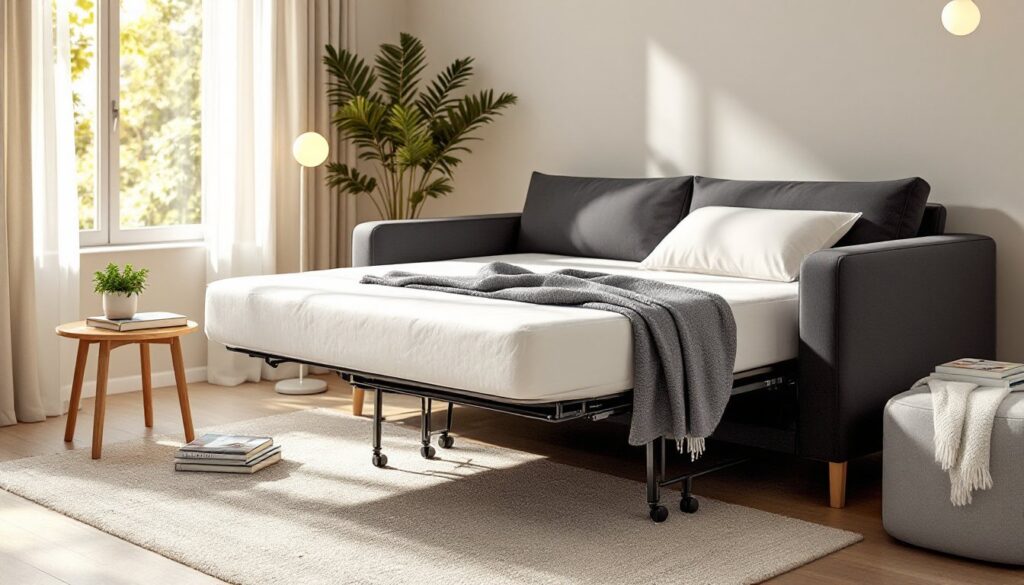
The pull-out mechanism matters more than most buyers realize. Ashley predominantly uses dual-bar linkage systems on their sleepers, which distribute weight evenly across the frame when the bed is deployed. This reduces stress on hinge points and extends the lifespan of both the mechanism and the mattress platform. Compare that to single-bar systems common in budget models, which tend to sag in the middle after moderate use.
Upholstery options span performance fabrics (polyester blends treated for stain resistance), genuine leather, and faux leather. Performance fabrics are the practical choice for high-traffic areas or homes with kids and pets, they’re typically rated to withstand 30,000+ double rubs on the Martindale abrasion test, which translates to years of daily use. Leather options add a different aesthetic but require more maintenance and aren’t as forgiving with spills.
Price positioning sits in the mid-range: expect to spend between $600 and $1,800 for most models, depending on size, upholstery, and mattress type. That’s competitive when you factor in the quality of the pull-out mechanism and frame construction. You’re not getting heirloom furniture, but you are getting a functional piece that should hold up for 7–10 years with reasonable care.
Popular Ashley Furniture Sleeper Sofa Styles and Collections
Ashley rotates collections seasonally, but a few lines have staying power. The Zeb collection is a perennial best-seller, it’s a straightforward contemporary design with track arms, available in charcoal, espresso, and quartz upholstery. The frame is corner-blocked, and it ships with a full-size innerspring mattress as standard. It’s a solid all-rounder if you don’t need anything flashy.
For tighter budgets, the Jarreau collection offers a more compact profile with a chaise extension, making it a good fit for apartments or bonus rooms. It typically comes with a twin-size pull-out, which is fine for solo guests but won’t comfortably sleep two adults. The trade-off is the smaller footprint, useful when you’re working with less than 90 inches of wall space.
On the higher end, the Darcy collection features plush cushioning, rolled arms, and a more traditional silhouette. It’s available with a queen-size sleeper, which is the sweet spot for guest accommodations. The Darcy also offers a memory foam mattress upgrade in some configurations, a feature worth considering if overnight guests are frequent.
Sectional sleepers are another category Ashley does well. The Maier sectional sleeper includes a chaise and a queen pull-out in the main body. It’s a smart layout for open-concept living rooms where you want seating capacity and occasional guest sleeping without dedicating a separate room. Just be aware that sectionals with sleepers are heavy, plan on 250+ pounds for most models, so you’ll need help moving it into place.
Memory Foam vs. Innerspring: Understanding Mattress Options
This choice directly affects guest comfort, and it’s worth understanding the trade-offs. Innerspring mattresses are the default in most Ashley sleepers. They use a coil system (typically Bonnell coils or offset coils) with a thin foam topper. The advantage is breathability and a firmer sleeping surface, which some guests prefer. The downside is durability, coils can start to feel lumpy or develop pressure points after a few years, especially if the mattress platform isn’t perfectly flat.
Memory foam mattresses (usually 4–5 inches thick in sleeper sofas) conform better to body shape and are quieter, no spring noise when someone shifts position at 2 a.m. They also fold more compactly, which can make the sofa portion slightly deeper and more comfortable. The downsides: they sleep warmer (a real issue in un-air-conditioned spaces) and tend to be pricier, adding $150–$300 to the base cost.
If you’re choosing between the two, consider how often the bed gets used. For a guest room that sees action a few times a year, innerspring is fine. If it’s doing double duty as a nightly bed in a studio or a teen’s room, memory foam is worth the upgrade for the comfort and longevity. Many modern furniture designs now prioritize mattress quality in convertible pieces, recognizing that sleep comfort can’t be an afterthought.
Sizing Your Space: Twin, Full, and Queen Sleeper Sofas
Measure twice, order once. Sleeper sofas occupy more real estate than traditional sofas, both when closed and deployed. Start by measuring your room’s usable width and depth, then subtract clearances for doors, traffic flow, and the pull-out mechanism.
A twin sleeper (mattress size 38″ × 75″) typically sits on a sofa base that’s 60–70 inches wide and 36–38 inches deep when closed. When deployed, you’ll need an additional 75 inches of clearance in front of the sofa. That means the total footprint runs about 113 inches deep from the back of the sofa to the end of the mattress. Twin sleepers work well in home offices, craft rooms, or kids’ playrooms where occasional overnight guests are solo.
Full sleepers (mattress 54″ × 75″) are the most common size. The sofa base usually measures 72–80 inches wide and 38–40 inches deep. Deployed depth is the same 75 inches, so plan for a total of around 115 inches. This is the minimum comfortable size for two adults, though taller guests (over 6’2″) may find it cramped.
Queen sleepers (mattress 60″ × 80″) offer the best guest experience but demand the most space. The sofa itself runs 84–90 inches wide and 38–42 inches deep, with an 80-inch pull-out, totaling around 120 inches of depth when deployed. You’ll also need adequate width, make sure there’s at least 6 inches of clearance on each side for the mattress to deploy without hitting walls or furniture.
Don’t forget ceiling clearance if you’re in a basement with low ceilings or planning to place the sleeper under a staircase. The deployed bed sits about 18–20 inches off the floor, so anyone sitting up in bed needs adequate headroom.
Doorways are another common stumbling block. Most residential doorways are 32–36 inches wide, and sleeper sofas don’t disassemble. Check the packaging dimensions before ordering, some models ship in boxes that exceed 40 inches in width or height, which won’t navigate tight hallways or stairwells without removal of doors or creative angling.
Key Features to Look for When Shopping
Frame material: Look for kiln-dried hardwood or engineered wood with corner-block construction. Avoid frames described only as “wood and metal”, that’s often code for particleboard with minimal reinforcement.
Mechanism type: Dual-bar linkage systems are preferable. Ask specifically about the weight capacity of the deployed bed. Quality mechanisms are rated for 500–600 pounds, which accounts for two adults plus mattress weight.
Mattress platform: The surface the mattress rests on should be either slats no more than 3 inches apart or a solid deck. Wide-spaced slats or wire mesh will cause premature sagging, especially with innerspring mattresses.
Fabric treatment: If you’re choosing upholstery, ask about performance ratings. Look for fabrics with a Martindale score above 25,000 double rubs or Wyzenbeek ratings above 15,000 cycles. Stain-resistant treatments (often listed as “performance fabric” or “easy-clean”) use a coating that repels water and oil-based spills, helpful but not invincible. You’ll still need to blot spills quickly.
Cushion fill: High-resiliency foam (HR foam) is the baseline for decent comfort and shape retention. Density should be at least 1.8 lbs per cubic foot. Cheaper models use standard polyurethane foam, which compresses faster. Some higher-end Ashley models include pocket coil seat cushions, which hold their shape better over time but add cost.
Removable covers: Rare in Ashley’s lineup but worth asking about. Removable, washable covers significantly extend the life of the upholstery, especially in homes with pets.
Inspecting interior design elements can help contextualize how a sleeper sofa fits within a room’s overall aesthetic, but don’t let styling distract from structural priorities.
Maintenance and Care Tips for Long-Lasting Performance
Vacuum upholstery monthly using the brush attachment to prevent dust and debris from embedding in the fibers. For performance fabrics, spot-clean spills immediately with a damp microfiber cloth and a drop of mild dish soap, don’t saturate the fabric, as moisture can soak into the foam and lead to mold.
Leather and faux leather need different care. Wipe genuine leather every few months with a leather conditioner to prevent cracking. Faux leather should be cleaned with a damp cloth only, conditioners can break down the polyurethane coating.
Rotate the mattress every 3–4 months if it’s reversible. Most sleeper mattresses aren’t, but check, flipping extends mattress life by distributing wear. If your mattress develops a sag or indentation deeper than 1.5 inches, it’s time for a replacement. Ashley sells replacement mattresses separately, usually in the $200–$400 range depending on size and type.
Lubricate the pull-out mechanism annually with a silicone-based spray lubricant (not WD-40, which attracts dust). Focus on the hinge points and slide rails. Open and close the mechanism a few times after lubricating to work the product in.
Check corner-block screws every 6–12 months, especially if the sleeper sees heavy use. Wood expands and contracts with humidity, which can loosen fasteners. Tighten with a cordless drill or screwdriver, it takes five minutes and prevents frame wobble.
If a leg becomes wobbly, flip the sofa and inspect the mounting plate. Most Ashley sleepers use threaded insert legs that screw into metal or plastic plates. If the plate is cracked, you can order replacements from Ashley’s parts department or use a furniture leg mounting plate from a hardware store, they’re standardized and run about $8–$12 per plate.
Avoid placing sleeper sofas in direct sunlight for extended periods. UV exposure fades fabric and degrades foam, particularly memory foam. If your layout requires sun exposure, use blackout curtains or UV-filtering window film.
Making the Most of Your Investment: Styling and Placement Ideas
Sleeper sofas work best in rooms with multiple functions. A home office with a queen sleeper becomes a legitimate guest room without sacrificing workspace, just make sure the desk setup can be quickly cleared or relocated when company arrives.
In open-concept spaces, use the sleeper as a room divider. Position it perpendicular to the main seating area to create distinct zones. This works especially well with sectional sleepers, which anchor the space without blocking sightlines.
Pair with a coffee table on casters so you can roll it aside when deploying the bed. Standard coffee tables create an obstacle course at 2 a.m. when someone needs to use the bathroom. Lightweight nesting tables are another option, they stack out of the way easily.
Storage ottomans are a practical complement. Guests need somewhere to stash luggage, and a 36-inch storage ottoman doubles as extra seating or a footrest when the sofa is in couch mode.
Lighting matters more than you’d think. Overhead lighting is harsh for someone trying to sleep. Add a floor lamp or table lamps with three-way bulbs so guests can adjust brightness. If the sleeper is in a multipurpose room, consider a dimmer switch, code-compliant installation is straightforward if you’re comfortable working with household wiring and can shut off the breaker.
Throw pillows and a storage basket for extra bedding keep the space guest-ready without looking like a hotel room. Store a fitted sheet, flat sheet, pillowcases, and a blanket in a labeled basket in a nearby closet. Guests appreciate not having to hunt for linens at midnight.
For contemporary design inspiration that integrates functional furniture seamlessly, observe how designers use neutral upholstery and accent pieces to make sleeper sofas feel intentional rather than makeshift. The goal is a room that doesn’t broadcast “this is a guest room” when no one’s visiting.