

Table of Contents
TogglePatio furniture closeout sales offer some of the steepest discounts in home improvement, often 50% to 80% off retail. Retailers clear inventory seasonally to make room for new lines, and savvy homeowners can furnish an entire outdoor space for the price of a single premium sofa set at full retail. But timing, quality inspection, and knowing where to look make the difference between a smart investment and a headache. This guide walks through the mechanics of closeout sales, the best hunting seasons, and how to evaluate durability so you’re not hauling faded, warped furniture to the curb next spring.
Key Takeaways
- Patio furniture closeout sales offer 50–80% discounts during late summer through early winter when retailers clear inventory for new merchandise and seasonal displays.
- Late August through September and October through December are the prime hunting seasons for closeout deals, with steeper discounts in fall but better selection in early autumn.
- Inspect frame materials (aluminum, powder-coated steel, or teak), cushion density, and hardware quality before purchasing, as closeout items are typically non-returnable.
- Measure your outdoor space carefully before buying closeout furniture to ensure pieces fit your patio layout and traffic flow, since retailers won’t accept returns on discontinued inventory.
- Maximize savings by negotiating additional discounts on floor models, mixing styles intentionally instead of waiting for complete sets, and factoring in total costs including delivery and assembly.
- Shop across multiple channels—big-box retailers, warehouse clubs, specialty garden centers, and online outlets—to compare closeout inventory and find the best quality-to-price ratio.
What Is a Patio Furniture Closeout Sale and Why Should You Care?
A closeout sale happens when a retailer or manufacturer discontinues a product line and sells remaining inventory at steep markdowns to clear warehouse space. Unlike standard seasonal sales that rotate stock, closeouts are final, once it’s gone, it’s gone. Retailers typically closeout patio furniture for three reasons: seasonal turnover (making room for holiday or winter merchandise), model-year changes (new designs arriving), or store closures.
Discount depth varies, but expect 40% to 75% off original prices during true closeouts. Some big-box stores and online outlets push unsold inventory even lower in late fall, sometimes hitting 80% off. The trade-off is limited selection: you’re buying what’s left, not custom-ordering colors or configurations.
For homeowners working within a budget, closeouts unlock access to materials and brands that would otherwise sit out of reach. A powder-coated aluminum dining set that retails for $1,800 might drop to $600. That price gap funds upgrades elsewhere, better cushions, an outdoor rug, or a fire pit. Closeout shopping requires flexibility on style and color, but the return on investment beats waiting for incremental holiday discounts.
When to Find the Best Patio Furniture Closeout Deals
Timing drives closeout success. The calendar follows retail cycles, and knowing when stores rotate inventory gives you first access to deep discounts.
Late summer through early fall (August–September) is prime hunting season. Retailers clear patio furniture to make floor space for Halloween, Thanksgiving, and winter holiday displays. Expect markdowns to begin around mid-August and deepen through Labor Day weekend. Inventory selection peaks early in this window, then thins as popular items sell.
Late fall and early winter (October–December) offer the steepest discounts, but slim pickings. Stores want zero outdoor furniture sitting in warehouses by Thanksgiving. If you’re flexible on style and willing to dig through what’s left, you’ll find rock-bottom prices, often 70% to 80% off. This is when big-box chains liquidate floor models and odds-and-ends.
Post-holiday clearance (January–February) occasionally surfaces outdoor furniture if a retailer overordered or had unsold stock from the prior season. Selection is minimal, but prices stay aggressive. Check warehouse clubs and outlet centers during this window.
Avoid shopping during peak outdoor season (April–June). Retailers stock fresh inventory and rarely discount heavily. Memorial Day and Fourth of July sales offer moderate markdowns (15% to 30%), but those aren’t true closeouts, they’re promotional events with full-price merchandise returning after the holiday.
Where to Shop for Closeout Patio Furniture
Closeout inventory appears across multiple retail channels. Cast a wide net and compare options before committing.
Big-box home improvement stores (Home Depot, Lowe’s) rotate seasonal inventory aggressively. Check endcaps and clearance sections starting in August. Floor models often see additional markdowns, inspect closely for wear, but these are typically solid buys if frames and welds are intact. Staff can check inventory at nearby locations if your store is picked over.
Warehouse clubs (Costco, Sam’s Club) bring in limited patio furniture runs during spring, then mark down unsold sets dramatically in late summer. Selection is hit-or-miss, but quality tends toward mid-range to premium brands. Membership gives access to online clearance sections that aren’t advertised in-store.
Specialty outdoor retailers and garden centers often hold end-of-season sales to clear space for fall plants and décor. These stores carry higher-end brands, so closeouts here can land you commercial-grade aluminum or teak pieces at consumer prices. Smaller retailers may negotiate further if you’re buying multiple items.
Online outlets and direct-from-manufacturer sites list closeouts year-round. Wayfair, Overstock, and Hayneedle run dedicated clearance sections. Manufacturers like Polywood and Telescope Casual sell discontinued colors and styles directly. Shipping costs matter, calculate total delivered price before assuming online is cheaper. For strategies on hunting clearance deals at brick-and-mortar chains, At Home patio furniture sections often mirror big-box timing.
Estate sales and liquidation auctions are wildcard options. Commercial patio furniture from closing restaurants or hotels occasionally appears. Quality varies widely, but if you spot powder-coated aluminum or teak, it’s worth inspecting.
How to Choose Quality Patio Furniture During Closeout Sales
Closeouts tempt buyers to grab first and think later. Resist. A cheap price on furniture that fails in two seasons wastes money and creates disposal headaches.
Inspect Material Durability and Weather Resistance
Frame material determines longevity. Powder-coated aluminum resists rust and handles humidity without degrading, ideal for coastal or rainy climates. Aluminum frames are lightweight and easy to move, but check welds and joints for cracks or gaps. Avoid furniture with visible corrosion or flaking powder coat.
Steel frames (especially powder-coated steel) offer durability at lower cost than aluminum, but rust is a long-term concern if the coating chips. Inspect tube ends, joints, and underside surfaces where moisture collects. Light surface rust can be sanded and treated: deep pitting means the piece won’t last.
Resin wicker (synthetic wicker over a metal or aluminum frame) holds up well outdoors if the resin is UV-stabilized. Squeeze and flex the wicker strands, they should feel firm and springy, not brittle. Cracking or fading suggests the resin isn’t UV-treated, and it’ll deteriorate quickly in direct sun.
Wood furniture requires maintenance. Teak, eucalyptus, and acacia are naturally weather-resistant, but they’ll gray over time without annual oiling or sealing. Softwoods like pine need more frequent sealing and are prone to splitting. If buying wood on closeout, confirm it’s a hardwood species and inspect for cracks, warping, or soft spots that indicate rot.
Cushion and fabric quality matter as much as frames. Look for solution-dyed acrylic fabrics (Sunbrella is the benchmark brand). These resist fading and mildew better than cheaper polyester blends. Check foam density, high-density foam (1.8 lbs per cubic foot or higher) resists compression and holds shape longer. Thin, soft cushions flatten within a season. Many homeowners upgrading outdoor furniture also consider Home Goods patio offerings for accessory pieces.
Hardware and fasteners often reveal build quality. Stainless steel or coated fasteners won’t rust. Cheap zinc-plated screws corrode quickly outdoors. Wiggle joints and armrests, excessive play indicates weak joinery that’ll worsen over time.
Measure Your Space Before You Buy
Closeout deals evaporate fast, but buying furniture that doesn’t fit your patio is worse than missing a sale. Measure your outdoor space and map out traffic flow before shopping.
Dining sets: Allow at least 36 inches of clearance around the table so chairs can pull out comfortably. A 60-inch round table seats six but needs a 132-inch diameter space (table plus clearance). Rectangular tables fit narrow patios better than rounds.
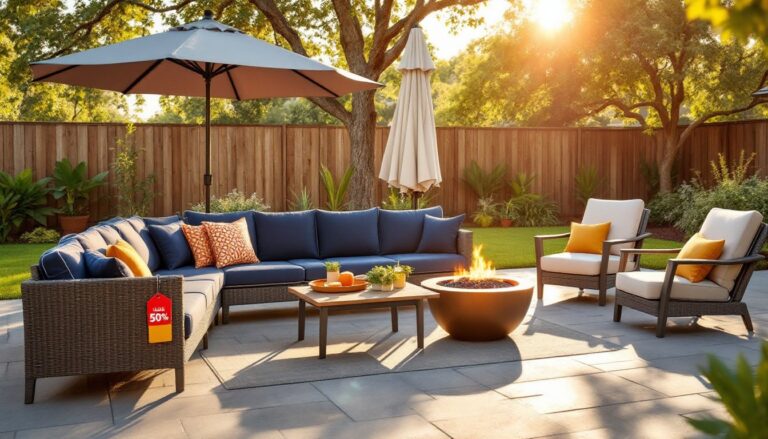
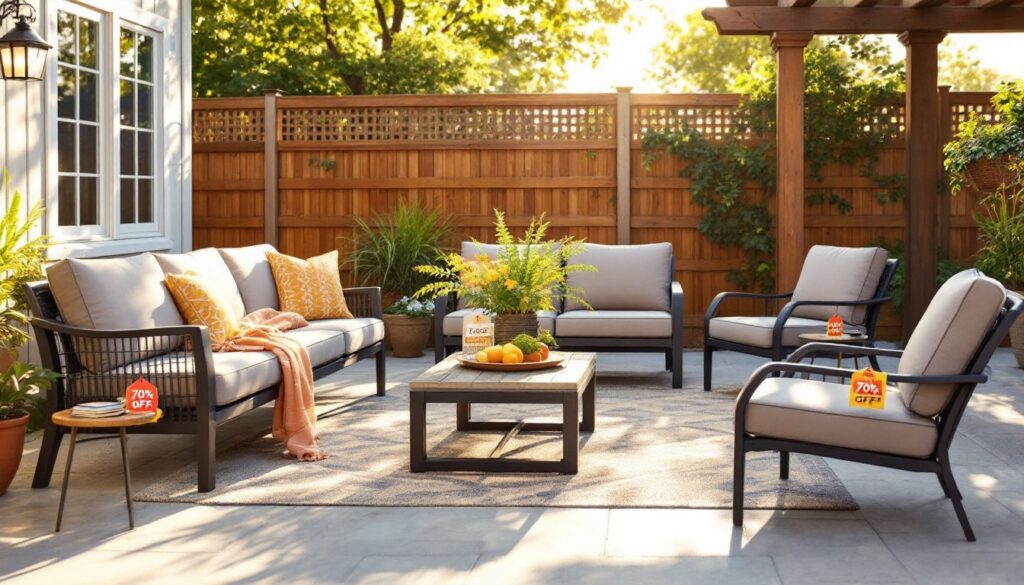
Seating arrangements: Sofas and deep-seating sets consume more space than they appear in-store. Measure seat depth (typically 24 to 30 inches) and add cushion thickness. If your patio is under 10 feet deep, a loveseat and two chairs often work better than a full sectional.
Clearance for doors and walkways: Furniture shouldn’t block sliding doors or pathways to the yard. Maintain at least 30 inches of clearance for safe passage, especially if you’re grilling or carrying food outside.
Bring a tape measure to the store or verify dimensions online before buying. Retailers won’t accept returns on closeout items, and reselling oversized furniture costs time and money. For cost guidance on typical patio projects, HomeAdvisor offers regional price benchmarks.
Smart Strategies to Maximize Your Closeout Savings
Buying smart beats buying cheap. Apply these strategies to stretch your budget and avoid regrets.
Negotiate on floor models and damaged packaging. Retailers mark down display pieces, but you can often negotiate an additional 10% to 20% off if the item has minor scratches, wobbly legs, or torn packaging. Ask to speak with a manager and inspect the item thoroughly, if it’s structurally sound, cosmetic flaws are worth the discount.
Buy mismatched sets and mix styles intentionally. Closeouts rarely offer complete sets in one style. Instead of waiting for a perfect match, combine a closeout dining table with clearance chairs in a complementary material. Mixing metal and wood, or pairing neutral frames with bold cushions, creates visual interest and saves money. Just keep scale and proportion consistent.
Stock up on replacement cushions and hardware. If you find cushions on clearance that fit your existing furniture, buy extras. Outdoor fabrics degrade over time, and having backup cushions extends the life of your set. Similarly, grab extra bolts, caps, or glides if they’re available, these small parts are hard to replace once discontinued.
Understand return policies before buying. Most closeout sales are final, meaning no returns or exchanges. Confirm the policy in writing, and inspect items carefully before leaving the store. For online purchases, photograph packaging and contents immediately upon delivery in case you need to dispute damage claims.
Plan for storage and off-season protection. Closeout furniture bought in fall will sit unused until spring. Store cushions in a dry, ventilated space, basements and sheds work if they’re not damp. Cover metal and wood frames with breathable furniture covers (not plastic tarps, which trap moisture). Proper storage prevents rust, mildew, and UV damage before you even use the furniture. For design inspiration that complements outdoor furniture, Southern Living showcases porch and patio layouts suited to various climates.
Calculate total cost, including delivery and assembly. Closeout prices look attractive until you add $150 for delivery or realize the set requires two hours of assembly with a hex wrench. Factor these costs before comparing deals across retailers. Sometimes paying slightly more for free shipping or pre-assembled furniture saves money and frustration.