

Table of Contents
ToggleCreating a palm coastal vibe on your patio isn’t just about tossing a few chairs out back and calling it done. It’s about building an outdoor space that balances relaxed beach-house charm with materials that’ll actually survive your climate, whether that’s salty air, afternoon downpours, or relentless UV. The right furniture anchors the look, but only if it’s chosen with both style and durability in mind. This guide walks through material choices, layout considerations, color strategies, and maintenance routines that keep coastal patio furniture looking sharp season after season.
Key Takeaways
- Palm coastal patio furniture combines natural textures and weathered aesthetics with durable materials that thrive in coastal conditions like salt air, UV exposure, and humidity.
- Synthetic wicker and hardwoods like teak or eucalyptus are the best material choices for coastal patio furniture, with synthetic wicker offering durability and teak providing timeless elegance and natural water resistance.
- Proper layout planning—accounting for conversation zones, dining space, and traffic flow—ensures your palm coastal patio furniture fits comfortably while maintaining functionality in your specific outdoor space.
- Invest in solution-dyed acrylic cushions (like Sunbrella) and coastal color palettes of soft whites, seafoam greens, and driftwood grays to achieve authentic style while resisting fading and mildew.
- Monthly rinsing of synthetic wicker, annual sealing of hardwoods, and timely cushion maintenance keep your palm coastal furniture looking intentionally weathered rather than neglected season after season.
What Makes Palm Coastal Style Perfect for Outdoor Spaces
Palm coastal style leans into natural textures, soft neutrals, and an effortlessly weathered aesthetic that complements outdoor living better than most indoor-focused design trends. It draws from tropical and beach-house influences, think airy, organic materials and colors that echo sand, driftwood, and sky.
Outdoor spaces benefit from this approach because the style prioritizes materials that already look good when they age. A little sun fade or patina isn’t a flaw, it’s part of the character. That makes it forgiving in real-world conditions where UV exposure, humidity, and temperature swings are constant.
The look also scales well. Whether working with a compact balcony or a sprawling poolside deck, palm coastal furniture keeps things light and uncluttered. Low-profile seating, open weaves, and pale tones help smaller patios feel larger, while larger layouts benefit from the cohesive, unforced vibe that keeps spaces from feeling overly formal.
Another practical advantage: coastal style pairs naturally with native landscaping in warm climates. Palms, succulents, ornamental grasses, and even xeriscaping blend seamlessly with wicker, teak, and linen textures. It’s a style that works with the environment rather than fighting it.
Best Materials for Palm Coastal Patio Furniture
Material choice determines how long your furniture lasts and how much upkeep it demands. Palm coastal aesthetics favor natural or natural-looking materials, but not all of them perform equally outdoors.
Wicker and Rattan: Natural Texture Meets Durability
Wicker refers to the weaving technique, not the material itself. True natural wicker (often woven from rattan, willow, or reed) delivers authentic texture but breaks down quickly outdoors unless kept under a covered patio. Moisture causes rot, and UV makes it brittle.
Synthetic wicker (also called resin wicker or all-weather wicker) solves that problem. It’s typically woven from high-density polyethylene (HDPE) or PVC over aluminum or steel frames. Quality synthetic wicker resists fading, won’t unravel in rain, and handles temperature swings without cracking. Look for UV-stabilized resin, cheaper versions fade to chalky gray within a season.
Frames matter as much as the weave. Aluminum frames won’t rust, though they can corrode in coastal salt air without powder coating. Steel frames are sturdier but need rust-resistant finishes. Check welds and joints, these are the first spots to fail on budget furniture.
For a true coastal look, choose wicker in honey, driftwood gray, or weathered taupe tones. Tight weaves shed water better than loose, open patterns. Many outdoor furniture styles incorporate all-weather wicker for its blend of texture and resilience.
Teak and Eucalyptus: Sustainable Hardwood Options
Teak is the gold standard for outdoor hardwood. Its natural oils repel water and resist rot, insects, and warping. Left untreated, teak weathers to a silvery-gray patina over 12–18 months, a look that fits coastal aesthetics perfectly. If you prefer the original honey tone, plan on applying teak oil or sealer annually.
Grade matters. Grade A teak comes from the heartwood and has the highest oil content and tightest grain. Grade B and C include more sapwood, which is less durable and more prone to splitting. Expect to pay $800–$2,000+ for a quality teak dining set, depending on size and joinery.
Eucalyptus offers a more budget-friendly alternative. It’s sustainably harvested (often FSC-certified) and shares some of teak’s water resistance, though it’s softer and less dense. Eucalyptus furniture typically costs 30–50% less than comparable teak pieces. It still benefits from annual sealing to prevent checking and color fade.
Both woods arrive kiln-dried, but they’ll still expand and contract with humidity changes. Avoid placing them on surfaces that trap moisture underneath, use furniture pads or slatted decking to allow airflow.
Choosing the Right Furniture Pieces for Your Patio Layout
Start with your patio’s dimensions and how you’ll actually use the space. Measure twice, furniture looks smaller in the showroom than it does crammed onto a 10×12 slab.
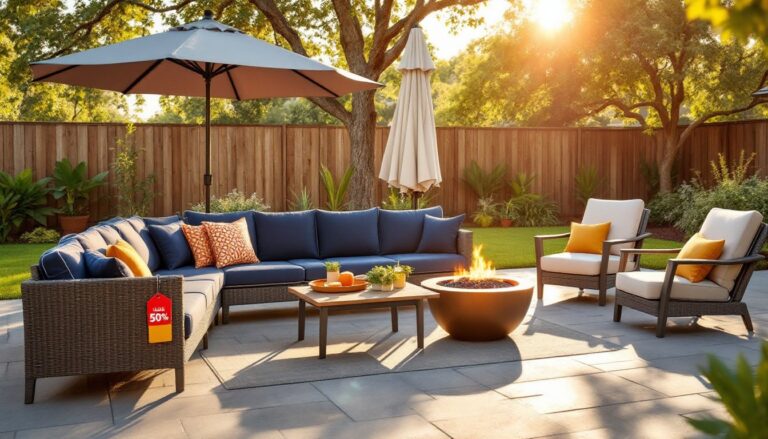
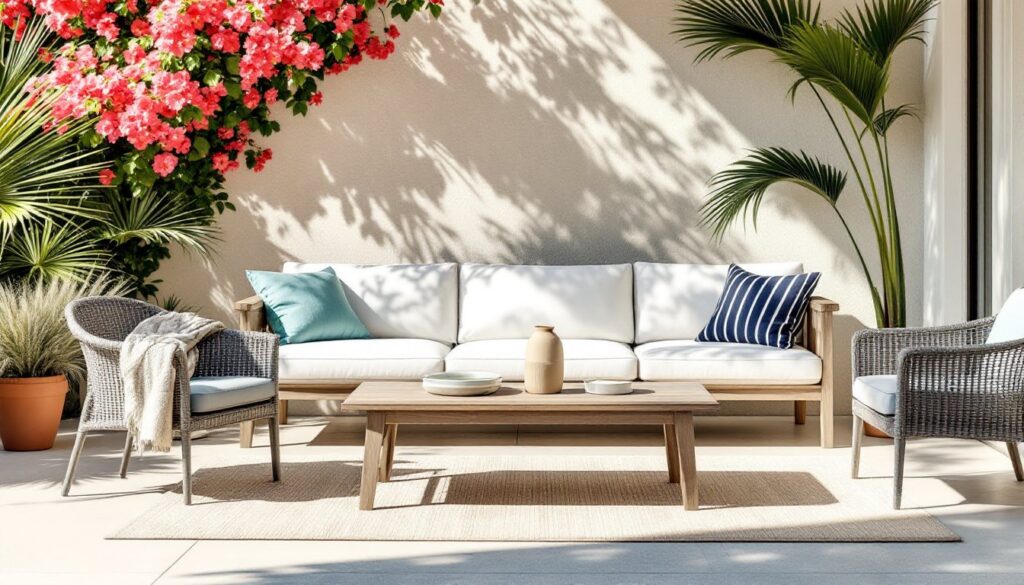
Conversation groupings work well for patios 12×12 feet or larger. Aim for a sofa or loveseat plus two chairs arranged around a low coffee table. Keep 18–24 inches of clearance between seat edges and the table for legroom. If space is tight, swap bulky sofas for a pair of deep lounge chairs.
Dining setups need more room. A 60-inch round table seats four comfortably and requires a 10×10-foot clear zone (table plus chairs pulled out). Rectangular tables fit narrow patios better, a 72×36-inch table seats six and works in an 8-foot-wide space if you don’t mind chairs brushing the edges.
For small patios or balconies, skip the full dining set. Bistro tables (24–30 inches diameter) paired with two folding chairs tuck into corners and move easily. Stackable stools and nesting side tables add flexibility without permanent footprint.
Traffic flow matters more than most DIYers think. Leave at least 36 inches of clearance for main walkways, from the door to the stairs, around the grill, to the yard. If your patio doubles as a route to the backyard, furniture placement can’t block it.
Consider anchoring zones with an outdoor rug (8×10 feet for seating areas, 5×7 for dining). Rugs visually define spaces on large patios and help unify mismatched furniture. Choose polypropylene or recycled plastic rugs, natural fibers mildew outdoors even with good drainage.
Layering in home goods patio pieces can help fill out the layout without overcommitting to a single furniture line.
Color Palettes and Cushion Fabrics That Capture Coastal Vibes
Palm coastal color palettes pull from beach and tropical landscapes: soft whites, sandy beiges, seafoam greens, driftwood grays, and faded navy or aqua. The key is keeping things muted, no electric turquoise or neon coral unless you’re aiming for Miami Vice, not coastal calm.
For cushions and upholstery, fabric choice determines how often you’ll be replacing them. Standard indoor fabrics fade and mildew within months outdoors, even under a roof.
Solution-dyed acrylic (Sunbrella is the best-known brand) is the workhorse fabric for outdoor cushions. The color is locked into the fiber during manufacturing, so it resists fading for years. It also repels water and resists mold. Expect to pay $40–$80 per yard, or $200–$400 for a full set of cushions for a sectional.
Polyester blends cost less but fade faster, plan on 2–3 seasons before colors look washed out. Some newer “outdoor performance” polyesters use UV inhibitors and water-repellent coatings that extend lifespan, but check warranties. Anything under 1,000 hours of UV resistance won’t last a full summer in direct sun.
Foam density matters for comfort and longevity. Look for high-resilience foam rated for outdoor use, wrapped in a moisture barrier. Cheap foam compresses into lumpy pancakes within a year. If cushions don’t list foam specs, they’re probably using standard upholstery foam that’ll soak up water and never fully dry.
Color-wise, pair neutral furniture frames with cushions in coastal tones. A driftwood-gray wicker set looks sharp with white or natural linen-colored cushions accented by seafoam or navy throw pillows. Teak pairs well with deep navy, sand, or even muted coral.
Stripes are a coastal staple, but keep them classic: navy-and-white, beige-and-white, or soft blues. Avoid busy patterns, they compete with the textures already present in wicker and wood grain. Resources like Gardenista often showcase pared-back palettes that let materials take center stage.
Maintenance Tips to Keep Your Palm Coastal Furniture Looking Fresh
Even weather-resistant materials need regular upkeep to avoid becoming an eyesore or safety hazard.
Synthetic wicker: Hose it down monthly to remove pollen, dust, and bird droppings. For stubborn grime, scrub with a soft brush and mild dish soap, then rinse thoroughly. Check frame joints and welds annually for rust spots, if you catch surface rust early, wire-brush it off and touch up with rust-inhibiting spray paint.
Teak and eucalyptus: If you want to maintain the original honey color, clean annually with a teak cleaner (avoid pressure washers, they can splinter soft grain) and apply teak oil or sealer. For the silvered look, just hose off debris and let it weather naturally. Either way, inspect joints and hardware yearly. Tighten loose bolts and screws, wood movement from humidity changes can work fasteners loose.
Cushions and fabrics: Brush off loose dirt weekly. Spot-clean spills immediately with mild soap and water, most solution-dyed acrylics resist staining, but sticky residues attract dirt. For deeper cleaning, remove covers (if they’re zippered) and machine wash on gentle cycle with mild detergent, then air dry. Non-removable cushions can be scrubbed in place with a soft brush. Never use bleach on Sunbrella or similar fabrics, it weakens fibers.
Storage: If your area sees hard freezes, heavy snow, or months of rain, store cushions indoors during the off-season. Furniture covers help, but they trap condensation unless they’re breathable and vented at the bottom. Wicker and hardwood frames can generally stay out year-round in temperate climates, though covering them extends finish life.
PPE note: When cleaning with any outdoor furniture cleaner or applying sealers/oils, wear nitrile gloves and safety glasses. Some teak cleaners use oxalic acid, which can irritate skin.
For more ideas on extending the life of clearance patio finds, regular maintenance turns budget buys into long-term investments. Additional inspiration for coastal outdoor setups can be found in curated collections like Better Homes & Gardens’ coastal patio roundups.
Stick to a seasonal maintenance checklist, spring deep-clean, mid-summer inspection, fall prep, and palm coastal furniture will look intentionally weathered, not neglected.