

Table of Contents
ToggleChoosing outdoor furniture isn’t just about filling empty space, it’s about creating a zone that actually gets used. Grey patio furniture has quietly become the go-to for homeowners who want something that works with nearly any design scheme without demanding constant attention. It doesn’t fight with your brick, your siding, or that garden bed you’ve been nursing for three seasons. Unlike white that shows every pollen speck or dark brown that bakes in the sun, grey holds its own through weather and wear. This guide walks through why grey works, what materials deliver real durability, and how to make the most of this versatile color without your patio looking washed out.
Key Takeaways
- Grey outdoor patio furniture offers the perfect balance of style and practicality by hiding dirt better than lighter shades while avoiding heat absorption like dark colors.
- Powder-coated aluminum and hand-woven PE resin wicker are the most durable materials for grey patio furniture, with lifespans of 7–10+ years when properly maintained.
- Layer cushions, outdoor rugs, lighting, and greenery with grey furniture to add personality and prevent a washed-out appearance.
- Regular cleaning with mild soap and water, annual hardware inspections, and proper seasonal storage significantly extend the lifespan of grey patio furniture.
- Budget-friendly options ($200–$800) work well for renters and casual users, while mid-range ($800–$2,500) and premium ($2,500+) choices suit homeowners planning long-term use and frequent entertaining.
Why Grey Is the Perfect Color Choice for Outdoor Furniture
Grey sits in that sweet spot where style meets practicality. It hides dirt better than lighter shades and doesn’t absorb heat like black or navy, a real consideration when you’ve got metal frames sitting in afternoon sun.
The color pairs effortlessly with nearly every exterior palette. Brick homes, vinyl siding, stone veneer, wood decks, grey furniture complements them all without clashing. It acts as a neutral backdrop for cushions and throw pillows, meaning you’re not locked into one decorating scheme for the next five years.
From a design perspective, grey reads as modern without being trendy. It won’t look dated in three years the way some bold color choices do. Lighter greys give an airy, coastal feel. Charcoal and slate tones anchor a space and read more contemporary. Mid-tones split the difference and work in traditional or transitional settings.
Grey also plays well with natural elements. Planters, wood accents, greenery, all of these pop against grey rather than competing with it. If your patio includes stone pavers or a concrete slab, grey furniture ties into those materials naturally instead of creating visual conflict.
Types of Grey Outdoor Patio Furniture to Consider
Grey outdoor furniture comes in configurations for every patio size and function. Before buying, measure your space and think about how you’ll actually use it, entertaining, solo coffee mornings, or full family dinners.
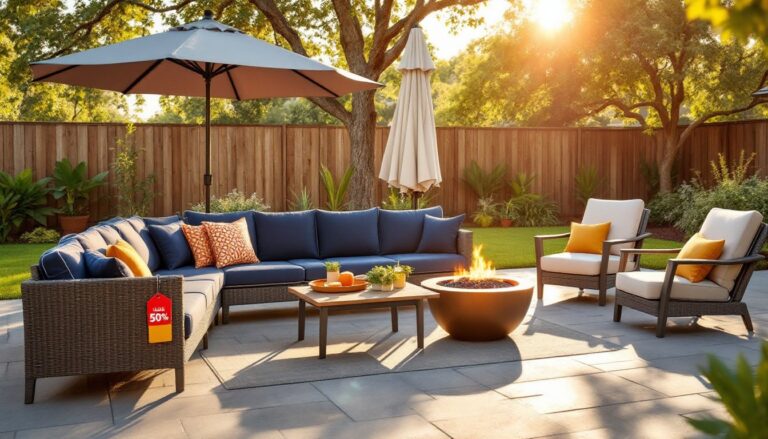
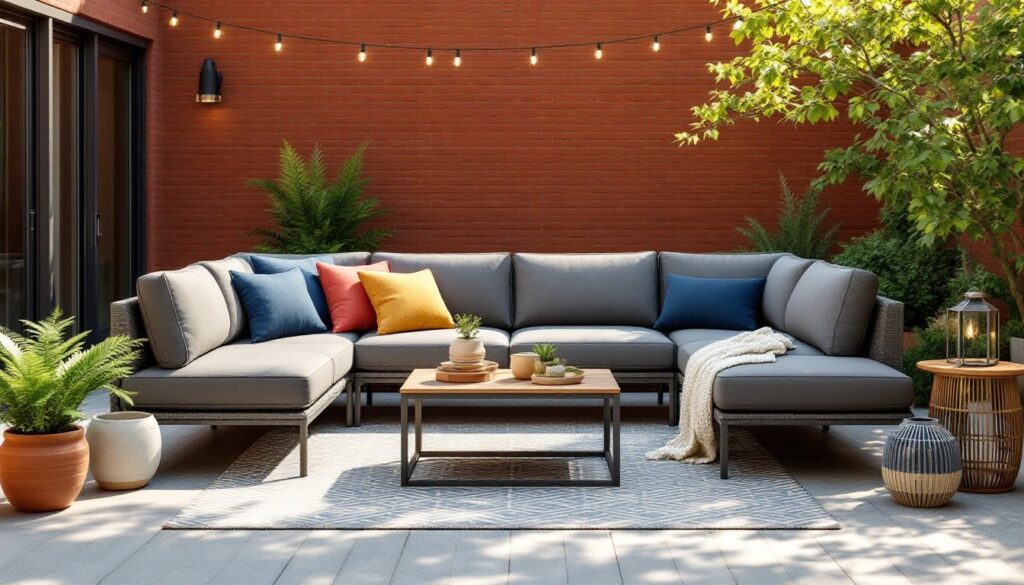
Sectionals work for larger patios and provide flexible seating. Look for modular pieces that can be rearranged. Most outdoor sectionals come with water-resistant cushions in grey or coordinating tones.
Conversation sets (typically four chairs and a coffee table) fit mid-sized spaces and create a defined gathering area. These work well on 10×12-foot patios or larger.
Bistro sets are ideal for small balconies or compact patios. A two-seat bistro in grey powder-coated metal or resin wicker takes up roughly 4×4 feet and still leaves room to move.
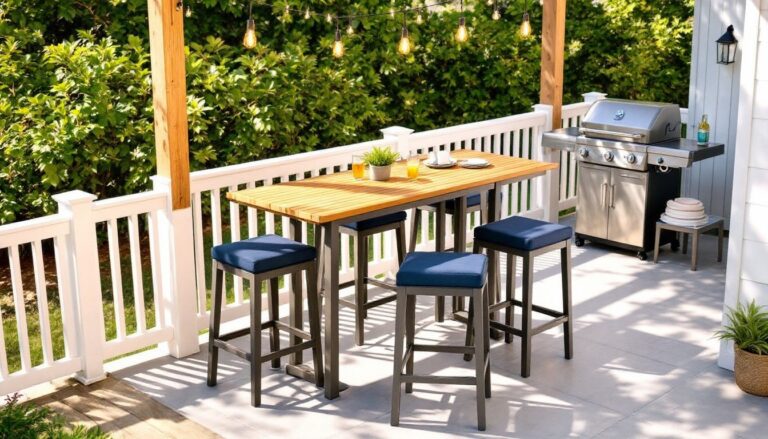
Dining sets range from four to eight seats. If you’re serious about outdoor meals, consider a rectangular table instead of round, it uses space more efficiently against a wall or railing.
Seating Options: From Loungers to Dining Sets
Adirondack chairs in grey composite or painted wood offer classic style with low maintenance. They’re wide, about 33 inches, so factor that into narrow patios.
Lounge chairs and chaises provide full recline for sun time. Aluminum frames with grey sling fabric dry quickly and weigh less than resin wicker, making them easier to move for mowing or storage.
Rocking chairs add motion without requiring much square footage. Grey resin wicker rockers mimic traditional styles but handle weather better than painted wood.
Ottomans and poufs in grey offer flexible extra seating or footrests. Weather-resistant fabric versions can double as side tables if you add a tray on top.
If budget allows, mix seating types. Pair a grey dining set with a separate lounge area to give your patio multiple functions without starting from scratch later.
Materials That Work Best for Grey Patio Furniture
Material choice determines how much maintenance you’ll be doing and how long the furniture lasts. Grey shows up across nearly every outdoor material, but performance varies.
Powder-coated aluminum is lightweight, rust-proof, and holds color well. Expect to pay $300–$800 for a quality aluminum dining set. The powder coating can chip if you drag furniture across concrete, but touch-up paint is available. Aluminum won’t rot or warp, making it a solid choice for humid climates.
Resin wicker (PE wicker) mimics natural rattan but handles rain and sun without falling apart. Grey wicker furniture often features aluminum frames underneath for structure. Quality matters here, cheap resin gets brittle after a few seasons of UV exposure. Hand-woven PE wicker lasts longer than machine-molded versions.
Polywood and composite lumber deliver the look of painted wood without the yearly maintenance. These materials won’t splinter, crack, or need refinishing. They’re heavier than aluminum, which helps in windy areas but makes rearranging harder. Homeowners considering long-term durability often choose cedar outdoor furniture for natural weather resistance, though composite eliminates even that level of upkeep.
Steel with powder coating offers durability at a lower price point than aluminum, but it’s heavier and can rust if the coating gets scratched. Grey powder-coated steel works well for dining sets that won’t move often.
Teak and eucalyptus painted or stained grey provide natural wood grain with weather resistance. Teak contains natural oils that repel moisture, but it’s pricey, $1,000+ for a modest dining set. Eucalyptus costs less but requires annual sealing to prevent cracking. Both need clear sealer or grey stain reapplication every 1–2 years.
Concrete and stone pieces in grey tones are nearly indestructible but stationary. A concrete bench or stone side table anchors a space permanently, great for a patio remodeling project but not if you like to rearrange.
How to Style Grey Outdoor Furniture for Maximum Impact
Grey furniture provides a foundation, but styling prevents it from looking flat or institutional. Layering texture and color brings grey to life without overcomplicating the space.
Cushions and pillows are the fastest way to add personality. Choose outdoor-grade fabrics like Sunbrella acrylic or solution-dyed polyester, both resist fading and mildew. Navy, coral, mustard, and sage all pair well with grey. Mix solid colors with one or two patterned pillows (stripes, geometric, or botanical prints work best outdoors).
Throw blankets aren’t just for porches. A chunky-knit outdoor throw in cream or charcoal adds warmth for cool evenings. Store them in a weatherproof deck box when not in use.
Outdoor rugs define seating areas and soften hard surfaces underfoot. Polypropylene rugs handle moisture and clean easily with a hose. A 5×7-foot rug works under most conversation sets: an 8×10-foot rug fits under six-person dining sets. Patterns with grey plus one accent color tie the look together.
Lighting transforms a patio from daytime-only to evening-friendly. String lights, lanterns, or solar path lights add ambiance without running electrical. If you’re planning broader upgrades, home goods patio furniture pairs well with coordinated lighting and décor.
Greenery softens grey’s cool tones. Potted plants in terracotta, ceramic, or galvanized metal add warmth. Hanging baskets, vertical planters, or a simple herb garden in containers bring life without taking up floor space. Design resources like Gardenista’s gray collection showcase how grey integrates with various plantings and outdoor materials.
Side tables and accent pieces in wood, rattan, or metal break up monochrome seating. A teak side table next to grey wicker chairs adds natural contrast. Avoid matching everything perfectly, mix materials for depth.
Maintenance and Care Tips for Long-Lasting Beauty
Grey furniture hides some dirt, but it still needs regular care to last. Most outdoor furniture failures come from neglect, not defects.
Routine cleaning prevents buildup that degrades materials. For resin wicker, aluminum, and powder-coated metal, mix mild dish soap with warm water and scrub with a soft brush. Rinse thoroughly, soap residue attracts dirt. Do this monthly during heavy-use months.
Wood furniture requires different care. Teak can be left untreated (it’ll silver naturally) or maintained with teak oil every 6–12 months to preserve color. Painted or stained wood needs inspection for chips or peeling. Sand any rough spots, prime bare wood, and touch up with exterior paint or stain. Outdoor design experts at The Spruce recommend checking wood furniture joints annually for loosening hardware.
Cushion care extends their life significantly. Bring cushions inside during storms or long periods of non-use. Brush off loose debris weekly. Most outdoor cushion covers unzip for machine washing, use cold water and air dry to prevent shrinkage. Spray with fabric protector after washing to restore water resistance.
Winter storage depends on climate and material. In regions with harsh winters, store cushions indoors and cover furniture with breathable outdoor furniture covers (not plastic tarps, which trap condensation). Aluminum and resin wicker can stay outside year-round in most climates, but wood should be covered or moved to a garage or shed.
Inspect furniture in spring. Tighten any loose bolts or screws, most outdoor furniture uses stainless steel hardware to resist rust. Check for cracked welds on metal frames or splintering on wood. Small issues fixed early prevent bigger problems.
For coastal areas, rinse furniture with fresh water monthly to remove salt spray, which accelerates corrosion even on rust-resistant materials.
Budget-Friendly vs. Premium: Finding the Right Grey Patio Furniture for Your Needs
Outdoor furniture pricing runs from under $300 for a basic bistro set to $5,000+ for high-end sectionals. Knowing where to invest depends on how you’ll use the space and how long you plan to keep the furniture.
Budget options ($200–$800) include resin wicker sets from big-box stores, basic aluminum bistros, and composite Adirondack chairs. These work fine for renters, first-time buyers, or those testing whether they’ll actually use outdoor furniture. Quality varies, check reviews for UV resistance and frame durability. Budget pieces often last 3–5 years with care.
Look for patio furniture clearance sales at end of season (August–October) to get mid-range quality at budget prices. Floor models and previous-year colors often go 30–50% off.
Mid-range choices ($800–$2,500) step up in materials and construction. Hand-woven PE wicker, thicker-gauge aluminum, and better cushion foam fall into this range. Warranties improve, many mid-range brands offer 2–5 year coverage. Expect 7–10 years of service with proper maintenance. This tier makes sense for homeowners planning to stay put and who use outdoor spaces regularly.
Premium furniture ($2,500+) features commercial-grade materials, customization options, and designer aesthetics. Teak, high-density resin wicker, marine-grade stainless steel hardware, and quick-dry foam cushions are standard. Some premium brands offer 10+ year warranties. Designers featured in publications like Southern Living often showcase premium outdoor furniture in their porch and patio projects, highlighting how quality pieces anchor a space.
Decide based on use frequency and home tenure. If you host weekly cookouts, invest more in seating. If the patio is mostly visual and you entertain once a month, budget or mid-range works fine. Mix tiers strategically, splurge on a quality dining table (the centerpiece) and save on accent chairs that see less use.
Buy in sets for cohesive style and bulk discounts, but single pieces let you add gradually as budget allows. Quality outdoor furniture holds resale value, check local marketplaces for gently used premium pieces at mid-range prices.