

Table of Contents
ToggleWalk into any furniture showroom and you’ll hear a flood of terms, pedestal, sideboard, credenza, hutch. It’s easy to get lost in the jargon. But knowing the proper names for dining room furniture isn’t just about impressing your dinner guests. It helps you communicate clearly with contractors, shop online more efficiently, and plan your space like a pro. Whether you’re furnishing a new home or replacing a worn-out piece, understanding what each item is called (and what it does) makes the whole process smoother and more intentional.
Key Takeaways
- Learning proper dining room furniture names helps you communicate clearly with contractors, shop online efficiently, and plan your space more intentionally.
- Rectangular tables are most common and accommodate leaves for extra seating, while round pedestal tables provide more legroom and encourage conversation in smaller rooms.
- Side chairs are 18 inches high and pair with 30-inch tables, while armchairs need 24 inches of space and offer formal dining room aesthetics at table ends.
- Buffets, sideboards, and credenzas are storage pieces with subtle differences—buffets are low and casual, sideboards are formal and taller, and credenzas are contemporary and display-focused.
- China cabinets and hutches display fine items and require wall anchoring with 3-inch wood screws into studs for safety, especially in homes with children.
- Accent pieces like servers, console tables, bar carts, and storage benches add functionality and personality to complete your dining room design without overwhelming the space.
Dining Tables: The Centerpiece of Your Dining Room
The dining table anchors the room. It’s where meals happen, assignments piles up, and board games stretch into midnight. But not all tables are created equal, size, shape, and construction all matter.
Rectangular tables are the most common. They fit well in long rooms and can accommodate additional leaves for holiday gatherings. Standard dimensions start around 36 inches wide by 60 inches long, seating six comfortably. Add a leaf (or two), and you’re up to eight or ten.
Round tables encourage conversation and work well in smaller or square rooms. A 48-inch diameter seats four: 60 inches fits six. They don’t have corners, which is a bonus if you’ve got kids darting around.
Pedestal tables use a single central support instead of four legs. This style gives you more legroom and flexibility with chair placement. The base is usually heavier to prevent tipping, so check your floor type if you’re placing it on tile or vinyl, felt pads help.
Extension tables come in two main types: drop-leaf (hinged panels fold down when not in use) and insert-leaf (removable section stored separately). The latter is sturdier for frequent use. If you’re building or refurbishing, remember that table leaves need to be stored flat and in a climate-controlled space to avoid warping.
For DIY builds or restorations, use hardwood like oak, maple, or walnut for the tabletop, softwoods dent too easily. Aim for a finished thickness of at least 1 inch (actual dimension, not nominal) to avoid sagging. Finish with polyurethane or hardwax oil for durability.
Dining Chairs and Seating Options
Seating is where comfort meets style, and the terminology here is more varied than you’d think.
Side chairs are armless, standard dining chairs. They slide under the table neatly and are easy to move. Standard seat height is 18 inches from the floor: pair that with a table height of 30 inches for comfortable clearance.
Armchairs (or host chairs) are typically placed at the table ends. They offer more support and a slightly formal look. Just measure your table width, armchairs need at least 24 inches of space per seat, versus 20 inches for side chairs.
Parsons chairs are fully upholstered with straight, clean lines and no arms. They’re popular in modern and transitional spaces. If you’re reupholstering, use a durable fabric like linen-cotton blend or performance polyester, dining chairs take a beating.
Bench seating is making a comeback. A dining bench fits one side of the table and seats multiple people without taking up the visual space of individual chairs. Great for families with kids, but not ideal for long dinners, lumbar support is minimal.
Windsor chairs and ladder-back chairs are traditional styles with exposed wood frames. They’re lighter and easier to refinish than upholstered options. If you’re restoring vintage chairs, check the joints, loose dowels and mortise-and-tenon connections can be reglued with wood glue and clamped overnight.
For upholstery work, remove the seat, add a layer of ½-inch foam if the padding is shot, and staple fabric taut across the underside. Trim excess and reattach. Always wear safety glasses when using a staple gun.
Storage Furniture for Your Dining Room
Storage pieces give you a place to stash dishes, linens, and serving ware, and they add visual weight to balance the room. But the names get confusing fast. Here’s the breakdown.
Buffets, Sideboards, and Credenzas
These three terms are often used interchangeably, but there are subtle differences.
A buffet is a low, long cabinet with storage inside, usually shelves or drawers. It typically has short legs and a flat top for serving. Standard dimensions are around 60 inches wide by 36 inches tall. In modern furniture catalogs, the term is often used broadly.
A sideboard is similar but tends to be slightly taller (up to 40 inches) and more formal in design. Traditionally, it’s used in dining rooms for storing silverware, linens, and serving dishes. If you’re building one, use ¾-inch plywood for the cabinet box and hardwood veneer for visible surfaces.
A credenza is lower and longer, originally designed without legs (or with very short ones). It’s more common in mid-century modern or contemporary spaces. The top is often used for display, plants, art, or a bar setup.
All three are great DIY projects if you’ve got intermediate carpentry skills. Use a Kreg jig for pocket-hole joinery on the frame, and finish with edge banding on any plywood edges. Soft-close hinges and drawer slides are worth the extra cost, cheap hardware wears out fast. Modern design trends favor these versatile storage pieces in open-concept homes.
China Cabinets and Hutches
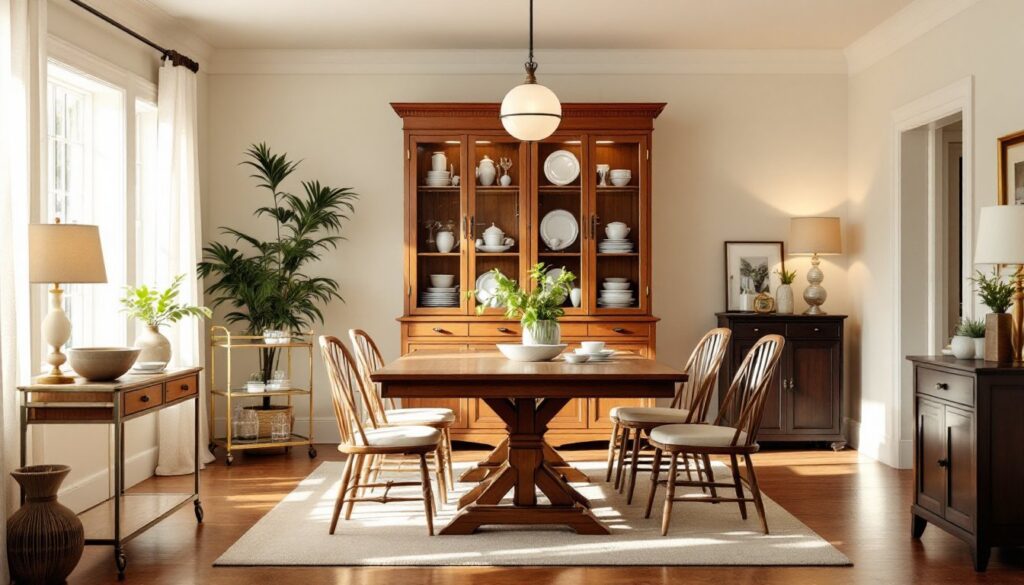
A china cabinet is a tall, freestanding piece with glass doors (usually on top) and solid doors or drawers below. It’s designed to display fine china, glassware, or collectibles. Interior lighting, often small puck lights or LED strips, adds drama.
A hutch is similar but typically sold as a two-piece unit: a base cabinet (like a buffet) and an upper display section. The two pieces can sometimes be separated. Hutches are common in farmhouse and traditional styles, and many unique furniture pieces can serve dual purposes in both dining and living areas.
If you’re installing one, make sure to anchor it to the wall. Use 3-inch wood screws into studs, especially if you have kids or live in an earthquake zone. Both pieces are heavy when loaded: don’t rely on drywall anchors alone.
For refinishing vintage cabinets, strip old finish with a chemical stripper (wear gloves and a respirator), sand to 220-grit, and apply gel stain or paint. Replace any missing or broken glass panes with ⅛-inch tempered glass cut to size at a local glass shop.
Accent and Decorative Furniture Pieces
Beyond the essentials, accent pieces add function and personality without overwhelming the room.
A server or serving cart is a small mobile unit with shelves or trays. It’s handy for holiday meals or bar service. Look for ones with locking casters if your floor isn’t level. Many designs fit the aesthetic of modern interior styles and blend seamlessly into open floor plans.
A console table is narrow (usually 12–18 inches deep) and fits against a wall. It’s often placed behind a sofa in open-plan spaces, but it works in a dining room too, especially for displaying décor or holding a table lamp. If you’re building one, a simple design with 2×4 legs and a 1×12 pine top can be assembled with pocket screws in a weekend.
Bar carts have made a comeback in the last decade. They’re smaller than servers, usually two or three tiers, and designed to hold bottles, glassware, and cocktail tools. Metal-framed versions are trendy, but wooden ones are easier to customize or refinish. Tips for styling these spaces can often be found on design resources dedicated to functional home décor.
A corner cabinet or corner hutch maximizes unused space. These are typically triangular and fit snugly into a 90-degree corner. They’re great for small dining rooms but tricky to move, plan placement carefully before assembly.
Storage benches with lift-up seats are less common in formal dining rooms but useful in breakfast nooks or casual eat-in kitchens. Build one with a piano hinge on the seat and soft-close lid supports to prevent slamming. Line the interior with cedar if you’re storing textiles.
Finally, plant stands or display pedestals aren’t furniture in the traditional sense, but they’re often found in dining rooms to add height and greenery. Keep them away from high-traffic paths to avoid tipping. These finishing touches echo the same principles found in curating bedroom furniture for cohesive home design.
Conclusion
Knowing the right name for each piece makes shopping, planning, and communicating about your dining space far easier. From the table itself to storage and accents, every item has a role, and a proper term. Use this guide as a reference when you’re ready to furnish, refinish, or rearrange, and you’ll save time, money, and a lot of unnecessary confusion.