


Table of Contents
ToggleBlack dining room furniture isn’t a trend, it’s a design anchor. When chosen thoughtfully, it grounds a space without overwhelming it. Whether working with a formal dining room or a kitchen nook, black pieces offer versatility that lighter woods and painted finishes often can’t match. They hide wear, adapt to changing decor, and provide contrast that makes other elements pop. This guide walks through selecting, pairing, and styling black dining furniture so it works hard in real homes, not just magazine spreads.
Key Takeaways
- Black dining room furniture serves as a versatile design anchor that adapts across styles—from farmhouse to contemporary—while hiding wear and everyday damage better than lighter finishes.
- Measure your space carefully and allow 36 inches of clearance around the table for chair movement; rectangular tables (60–72 inches) work best in standard dining rooms, while round or oval shapes suit tight or square spaces.
- Solid wood tables ($800–$2,500) are durable and repairable, while engineered wood ($300–$1,200) resists warping better; prioritize quality construction with mortise-and-tenon joinery and avoid glossy finishes if your household includes kids or pets.
- Balance dark black dining furniture with light-colored walls (white, warm beige, or greige), layered lighting with warm white LEDs (2700K–3000K), and light-colored rugs that extend at least 24 inches beyond the table to prevent the space from feeling cave-like.
- Pair your black dining table with upholstered chairs featuring high-density foam (1.8 lb/ft³ or higher) and add complementary pieces like sideboards, benches, or bar carts to maximize both function and visual interest.
Why Black Dining Room Furniture Makes a Bold Design Statement
Black dining furniture commands attention without shouting. It creates visual weight that defines the dining zone in open-concept layouts, especially where kitchens and living areas bleed together. Unlike medium-toned wood that can read as safe or builder-grade, black makes an intentional choice clear.
The color works across styles. A matte black farmhouse table fits industrial lofts and modern farmhouses alike. Glossy lacquered pieces lean contemporary, while distressed black wood nods to rustic or vintage aesthetics. This adaptability means black furniture survives style shifts, repaint the walls, swap the rug, and the table still fits.
Practically, black hides scuffs, spills, and the fine scratches that come with daily use. Families with kids or pets appreciate not seeing every watermark. It also contrasts sharply with lighter flooring (oak, maple, light tile), which helps smaller rooms feel more defined rather than washed out.
Designers on platforms like Architectural Digest frequently showcase black dining sets in high-end projects because the color reads as both formal and livable. It’s a workhorse finish that doesn’t demand constant maintenance or trend updates.
Choosing the Right Black Dining Table for Your Space
Start with dimensions. Measure the room and leave 36 inches of clearance on all sides for chairs to pull out comfortably. A table that’s too large chokes traffic flow: too small, and it floats awkwardly. For a standard dining room (12′ x 12′), a 60- to 72-inch rectangular table seats six without crowding.
Shape matters. Rectangular tables maximize seating and fit traditional room layouts. Round tables (48- to 60-inch diameter) work better in square rooms or tight spaces, no corners to navigate. Oval tables split the difference but can feel formal.
Consider extension leaves if the room serves double duty. Drop-leaf or butterfly-leaf mechanisms let a four-seater expand to eight for holidays without permanently hogging space. Check that the extension mechanism is smooth and doesn’t require removing the table from the room to operate.
Material Options and Durability Considerations
Solid wood (oak, maple, walnut) stained or painted black is durable and repairable. Expect to pay $800–$2,500 depending on size and construction. Look for mortise-and-tenon joinery in the base, screwed-on legs wobble over time. Solid wood can warp if exposed to humidity swings, so avoid placing it near radiators or in sunrooms without climate control.
Engineered wood (MDF or plywood core) with black veneer or laminate costs less ($300–$1,200) and resists warping better than solid wood. Quality varies widely, lift the table at a showroom to check weight. Heavier usually means denser core material and better stability. Avoid particleboard cores: they sag and chip easily, especially around leaf hardware.
Metal bases with wood or glass tops offer an industrial look. Powder-coated steel or iron bases are sturdy and low-maintenance. Glass tops show every fingerprint but pair well with black frames in modern spaces. Metal bases can scratch hardwood floors, add felt pads (3/4-inch diameter) to all contact points.
Marble or stone tops on black bases create contrast but add significant weight (200+ pounds for a 60-inch table). Verify your flooring can handle it, especially in older homes with subfloor concerns. Marble also requires sealing annually to resist stains from acidic foods and wine.
Finish impacts maintenance. Matte or satin finishes hide fingerprints and minor scratches better than high-gloss. Glossy lacquer looks sharp initially but shows every smudge and requires frequent polishing. If kids or messy eaters are in the picture, skip the gloss.
Black Dining Chairs: Styles and Comfort Features
Matching chairs to the table isn’t mandatory. Mixing chair styles, say, black wood chairs with a black metal table, adds texture without clashing. Just keep the black tones consistent: warm blacks (brownish undertones) don’t pair well with cool blacks (blue or gray undertones).
Upholstered seats improve comfort for long dinners. Look for high-density foam (at least 1.8 lb/ft³) in the cushion: cheaper foam compresses flat within a year. Removable, washable covers save headaches with spill-prone households. Leather and faux leather wipe clean but can feel sticky in summer without AC.
Solid wood or metal chairs are easier to clean but less forgiving during extended meals. Test the seat height against your table, 18 inches of clearance between the seat and table underside is standard. Armchairs need more room to tuck in: measure carefully if considering them for the table ends.
Spindle-back, ladder-back, and cross-back styles suit farmhouse and traditional settings. Modern spaces lean toward molded plastic (Eames-style), bent plywood, or minimalist metal frames. Midcentury designs often feature tapered legs and curved backs, comfortable and visually lighter than blocky shapes.
Check the weight capacity if larger adults or teens will use the chairs regularly. Many budget chairs max out at 200–225 pounds: sturdier designs handle 300+. Reinforced stretchers (horizontal supports between legs) add stability.
For homes juggling multiple aesthetics, navy blue accents can tie black furniture into coastal or transitional schemes without introducing harsh contrast.
Complementary Pieces and Storage Solutions
A buffet or sideboard in matching black grounds the room and provides storage for linens, servingware, and seasonal decor. Standard dimensions run 60 to 72 inches wide, 18 inches deep, and 34 to 36 inches tall, low enough to hang art above without crowding the wall.
Look for adjustable shelves inside cabinets to accommodate different dish heights. Soft-close hinges and drawer glides cost a bit more upfront but prevent slamming and extend hardware life. Dovetail joints in drawers signal better construction than stapled or glued corners.
China cabinets and hutches work in formal dining rooms with ceiling height to spare (9+ feet). Glass-front cabinets keep dust off dishes while displaying them. Integrated lighting (LED puck lights or strips) highlights glassware but adds to the budget, plan for wiring access or battery operation.
Bar carts in black metal or wood bring flexibility. They serve drinks during gatherings, then roll into a corner or hallway when not needed. Two-tier carts offer enough surface area without dominating the room.
Benches can replace chairs on one side of the table, especially in tight breakfast nooks or against a wall. A 48-inch bench seats three kids or two adults comfortably and tucks fully under the table to free up floor space. Upholstered benches add comfort: solid wood or metal versions are easier to wipe down.
If the dining room doubles as a workspace, consider a credenza with cable management. Black credenzas blend into the dining furniture during meals but offer desk functionality the rest of the week. Grommet holes and interior channels keep charger cords tidy.
Styling Tips to Balance Dark Furniture in Your Dining Room
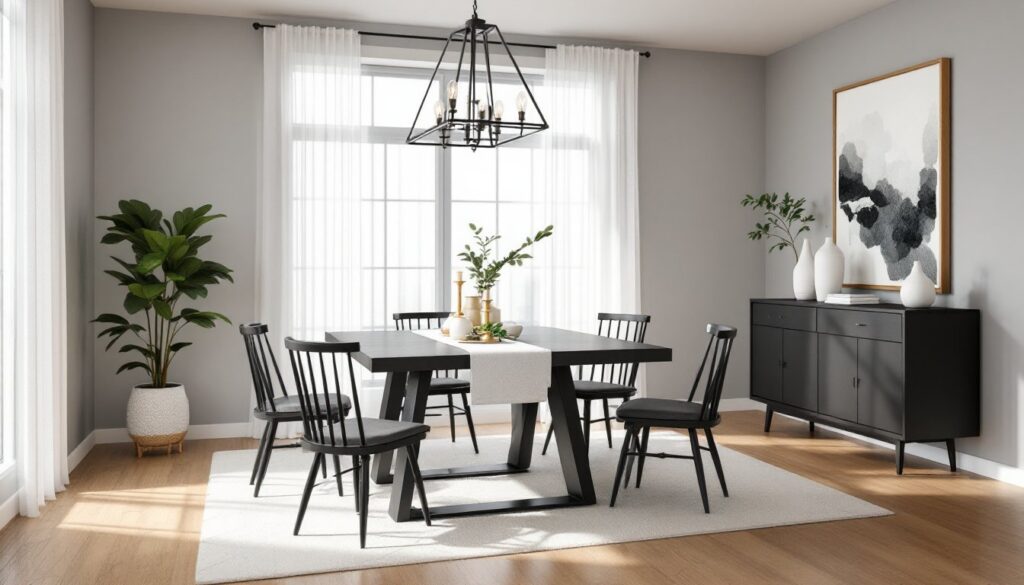
Black furniture can darken a room fast if not balanced. Start with wall color. White, light gray, or warm beige walls reflect light and prevent the space from feeling cave-like. Cooler grays (those with blue undertones) can make black furniture feel stark: warmer grays or greiges soften the contrast.
Lighting is critical. A single overhead fixture won’t cut it with dark furniture. Layer lighting: a chandelier or pendant centered over the table (hung 30 to 36 inches above the tabletop), plus wall sconces or a floor lamp in a corner. Dimmer switches let you adjust ambiance for different occasions.
Choose bulbs carefully. Warm white LEDs (2700K to 3000K) create a cozy glow that complements black furniture. Daylight bulbs (5000K+) can make the room feel clinical. For a dining chandelier, aim for 200 to 400 lumens per square foot of table surface for adequate task lighting without glare.
Rugs anchor the furniture and add warmth. A 9′ x 12′ rug works under most 60- to 72-inch tables, with at least 24 inches of rug extending beyond the table on all sides so chairs stay on the rug when pulled out. Light-colored or patterned rugs (cream, soft gray, muted blue) offset black furniture. Avoid all-black or very dark rugs, they blend with the furniture and erase definition.
Textiles introduce color and texture. Linen or cotton table runners in white, blush, sage, or mustard pop against black tables. Patterned napkins, upholstered chair seats, or curtains bring in pattern without permanent commitment. Designers featured on Elle Decor often pair black dining sets with brass or gold-toned accents (candlesticks, flatware, light fixtures) for warmth and a touch of glam.
Artwork and mirrors brighten the space. A large mirror opposite a window reflects natural light. Artwork with lighter backgrounds or bright colors draws the eye up and balances the visual weight of dark furniture. Frame color matters, black frames can disappear into black furniture: try natural wood, white, or metallic frames instead.
Greenery softens hard edges. A potted fiddle-leaf fig, snake plant, or even a simple vase of fresh eucalyptus adds life. Plants in light-colored pots (white, terracotta, light gray) provide another layer of contrast.
When mixing furniture finishes, complementary palettes help tie the room together if you’re pairing black dining pieces with wood tones elsewhere in an open floor plan. Keep metal finishes consistent (all brushed nickel, all matte black, all brass) across lighting, cabinet hardware, and furniture accents to avoid a cluttered look.
For those exploring broader furniture options, considering variety in home furnishing sources can help compare quality and construction details before committing to a black dining set.
Window treatments control natural light and add softness. Sheer white or linen curtains diffuse harsh sunlight, while heavier drapes in neutral tones can be drawn for evening ambiance. Avoid heavy, dark curtains that compound the room’s weight. Inspiration from Design Milk often highlights how modern spaces use minimal window treatments to keep black furniture from overwhelming smaller rooms.
Conclusion
Black dining room furniture delivers staying power. It adapts, hides wear, and anchors a room through decor changes and daily life. Focus on quality construction, measure twice, and balance the dark tones with light walls, layered lighting, and thoughtful accents. The result is a dining space that works as hard as it looks good.