





Table of Contents
ToggleBlack and white furniture creates visual impact without requiring advanced design skills or deep pockets. The high-contrast pairing works across multiple design styles, from mid-century modern to farmhouse to contemporary minimalism, making it one of the most versatile choices for bedroom makeovers. Unlike trendy color palettes that date a room within a few years, monochrome furniture maintains its appeal and adapts easily when homeowners want to refresh accent colors, bedding, or wall treatments. This guide breaks down how to select, arrange, and style black and white bedroom furniture to create a balanced, functional space.
Key Takeaways
- Black and white bedroom furniture maintains timeless appeal across design styles by offering neutral compatibility, high contrast clarity, and material flexibility that adapts as trends and personal tastes change.
- Choose bed frames, dressers, and nightstands based on material quality—solid wood and ball-bearing drawer glides offer superior durability compared to particle board and plastic glides.
- Balance black and white furniture using the 60-30-10 rule: allocate 60% mass to your dominant color, 30% to secondary color, and 10% to accent materials like wood and metal for visual harmony.
- Introduce warmth to black and white bedroom furniture through layered textiles, natural wood accents, metallics, and accent colors repeated in at least three places to create intentional visual rhythm.
- Position black pieces near windows or ceiling lights and use white furniture to reflect light into darker zones, as black absorbs light while white brightens spaces.
- Anchor tall dressers over 30 inches to wall studs with anti-tip straps to prevent tipping hazards, especially when multiple drawers are opened simultaneously.
Why Black and White Bedroom Furniture Never Goes Out of Style
The longevity of black and white furniture comes down to three practical advantages: neutral compatibility, contrast clarity, and material flexibility.
Neutral tones pair with virtually any accent color a homeowner chooses, navy bedding, terracotta throw pillows, or sage green curtains all work without clashing. When design trends shift or personal tastes change, swapping textiles costs far less than replacing furniture. This adaptability protects the initial investment.
High contrast between black and white pieces creates natural focal points in a room. A black metal bed frame against white walls defines the sleeping zone without additional decor. A white six-drawer dresser beside a black nightstand adds visual interest through shape and tone rather than pattern or embellishment.
Black and white finishes span multiple materials and price points. Painted MDF (medium-density fiberboard) offers budget-friendly options for dressers and nightstands, while solid wood pieces in black stain or white lacquer provide heirloom-quality durability. Metal frames in matte black powder coat resist scratches better than glossy finishes and suit industrial or modern aesthetics. Knowing the material behind the finish helps buyers assess quality and longevity before purchasing.
Choosing the Right Black and White Furniture Pieces for Your Bedroom
Bed Frames and Headboards
Bed frames anchor the room’s design and impact both style and function. Platform beds with built-in slats eliminate the need for a box spring, lowering the overall bed height, useful in rooms with low ceilings or for homeowners who prefer easier bed-making. Black platform frames in steel or powder-coated metal suit contemporary and industrial spaces, while white upholstered platform frames soften modern farmhouse or Scandinavian interiors.
Panel beds with vertical slat headboards add traditional structure. White-painted poplar or pine panel beds lighten dark rooms, while black-stained oak or walnut versions introduce warmth through visible wood grain beneath the finish. Headboard height matters: standard headboards measure 48 to 58 inches from the floor, but statement headboards can reach 60 to 72 inches, requiring at least 10 feet of ceiling height to avoid visual crowding.
Canopy beds with black metal frames create strong architectural lines without heaviness if the posts use slim profiles (1 to 1.5-inch diameter tubing). White wood canopy frames lean cottage or coastal. Both work best in bedrooms with at least 9-foot ceilings to maintain proportion.
Material choice affects durability and maintenance. Solid wood frames (actual dimensions for 1×6 boards are 3/4 inch x 5.5 inches) handle weight and movement better than particle board or veneered MDF. Metal frames resist humidity fluctuations that warp wood, making them suitable for basements or coastal climates.
Dressers, Nightstands, and Storage Solutions
Dressers serve dual purposes: clothing storage and display surface. Six-drawer dressers (typically 54 to 60 inches wide) fit along most bedroom walls and provide ample storage for two people. Black dressers with white or natural wood drawer fronts add subtle detail, while all-white dressers brighten small or poorly lit rooms.
Drawer glide quality separates budget from mid-range furniture. Ball-bearing drawer glides support heavier loads and operate smoothly for years, while plastic or friction glides wear out faster and stick under weight. Always test drawers fully extended before purchase, they should pull out smoothly and not tip forward.
Nightstands should align with the mattress height (standard mattress plus box spring places the top around 24 to 28 inches from the floor). Matching nightstand height to this range keeps table lamps, phones, and water glasses accessible without awkward reaching. Two-drawer nightstands offer more storage than single-shelf designs, but narrow bedrooms may require wall-mounted floating nightstands to preserve floor space.
Mixing black and white storage pieces works when balanced across the room. Pairing a white dresser with black nightstands on both sides creates symmetry. Alternatively, an asymmetrical layout with one black nightstand and one white piece adds visual interest in casual, eclectic spaces.
Safety note: Anchor all tall dressers and storage units to wall studs using furniture anti-tip straps rated for the unit’s weight. Dressers over 30 inches tall pose tipping hazards, especially when multiple drawers open simultaneously.
Design Styles That Work Best with Black and White Furniture
Modern and contemporary styles favor clean lines, minimal ornamentation, and function-forward design. Black lacquered dressers with integrated handles and white platform beds with low profiles suit these aesthetics. Chrome or brushed nickel hardware complements the monochrome palette.
Industrial design pairs black metal bed frames and storage units with exposed hardware, visible bolts, and raw wood accents. A black steel frame bed with white brick walls creates the signature warehouse-conversion look. Keep finishes matte rather than glossy to maintain the utilitarian feel.
Scandinavian and minimalist interiors rely on white-dominant furniture with black used sparingly as accent. White-washed oak or birch dressers with black metal legs, or an all-white bedroom suite with a single black pendant light, align with this restrained approach. Natural light and neutral textiles complete the aesthetic.
Mid-century modern incorporates black and white through retro silhouettes: tapered legs, rounded edges, and two-tone drawer fronts. A white dresser with black hairpin legs or a black-stained walnut bed frame with white linen upholstery captures the era’s design language. Brass or gold hardware adds period-appropriate warmth.
Farmhouse and transitional styles blend traditional forms with simplified detailing. White shaker-style dressers, black iron bed frames, or distressed painted finishes bridge rustic and contemporary elements. Layering in reclaimed wood nightstands or woven baskets softens the high contrast. Popular sites focusing on modern interior design frequently feature these versatile farmhouse-meets-modern combinations.
How to Balance Black and White Furniture in Your Bedroom Layout
Achieving visual balance starts with weight distribution. Dark furniture appears heavier than light pieces of identical size. Placing a large black dresser on one wall requires balancing it with either a white dresser of similar scale on the opposite wall, or distributing smaller white pieces (nightstands, seating, shelving) across the room.
The 60-30-10 rule adapted for monochrome design suggests allocating 60% of furniture mass to one dominant color, 30% to the secondary color, and 10% to accent materials like wood, metal, or glass. In practice, this might mean a white bed frame, white dresser, and white nightstands (60%), a black armchair and black bookshelf (30%), and natural wood picture frames or a brass lamp (10%).
Symmetry suits formal layouts. Matching black nightstands flanking a white bed, or twin white dressers on either side of a window, create orderly, hotel-like aesthetics. Asymmetry works in casual or eclectic spaces but requires careful mass balancing, a large black armoire on one side needs counterbalancing with multiple smaller white pieces or a white area rug to avoid visual tilt.
Vertical and horizontal lines also affect balance. Tall black bookcases draw the eye upward and make ceilings feel higher, while low-profile white dressers emphasize room width. Mixing these proportions prevents monotony. For comprehensive guidance on assembling cohesive bedroom furniture layouts, understanding each piece’s functional name and placement helps streamline the design process.
Lighting impacts how black and white furniture reads in a space. Black pieces absorb light and can disappear in dim corners, while white furniture reflects light and brightens dark rooms. Position black dressers near windows or under ceiling fixtures, and use white pieces to bounce natural light into darker zones.
Adding Color and Texture to a Black and White Bedroom
Monochrome furniture provides a neutral foundation, but layering in color and texture prevents the space from feeling sterile or cold.
Textiles offer the easiest and most affordable way to introduce warmth. Linen duvet covers in oatmeal, terracotta, or dusty blue soften stark contrast. Layering a chunky knit throw in charcoal or cream at the foot of a white bed adds tactile interest. Area rugs in jute, wool, or patterned designs anchor the room and muffle sound on hard flooring.
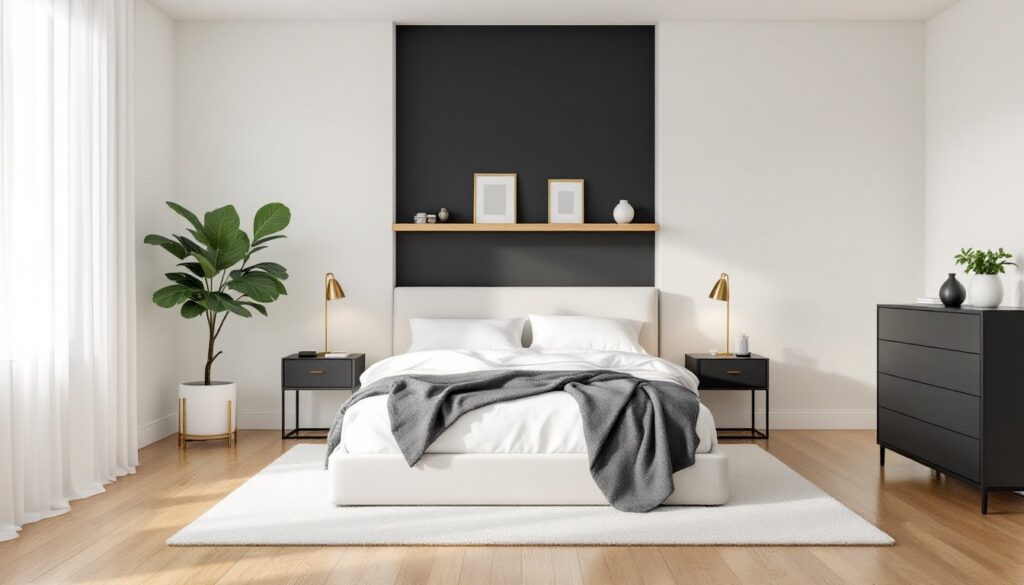
Wood tones inject warmth without introducing strong color. A natural oak or walnut nightstand beside a black metal bed frame bridges industrial and organic styles. Floating wood shelves above a white dresser display decor while breaking up large expanses of painted surface. Even small wood accents, picture frames, storage boxes, or a wooden bench, temper the monochrome palette.
Metallics function as neutrals in black and white schemes. Brushed brass drawer pulls on white dressers add subtle luxury, while matte black hardware maintains a cohesive look on mixed furniture. Chrome or nickel finishes suit contemporary spaces. Table lamps with brass or copper bases introduce vertical accent color without overwhelming the room.
Accent colors should appear in at least three places to feel intentional rather than random. If introducing sage green, repeat it in throw pillows, a bedside lamp shade, and framed art. This creates visual rhythm. Homeowners exploring how other neutral palettes interact with furniture might find useful comparisons in discussions of coordinating colors with brown furniture, which shares similar neutral-balancing principles.
Plants add organic shape and living color. A potted fiddle leaf fig in a white ceramic planter beside a black dresser, or trailing pothos on a white floating shelf, introduces movement and softens hard furniture lines.
Wall treatments also contribute texture. Shiplap painted white, black accent walls, or peel-and-stick geometric wallpaper create backdrop interest without altering furniture. Many bedroom galleries, such as those featuring black and white bedroom designs, demonstrate how textured walls enhance monochrome furniture.
Avoid overcrowding surfaces with decor. Black and white furniture thrives with breathing room, leave 30 to 40% of dresser tops clear to maintain the clean lines that make monochrome appealing in the first place.