

Table of Contents
ToggleAllen and Roth patio furniture has become a go-to choice for homeowners looking to upgrade their outdoor spaces without very costly. Available exclusively through Lowe’s, this line strikes a solid balance between affordability, durability, and design, three things that don’t always show up in the same package. Whether someone’s outfitting a sprawling deck or a compact balcony, Allen and Roth offers collections that can handle various climates and design preferences. This guide breaks down what makes the brand worth considering, which collections deliver the best bang for the buck, and how to keep pieces looking sharp season after season.
Key Takeaways
- Allen and Roth patio furniture offers a balanced combination of affordability, durability, and design at mid-range pricing ($400–$2,000 for full seating sets), making it an excellent choice for homeowners seeking quality outdoor spaces without premium costs.
- Weather-resistant materials like powder-coated aluminum frames, synthetic wicker, and solution-dyed acrylic cushions protect furniture from rust, UV damage, and moisture while requiring minimal maintenance with routine cleaning.
- Modular and stackable designs allow homeowners to reconfigure seating layouts seasonally and store pieces easily, especially important for those with limited off-season storage space.
- Proper maintenance—including regular cleaning, mid-season hardware tightening, breathable covers during storage, and cushion care—significantly extends the lifespan of Allen and Roth furniture beyond standard expectations.
- Timing purchases during Lowe’s three annual sales (late March, early July, and late September) can save 30–50% on Allen and Roth patio furniture, with additional discounts available on floor models and returned items.
- Climate considerations and space planning—measuring usable area, accounting for foot traffic, and selecting appropriate pieces for small balconies, medium decks, or large outdoor spaces—ensure both functionality and visual balance in your outdoor setup.
What Makes Allen and Roth Patio Furniture Stand Out?
Allen and Roth furniture distinguishes itself through mid-range pricing paired with thoughtful design features. Most collections retail between $400 and $2,000 for full seating sets, landing in a sweet spot that appeals to DIY-minded homeowners who want quality without venturing into high-end boutique territory.
The brand focuses heavily on weather-resistant materials. Powder-coated aluminum frames resist rust better than standard steel, while synthetic wicker weaves hold up to UV exposure without cracking or fading as quickly as cheaper alternatives. Cushions typically feature solution-dyed acrylic fabrics (similar to Sunbrella), which resist moisture, mildew, and color fading, critical for anyone leaving furniture uncovered during shoulder seasons.
Another practical advantage: modularity. Many Allen and Roth collections use sectional components that homeowners can rearrange as needs change. A corner wedge from this year’s patio layout can shift to linear seating next season without looking mismatched. That flexibility matters when working around grills, planters, or fire pits.
The brand also includes thoughtful details like adjustable leveling feet (useful on uneven concrete patios), reinforced corner joints on wicker frames, and removable cushion covers with hidden zippers, all features that make long-term ownership easier. These aren’t heirloom pieces, but they’re engineered to survive more than a couple of summers with reasonable care.
Popular Allen and Roth Patio Furniture Collections
Wicker and Rattan Sets
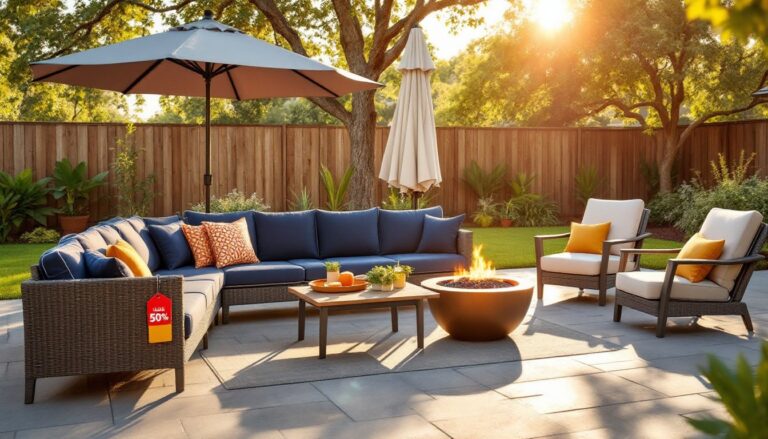
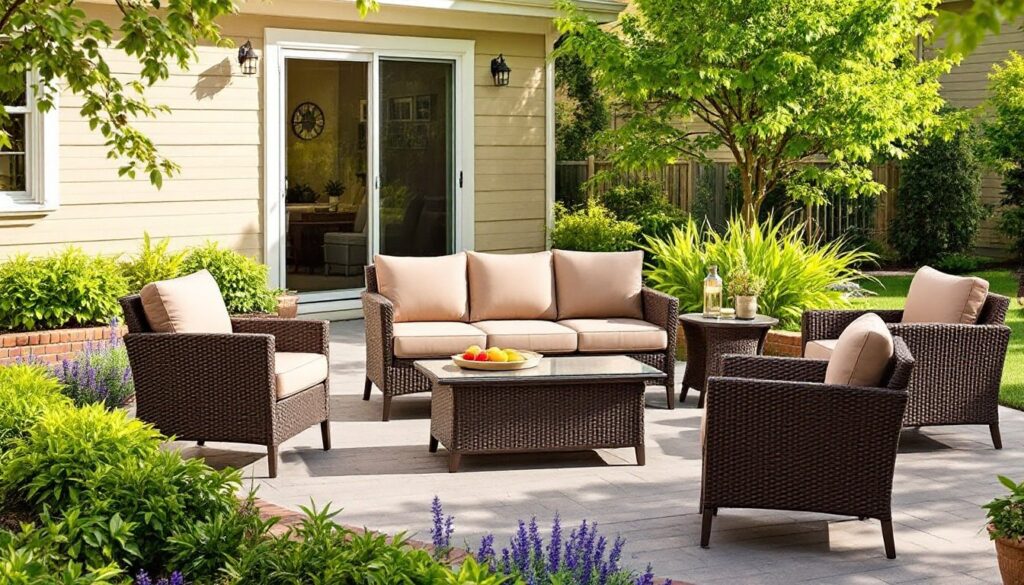
Synthetic wicker dominates Allen and Roth’s lineup, and for good reason, it mimics natural rattan’s texture without the maintenance headaches. The Belanore collection features hand-woven resin wicker over powder-coated steel frames, with deep seating (cushions typically run 5–6 inches thick) that works well for extended lounging. Espresso and gray finishes are standard, making these sets easy to coordinate with existing outdoor palettes.
For tighter budgets, the Nevelle collection offers a streamlined four-piece conversation set (two chairs, loveseat, and coffee table) around the $600–$800 range. The wicker weave is tighter and less detailed than higher-end lines, but the frames hold up well. One thing to watch: the included cushions on budget wicker sets sometimes use lighter-weight foam that compresses faster. Upgrading to denser foam inserts (available at fabric stores) can extend comfort life by several seasons.
Most wicker collections include tempered glass tabletops with pre-drilled umbrella holes. The glass is typically 5mm thick, adequate for normal use but worth protecting during hailstorms or high winds. Homeowners in areas with frequent severe weather often swap these for marine-grade polymer tops.
Metal and Aluminum Collections
Allen and Roth’s metal offerings lean heavily on cast and extruded aluminum, which resists rust far better than wrought iron while staying light enough for one person to rearrange. The Gatewood collection uses sling-style seating with Textilene mesh fabric, a woven polyester that dries quickly and doesn’t trap heat like solid cushions. This makes it ideal for poolside placement or humid climates where mildew is a constant battle.
The Carrinbridge collection takes a more traditional route with cushioned aluminum chairs and a rectangular dining table. Frame thickness on these pieces typically measures 1.5–2mm wall tubing, not commercial-grade, but sufficient for residential use. Cross-bracing under seat frames adds stability without adding bulk.
One advantage of metal collections: easier off-season storage. Stackable chairs and folding tables take up far less garage or shed space than bulky wicker sectionals. For anyone without a covered porch, that storage flexibility can be the deciding factor. These collections also pair well with outdoor clearance finds when mixing and matching seasonal pieces.
How to Choose the Right Allen and Roth Furniture for Your Space
Start by measuring the actual usable area, not just the total patio footprint. Leave at least 24–30 inches of clearance around seating for foot traffic. A common mistake is filling every square foot, which makes spaces feel cramped and makes it tough to maneuver a grill or cooler.
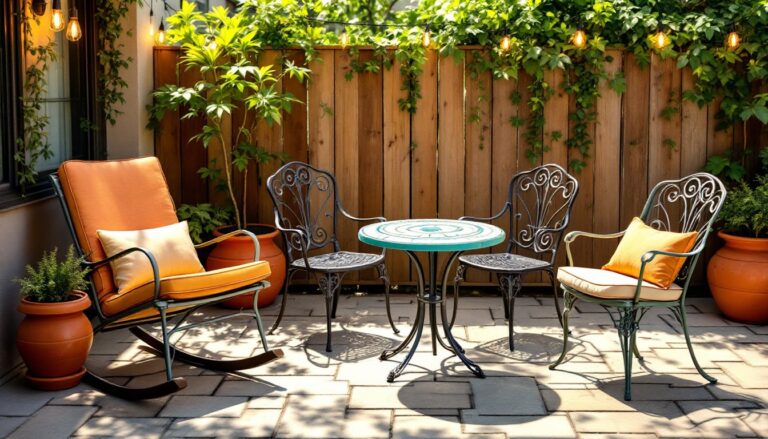
For small balconies or patios (under 100 square feet), bistro sets or compact two-seaters work better than full conversation sets. The Allen and Roth Carrinbridge bistro measures roughly 30 inches in diameter, fitting comfortably on most apartment balconies while still allowing room for a small planter or side table.
Medium-sized decks (100–200 square feet) can accommodate four-piece conversation sets or a six-seat dining table. Consider traffic flow: if the patio serves as a walkway to a yard or garden, position larger pieces along the perimeter rather than in the center. Modular sectionals work well here because they can hug walls or corners.
Large outdoor spaces (200+ square feet) allow for multiple zones, a dining area near the grill, a conversation pit around a fire feature, maybe a lounge chair grouping for reading. Mixing Allen and Roth collections is doable if you stick to complementary finishes (gray wicker pairs fine with charcoal aluminum).
Climate plays a role too. In coastal areas with salt air, aluminum and synthetic wicker hold up better than wood or steel. Desert climates demand UV-resistant cushions and lighter frame colors that don’t become scorching to the touch. Rainy regions benefit from sling seating or quick-dry cushions that don’t stay soggy for days.
Finally, think about how much furniture will stay outside year-round. If storage is limited, prioritize lighter pieces that one person can move. A heavy concrete-topped dining table might look great but becomes a problem if it needs to be relocated every few months. Gardeners seeking inspiration for their outdoor spaces often reference design ideas from Sunset to create cohesive looks.
Maintenance and Care Tips for Long-Lasting Outdoor Furniture
Routine cleaning prevents most major issues. For synthetic wicker, mix mild dish soap with warm water and scrub with a soft-bristle brush every 4–6 weeks during active use. Rinse thoroughly, soap residue attracts dirt. For stubborn grime in wicker crevices, a pressure washer on low setting (under 1,500 PSI) works, but keep the nozzle at least 12 inches away to avoid fraying the weave.
Aluminum frames need even less attention. Wipe down with soapy water and dry with a microfiber cloth to prevent water spots. If the powder coating gets scratched, touch up with matching spray paint (available at most hardware stores) to prevent oxidation from starting.
Cushions are the weak link on most outdoor furniture. Even solution-dyed fabrics benefit from being brought inside during prolonged rain or when not in use for more than a week. For light cleaning, vacuum to remove debris, then spot-clean with a 1:4 bleach-to-water solution (test on a hidden area first). Deep cleaning once per season with an upholstery cleaner keeps them looking fresh. Always let cushions dry completely before storing, trapped moisture breeds mold.
Inspect hardware (bolts, screws, leveling feet) at the start and end of each season. Aluminum frames can develop galvanic corrosion if stainless steel fasteners aren’t used. If you notice white or gray powdery buildup around bolts, clean with a wire brush and apply a light coating of marine grease.
For off-season storage, clean everything thoroughly before putting it away. Dirt and moisture trapped under covers or in storage bins accelerate deterioration. If leaving furniture outside, use breathable covers rather than plastic tarps, trapped condensation causes more damage than rain. Vent covers at ground level to allow airflow.
Glass tabletops should be removed and stored vertically (leaning against a wall) rather than flat-stacked, which can lead to cracking from uneven pressure. Wrap edges with moving blankets or pool noodles to prevent chipping.
One often-overlooked task: tighten all fasteners mid-season. Temperature swings cause metals to expand and contract, gradually loosening connections. A quick pass with an Allen wrench or socket set every few months prevents wobbly chairs from becoming broken ones. Homeowners looking for affordable ways to expand their outdoor setups can explore options at Home Goods patio sections for complementary pieces.
Where to Buy and What to Expect for Pricing
Allen and Roth patio furniture is sold exclusively through Lowe’s, both in-store and online. This exclusivity simplifies warranty claims and returns but limits price-shopping opportunities. Lowe’s typically runs major patio furniture sales three times per year: late March (spring launch), early July (mid-summer clearance), and late September (end-of-season blowout). Discounts during these windows can hit 30–50% off retail.
Pricing tiers break down roughly as follows:
- Bistro sets and compact two-seaters: $150–$400
- Four-piece conversation sets: $500–$1,200
- Six-piece dining sets: $800–$1,800
- Large sectionals and modular collections: $1,200–$2,500
These ranges reflect mid-2026 pricing and can fluctuate based on material costs and regional demand. Coastal markets sometimes see slightly higher prices due to shipping.
Delivery and assembly are available but add to the total cost. Standard delivery runs $79–$149 depending on item size and location. Assembly services typically add another $75–$150. For anyone comfortable with basic tools (usually just an Allen wrench and adjustable wrench), assembly is straightforward, most pieces take 1–2 hours with clear instructions.
Warranties on Allen and Roth furniture vary by collection but generally cover manufacturing defects for 1–3 years. Frame warranties sometimes extend to 5 years, while cushions and fabric components typically get 1 year. Keep receipts and register products online within 30 days to activate coverage.
For the best deals, sign up for Lowe’s email alerts and check inventory in late August through September. Floor models and returned items (often barely used) get marked down significantly. Inspect these carefully for frame damage or missing hardware, but they can deliver major savings.
Finally, consider freight timing. Orders placed during peak spring season (April–May) may face 2–4 week delays. Off-season purchases ship faster and sometimes qualify for free delivery promotions. Outdoor living trends and seasonal ideas can be found on sites like Gardenista for pairing furniture with landscaping plans.