



Table of Contents
ToggleHunting down the perfect outdoor furniture doesn’t always mean scrolling through endless catalogs of identical resin sets. Vintage patio furniture offers character, craftsmanship, and often better build quality than modern mass-produced alternatives. Whether someone’s eyeing a wrought iron bistro set from the 1950s or a mid-century aluminum lounge chair, these pieces tell a story, and usually hold up better to weather than expected. This guide walks through finding, evaluating, restoring, and styling vintage outdoor furniture that’ll outlast the trends.
Key Takeaways
- Vintage patio furniture from the 1920s–1980s offers superior durability and craftsmanship compared to modern mass-produced alternatives, with thicker metals and hand-tied joints that last decades longer.
- Finding authentic vintage outdoor furniture requires exploring estate sales, flea markets, online marketplaces, and architectural salvage yards—arriving early and searching local options to avoid expensive shipping.
- Quality vintage patio pieces use welded or bolted construction, come from established manufacturers like Salterini and Woodard, and have dense, heavy materials that indicate longevity over lighter modern equivalents.
- Metal furniture restoration starts with stripping rust, applying primer, and using oil-based or epoxy paint in multiple thin coats, while wicker requires gentle cleaning, repair with soaked cane, and seasonal conditioning with linseed oil.
- Style vintage patio furniture by mixing eras intentionally, layering cushions for comfort, defining conversation zones, and balancing old pieces with modern elements to create functional outdoor retreats that feel current rather than dated.
What Makes Patio Furniture “Vintage” and Why It’s Worth Seeking Out
The term “vintage” generally applies to outdoor furniture manufactured between the 1920s and 1980s, though some collectors stretch that window slightly. These decades produced distinct styles: ornate cast iron Victorian reproductions, streamlined Art Deco metal sets, colorful mid-century modern aluminum, and handwoven wicker from the postwar boom.
Why bother with old furniture? Three reasons: durability, design, and value. Manufacturers in those eras used thicker gauge metals, solid hardwoods, and hand-tied joints that simply aren’t economical today. A 1960s wrought iron chair typically weighs twice what a modern powder-coated steel equivalent does. That mass translates to stability and longevity.
Design-wise, vintage pieces offer variety modern retailers can’t match. Cookie-cutter sectionals dominate today’s market, but vintage hunting yields unique silhouettes: clamshell chairs, spring-action rockers, mosaic-topped tables. And unlike “vintage-inspired” reproductions sold at premium prices, authentic vintage often costs less, especially if someone’s willing to handle restoration themselves. A $50 rusty chair that needs an afternoon of work beats a $400 knockoff any day.
Where to Find Authentic Vintage Patio Furniture
The best sources for vintage outdoor furniture require legwork, but that’s part of the appeal. Estate sales top the list, older properties often hide decades-old patio sets in garages or basements. Arrive early: serious pickers line up before opening.
Flea markets and antique malls offer concentrated hunting. Vendors specializing in architectural salvage or mid-century goods frequently stock outdoor pieces. Quality and pricing vary wildly, so inspect thoroughly before buying. Some sellers at flea markets stock rusty garden sets that clean up beautifully with minimal effort.
Online marketplaces (Craigslist, Facebook Marketplace, OfferUp) work well for local pickups. Search terms like “wrought iron patio,” “vintage aluminum furniture,” or specific brand names (Brown Jordan, Salterini, Tropitone, Woodard). Filter by distance, these pieces are heavy and expensive to ship.
Architectural salvage yards sometimes stock outdoor furniture alongside building materials. Yard sales in older neighborhoods can yield bargains, though selection is hit-or-miss. Auctions (both live and online) offer bulk lots, which can be economical if someone needs multiple pieces and doesn’t mind mismatched styles.
How to Identify Quality Vintage Outdoor Pieces
Not all old furniture is good furniture. Distinguishing keepers from junk requires checking structural integrity and material quality.
For metal furniture, inspect joints first. Quality pieces use welded or bolted construction, not pop rivets. Lift the piece, if it’s surprisingly heavy for its size, that indicates thicker gauge metal. Check for manufacturer stamps or labels, usually on the underside of seats or table aprons. Names like Salterini, Woodard, Tropitone, and Brown Jordan signal collectible quality.
Surface rust on iron or steel isn’t a deal-breaker (it’s fixable), but examine for rust-through holes or severely pitted metal. If someone can push a screwdriver through corroded sections, structural integrity is compromised. Aluminum furniture won’t rust but can corrode: look for white powdery deposits or deep pitting.
For wicker and rattan, flex the material gently. Natural materials should bend slightly without cracking. Brittle, crumbly wicker indicates UV damage beyond repair. Inspect joints where horizontal and vertical pieces meet, loose wrapping can be re-secured, but missing sections are harder to fix.
Wood furniture (teak, cedar, redwood) should feel dense and heavy. Check for rot by pressing a thumbnail into end grain: soft spots mean decay. Joints should be tight. Mortise-and-tenon or dowel joints beat screws for longevity.
Sit in chairs and press on tables. Wobbles aren’t always disqualifying, they might just need tightening, but excessive flex suggests weak joints or thin materials. Garden design enthusiasts at Gardenista frequently showcase how restored vintage pieces integrate into contemporary outdoor spaces.
Restoring and Refurbishing Vintage Patio Furniture
Most vintage outdoor furniture needs work. That’s not a flaw, it’s an opportunity to customize finish and ensure another few decades of use. Approach restoration methodically, and the results will rival professional refinishing at a fraction of the cost.
Metal Furniture Restoration
Start with stripping and cleaning. For painted metal, use a wire brush attachment on an angle grinder or drill to remove loose paint and rust. Work outdoors wearing safety goggles, dust mask, and gloves, paint from before 1978 may contain lead. For intricate scrollwork where power tools can’t reach, use a wire brush by hand or naval jelly rust remover (follow manufacturer instructions for dwell time).
Once bare metal is exposed, wipe down with denatured alcohol to remove oils. For rust prevention, apply a rust converter (phosphoric acid-based products that chemically stabilize rust) or a dedicated metal primer like Rust-Oleum Clean Metal Primer. Don’t skip primer, it’s the difference between paint lasting two seasons and twenty.
For topcoat, oil-based enamel or epoxy-based paint provides the best weather resistance. Spray application (HVLP sprayer or aerosol cans) gives smoother results than brushing on detailed metalwork. Apply 2-3 thin coats rather than one heavy coat to avoid drips. Allow full cure time (typically 7 days) before exposing to moisture.
For wrought iron or steel that’ll stay unpainted, consider a clear protective coating (Renaissance Wax or paste wax) after rust removal. Reapply seasonally.
Wicker and Rattan Care
Natural wicker and rattan require gentler treatment. Clean first: vacuum thoroughly, then scrub with a solution of mild dish soap and warm water using a soft brush. Rinse with a damp cloth and air-dry completely in shade, direct sun can cause cracking.
For damaged wrapping, furniture repair cane or reed (available from basketry suppliers) can be woven in using a blunt needle and matching the original pattern. Soak replacement reed in warm water for 20-30 minutes before weaving for flexibility. Secure ends with waterproof wood glue.
Once repairs are complete, consider treating with boiled linseed oil or tung oil to restore moisture and flexibility. Apply with a brush, let soak 15 minutes, then wipe excess. This also darkens the color slightly and adds UV protection. For painted wicker, use the same cleaning process, then touch up with spray paint formulated for wicker (it flexes with the material).
Never use high-pressure washers on wicker, the force breaks fibers. Store wicker furniture indoors during winter: moisture freeze-thaw cycles destroy natural materials faster than any other weathering.
Styling Your Outdoor Space with Vintage Patio Furniture
Vintage furniture shines when styled intentionally, not just plopped on a deck. The key is balancing the furniture’s era with modern comfort and function.
Mix, don’t match. Unless someone scored a complete set, embrace intentional mismatch. Pair a wrought iron table with aluminum chairs, or combine a vintage metal loveseat with newer teak side tables. Cohesion comes from shared elements: paint all metal pieces the same color, or keep wood tones within the same family (all warm or all cool).
Layer comfort. Vintage metal furniture wasn’t designed for lounging, cushions are non-negotiable. Use outdoor-rated cushions with solution-dyed acrylic fabric (Sunbrella is the standard). These resist fading and mildew better than indoor textiles. Measure vintage seats before buying cushions: dimensions often differ from modern standards, so custom may be necessary.
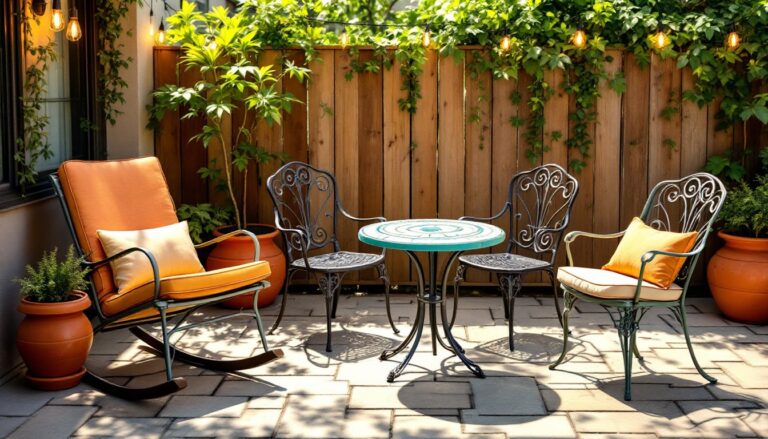
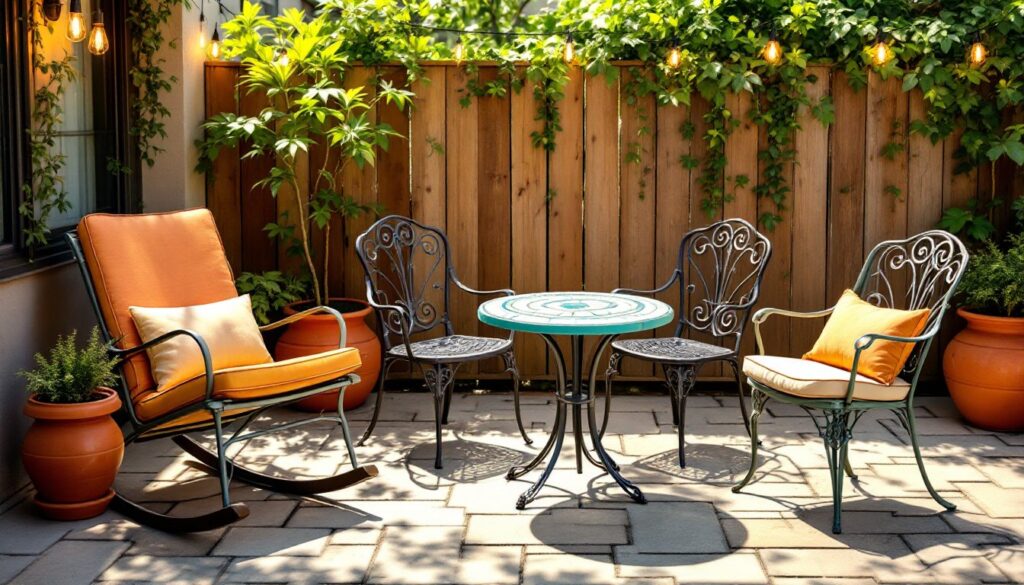
Define zones. On larger patios, use vintage pieces to create conversation areas separate from dining spaces. A pair of spring rockers with a small mosaic table makes a reading nook. In smaller spaces, a single statement piece, like a colorful metal glider, can anchor the design.
Balance old and new. Outdoor living spaces inspired by Southern Living demonstrate how vintage furniture grounds modern amenities. Pair a restored 1950s dining set with a contemporary outdoor rug, or flank a vintage bench with modern planters. This keeps the space feeling current, not museum-like.
Consider scale and proportion. Mid-century metal furniture tends to be lighter and lower-profile than modern pieces. Balance this by adding taller elements: potted plants, outdoor lighting, or vertical garden structures. Conversely, heavy cast iron pieces need breathing room, don’t crowd them with too many accessories.
Weatherproofing matters. Even restored furniture needs protection. Position pieces under covered areas when possible. For clearance patio furniture used in exposed locations, invest in fitted covers during off-season. Apply paste wax to metal furniture annually to maintain finish. Bring cushions indoors when not in use.
Lighting enhances character. Vintage furniture looks best in warm lighting. String lights, lanterns, or low-voltage landscape lighting highlight metalwork details and create ambiance after dark. Avoid harsh overhead floods that flatten the furniture’s sculptural qualities.
Someone transforming an outdoor space into a functional retreat understands that patio furniture selection combines aesthetics with practicality, vintage pieces excel at both when properly restored and styled.