




Table of Contents
ToggleAspen Home bedroom furniture has carved out a reputation for blending rustic charm with livable sophistication. These aren’t the knotty-pine cabin pieces of your grandparents’ lake house, they’re thoughtfully crafted collections that bring warmth, texture, and architectural detail into modern bedrooms. Whether you’re furnishing a primary suite, a guest room, or a teen’s space, Aspen Home offers collections that balance solid construction with the kind of finish quality that holds up under real-world use. This guide walks through what sets these pieces apart, how to choose the right collection for your space, and how to maintain them for decades of service.
Key Takeaways
- Aspen Home bedroom furniture combines solid hardwood construction with mortise-and-tenon joinery and full-extension drawer glides, ensuring durability and quality comparable to high-end pieces.
- Popular collections like Oxford Peppercorn, Arcadia, and Tucker Hill offer distinct rustic finishes—from charcoal and distressed whites to greige tones—that balance traditional warmth with modern aesthetics.
- Proper sizing is critical: measure ceiling height and floor space before selecting a collection, as tall headboards and substantial footprints can overwhelm smaller bedrooms.
- Balance the visual weight of Aspen Home bedroom sets with lighter bedding in contrasting colors, layered textiles, and strategic lighting to avoid a heavy appearance.
- Weekly dusting, spill management with slightly damp cloths, and maintaining 40–50% humidity prevents warping and extends the life of wood and veneer finishes.
- Annual hardware checks and avoiding direct sunlight protect your investment and keep drawers operating smoothly for decades of use.
What Is Aspen Home Bedroom Furniture?
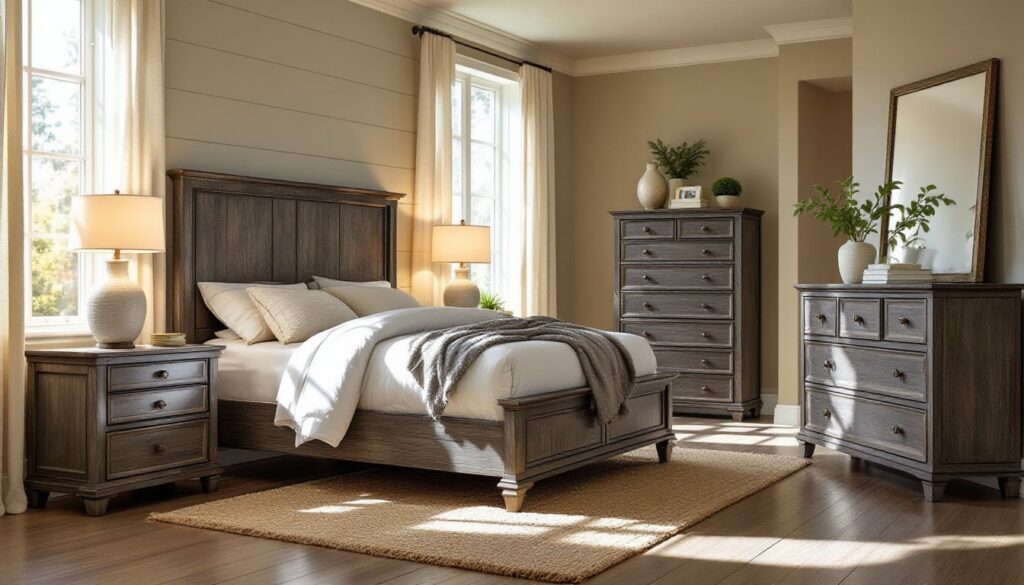
Aspen Home is a furniture brand under the Vaughan-Bassett umbrella, known for manufacturing bedroom sets in traditional, rustic, and transitional styles. The collections typically feature solid hardwood frames (often oak or poplar) with veneers on larger panels like headboards and dressers. This construction approach balances stability with cost, solid wood where it counts (joints, rails, legs) and veneer where large, flat surfaces benefit from dimensional stability.
Most Aspen Home pieces use mortise-and-tenon joinery or dovetail drawer construction, both hallmarks of furniture built to last. Drawers often ride on full-extension ball-bearing glides, which means they pull out completely for access to the back and can handle the weight of linens, sweaters, or stacked jeans without sagging.
Finishes range from distressed whites and grays to rich tobacco browns and charcoal stains. Many collections incorporate hand-applied glazing or wire-brushing techniques that accentuate wood grain and give each piece a slightly varied, lived-in look. That finish variability is intentional, it’s part of the rustic aesthetic, not a defect.
Aspen Home bedroom furniture is typically sold as coordinated collections: bed frame, nightstands, dresser, chest of drawers, and sometimes a media chest or vanity. Buying within a collection ensures matching finish, hardware, and design details like panel styling or decorative molding.
Popular Aspen Home Bedroom Furniture Collections
Aspen Home rotates and updates its lines, but several collections have become go-to options for homeowners seeking that rustic-modern crossover.
Oxford Peppercorn features a deep charcoal finish with heavy distressing and metal corner brackets. The panels and drawer fronts have a planked look, reminiscent of reclaimed barn wood. It’s a strong choice for industrial or farmhouse interiors.
Arcadia leans softer, with a weathered white or eggshell finish over ash veneers. The headboards often include horizontal slat detailing and gently rounded edges. This collection pairs well with linen bedding and coastal or cottage aesthetics.
Centennial is darker and more formal, using a burnished chestnut stain on oak with raised moldings and turned pilasters. If you’re drawn to traditional furniture but want something less ornate than Victorian reproductions, Centennial strikes that balance.
Many of these collections incorporate modern bedroom furniture ideas that echo current design trends seen in luxury interiors, blending rustic textures with clean lines. Tucker Hill offers a greige-toned distressed finish and features X-pattern details on bed footboards and case piece sides. It’s transitional enough to work in both farmhouse and contemporary spaces.
When selecting a collection, consider the scale of the pieces. Aspen Home beds are often substantial, tall headboards (60+ inches) and wide footboards. Measure your room’s ceiling height and floor space before committing. A king sleigh bed that looks perfect in a showroom can overwhelm a 12×14 bedroom.
Key Features That Define Aspen Home Bedroom Sets
Understanding what goes into these pieces helps you evaluate quality and longevity.
Dovetail joinery on drawers is non-negotiable for durability. Look for English dovetails on drawer fronts (visible interlocking fingers) and either French or English dovetails at the back. This joinery resists pulling apart under repeated use far better than stapled or doweled joints.
Full-extension drawer glides are standard on most Aspen Home dressers and chests. These allow the drawer to pull completely out of the case, giving access to items at the very back. They also reduce wear on drawer boxes since you’re not yanking half-open drawers to reach contents.
Felt-lined top drawers in dressers protect jewelry, watches, and sunglasses from scratching. Not every collection includes this, but it’s a nice touch when present.
Adjustable levelers on case pieces (dressers, chests, nightstands) compensate for uneven floors. If your home has original hardwood or slightly out-of-level subflooring, these small threaded feet prevent rocking and keep drawers operating smoothly.
Dust panels between drawers are thin sheets of plywood or hardboard that separate drawer cavities. They keep contents cleaner and add structural rigidity to the case. Budget furniture often skips this feature.
Many Aspen Home beds include slat systems or a platform base, eliminating the need for a separate box spring. Slats are typically 3–4 inches wide, spaced 3–4 inches apart, made from solid hardwood. This spacing works for most modern mattresses (memory foam, hybrid, innerspring), but if you’re using a traditional innerspring without a foundation, check the mattress manufacturer’s warranty, some require additional support.
Hardware varies by collection but often includes antique bronze, pewter, or brushed nickel pulls and knobs. These are usually mounted with machine screws rather than wood screws, which means they stay tight longer. Keep a Phillips-head screwdriver handy to snug them up annually.
How to Choose the Right Aspen Home Bedroom Furniture for Your Space
Start with room dimensions and traffic flow. Measure wall lengths, ceiling height, and the distance from the bed footboard to the opposite wall or dresser. Leave at least 36 inches of clearance around the bed for comfortable movement, more if you’re working with a king or California king.
Bed size should match both your physical needs and room scale. A queen bed measures 60×80 inches: a king is 76×80 inches. But the footprint of the bed frame is larger once you add headboard depth and footboard projection. Aspen Home sleigh beds and panel beds can add 6–10 inches beyond the mattress perimeter.
For storage needs, count how many people are using the room and what you’re storing. A couple sharing a bedroom typically needs a dresser (6–9 drawers) plus two nightstands. If closet space is limited, add a chest of drawers (5–7 drawers, taller and narrower than a dresser) or a media chest with both drawers and open shelving.
Style consistency matters more than matching finish throughout your home. Aspen Home’s rustic collections pair well with other natural materials, leather, linen, jute, iron, but can clash with ultra-modern glass-and-chrome pieces. If your home leans contemporary, choose one of the lighter, less distressed Aspen finishes and keep accessories minimal.
Exploring bedroom furniture terminology can help you better understand the differences between case goods, accent pieces, and storage options when planning your layout. Finish durability is another factor. Darker stains (tobacco, espresso, peppercorn) tend to show dust and fingerprints more readily than mid-tones. Distressed finishes are forgiving, minor dings blend in. High-gloss or hand-rubbed finishes require more frequent dusting and careful handling.
Delivery and assembly: Aspen Home furniture typically ships in pieces and requires assembly. Bed frames usually involve attaching the headboard, footboard, and side rails with metal brackets and bolts. Dressers and chests arrive mostly assembled, but you’ll need to attach hardware and feet. Budget 1–2 hours for a bed frame, 30–45 minutes per case piece. If you’re not comfortable with an Allen wrench and a rubber mallet, hire assembly help.
Styling Tips for Aspen Home Bedroom Furniture
Rustic furniture can skew heavy if you’re not intentional with styling. Balance the wood’s visual weight with lighter textiles and strategic negative space.
Bedding should contrast with the bed frame’s finish. If you’ve chosen a dark collection like Oxford Peppercorn, opt for white, cream, or soft gray linens. Textured materials, linen, washed cotton, waffle weave, echo the handcrafted feel of the furniture. Avoid overly shiny or synthetic-looking fabrics like polyester satin: they fight the rustic aesthetic.
Layering adds depth without clutter. Start with a fitted and flat sheet, add a duvet or coverlet, then layer a throw blanket at the foot of the bed. Swap decorative pillows for Euro shams (26×26 inches) against the headboard, standard sleeping pillows in front, and one or two smaller accent pillows. Keep the total pillow count under six, more than that and it starts feeling like a hotel display.
Industry trends documented by Elle Decor show that mixing textures, rough-hewn wood, soft textiles, and metal accents, creates visual interest in rustic bedrooms. Nightstand styling should be minimal and functional. A table lamp (15–20 inches tall to avoid glare when sitting up in bed), a small tray for daily items (watch, phone, glasses), and maybe a single book or plant. If your nightstand has a drawer, use it, don’t let surfaces become catchalls.
Wall treatments can soften the furniture’s solidity. Shiplap, board-and-batten, or a textured plaster finish adds architectural interest without competing. If you’re painting, choose warm neutrals, greige, soft taupe, or muted sage, that harmonize with the wood tones. Stark white can make rustic furniture look dated.
Lighting is critical. Rustic furniture tends to absorb light rather than reflect it, so layer your sources. Overhead lighting (a flush-mount or low-profile chandelier), task lighting (table lamps on nightstands), and ambient lighting (a floor lamp in a corner or LED strip behind the headboard) keep the room from feeling cave-like.
Accessories should lean organic and understated. Woven baskets under a bench, a jute rug, wrought-iron curtain rods, or a reclaimed wood mirror frame all reinforce the rustic vibe. Avoid anything overly glossy, plastic, or neon.
For homeowners exploring diverse home furnishing styles, Aspen collections offer a versatile middle ground that adapts to both traditional and modern decor schemes.
Care and Maintenance for Long-Lasting Beauty
Solid wood and veneer furniture demand regular but simple maintenance. Done right, Aspen Home pieces will outlast particleboard flat-packs by decades.
Dusting should happen weekly. Use a microfiber cloth, it grabs dust without scratching the finish. Avoid feather dusters: they just redistribute particles. For carved details or grooves, a soft-bristle brush (a clean paintbrush works) dislodges dust that cloths miss.
Cleaning requires care. Wipe spills immediately with a slightly damp cloth, then dry. For deeper cleaning, use a wood-specific cleaner (Murphy Oil Soap diluted per label instructions, or a product like Howard Feed-N-Wax). Spray onto your cloth, not directly onto the furniture, overspray can seep into joints and cause swelling. Wipe with the grain, then buff dry.
Avoid all-purpose sprays, ammonia-based cleaners, and abrasive scrubbers. They can strip the finish or leave hazy residue. Don’t use furniture polish with silicone: it builds up and attracts dust.
Humidity control prevents warping and cracking. Wood expands in high humidity and contracts in low. Aim for 40–50% relative humidity year-round. In winter, a humidifier helps: in summer, a dehumidifier or air conditioning keeps levels stable. If you notice drawers sticking in summer and gaps appearing in winter, humidity swings are the culprit.
Sunlight fades and dries wood finishes. Keep dressers and beds out of direct sun, or use UV-filtering window film or curtains. If a piece sits in a sunny spot, rotate accessories or occasionally shift the furniture slightly to even out any color changes.
Hardware maintenance is a quick annual task. Check knobs, pulls, and bed frame bolts, tighten anything that’s loosened. Bed frames, especially, need this attention. The weight and movement of sleeping shifts bolts over time. A loose connection can cause the frame to creak or, worse, fail.
Drawer care: If glides become sticky, wipe the tracks with a damp cloth to remove lint and dust, then let dry. For wood-on-wood drawers (less common in Aspen Home but present in some older or budget lines), rub a bar of soap or a candle along the drawer’s bottom edges, it acts as a lubricant.
Scratch and dent repair: Minor scratches often blend into distressed finishes. For deeper damage, furniture touch-up markers or wax fill sticks (available at hardware stores) can hide dings. Match the color as closely as possible, apply, then buff gently with a soft cloth.
Regular care aligned with furniture maintenance best practices ensures your investment maintains both function and appearance through years of daily use. If you’re moving, disassemble beds and wrap case pieces in furniture blankets. Use cardboard corner protectors and avoid dragging pieces across floors, lift and carry, or use furniture sliders. Veneer edges are vulnerable to impact damage during moves.
Conclusion
Aspen Home bedroom furniture delivers the warmth and texture of rustic design without sacrificing the durability that everyday life demands. By understanding the construction details, choosing collections that match both your space and style, and committing to straightforward maintenance, these pieces become the kind of furniture you use, enjoy, and eventually pass along. Whether you’re drawn to the farmhouse charm of Arcadia or the bold character of Oxford Peppercorn, the right set transforms a bedroom from a placeholder into a retreat.