

Table of Contents
TogglePolywood furniture has revolutionized how homeowners approach outdoor seating. Unlike traditional wood that rots or metal that rusts, this material laughs at rainstorms and laughs harder at snow. Made from recycled HDPE plastic, it mimics the look of painted wood but skips the annual sanding, staining, and sealing rituals that make deck maintenance a chore. For anyone tired of dragging cushions indoors or watching their investment splinter after two seasons, polywood offers a low-maintenance alternative that actually delivers on its promises.
Key Takeaways
- Outdoor patio furniture made from polywood offers zero water absorption and requires minimal maintenance—just a yearly wash with dish soap and water, eliminating the need for sealing, staining, or sanding.
- Polywood’s recycled HDPE plastic construction provides 20-year warranties, temperature tolerance from -60°F to 160°F, and resists rot, rust, and coastal salt damage far better than traditional wood or metal furniture.
- Quality polywood patio furniture features stainless steel hardware, weighs 35-50 lbs per chair, and uses reinforced joint construction—key indicators to check before purchasing to ensure durability and longevity.
- Colors range from white to dark browns, with mid-tone shades balancing aesthetics and functionality, as dark colors retain excessive heat while white shows dirt fastest in outdoor settings.
- Expect to invest $150-400 for premium Adirondack chairs or $600-2,500 for full seating groups, and always sit in pieces before buying since polywood’s rigid feel affects comfort differently than traditional wood.
What Is Polywood and Why Choose It for Your Patio?
Polywood is a trade name that’s become shorthand for high-density polyethylene (HDPE) lumber used in outdoor furniture. The material starts as post-consumer plastic, milk jugs, detergent bottles, and similar containers, which gets cleaned, shredded, and extruded into boards that mimic wood grain.
Unlike cheap resin chairs that crack in cold weather, polywood contains UV-stabilized colorants mixed throughout the material, not just surface-applied. That means scratches don’t reveal a different color underneath, and sun exposure won’t bleach your chairs to a sad, chalky finish within a year.
The manufacturing process also allows for stainless steel hardware integration. Quality polywood furniture uses marine-grade fasteners that won’t corrode, even in coastal environments where salt air destroys standard galvanized screws in a single season.
Why it works for patios: Traditional pressure-treated pine needs constant refinishing. Cedar and teak require annual oiling to prevent graying. Metal furniture gets scorching hot in summer sun. Polywood sidesteps all three issues while delivering the Adirondack chair aesthetic most homeowners want without the maintenance headaches.
Key Benefits of Polywood Patio Furniture
Weather Resistance and Durability
Water absorption: zero. That’s not marketing speak, HDPE doesn’t absorb moisture, so rot, mold, and mildew can’t get a foothold. Leave polywood furniture out through winter, and it’ll look identical in spring. No tarps, no storage shed wrestling matches.
Temperature tolerance runs from -60°F to 160°F without structural degradation. That covers Phoenix summers and Minnesota winters without the material becoming brittle or warping. The color does fade slightly over years of direct sun exposure, typically 10-15% lightening in high-UV climates, but remains consistent across the entire piece.
Manufacturers often offer 20-year warranties on structural integrity, which tells you what you need to know about durability. Compare that to the 1-3 year coverage on most wood or wicker furniture.
For coastal areas, polywood furniture handles saltwater spray and humidity better than any natural material. No rust stains on decking, no corroded joints after a season.
Low Maintenance and Easy Care
Annual maintenance requirements: wash it once. That’s the entire checklist.
Use a soft-bristle brush with warm water and dish soap for routine cleaning. Tree sap, bird droppings, and pollen rinse off without staining. For stubborn grime, a 30% vinegar solution works without damaging the material. Skip pressure washers, they’re overkill and can rough up the surface texture unnecessarily.
No sealing, no staining, no sanding. The color goes all the way through, so even deep scratches from dragging furniture across concrete won’t expose raw material that needs touch-up paint.
Winter storage is optional. If you’ve got the space and want to extend longevity, great. If not, leave it out. Snow load isn’t an issue for properly constructed pieces, the material doesn’t absorb water that could freeze and crack joints like saturated wood does.
Popular Polywood Furniture Styles for Every Outdoor Space
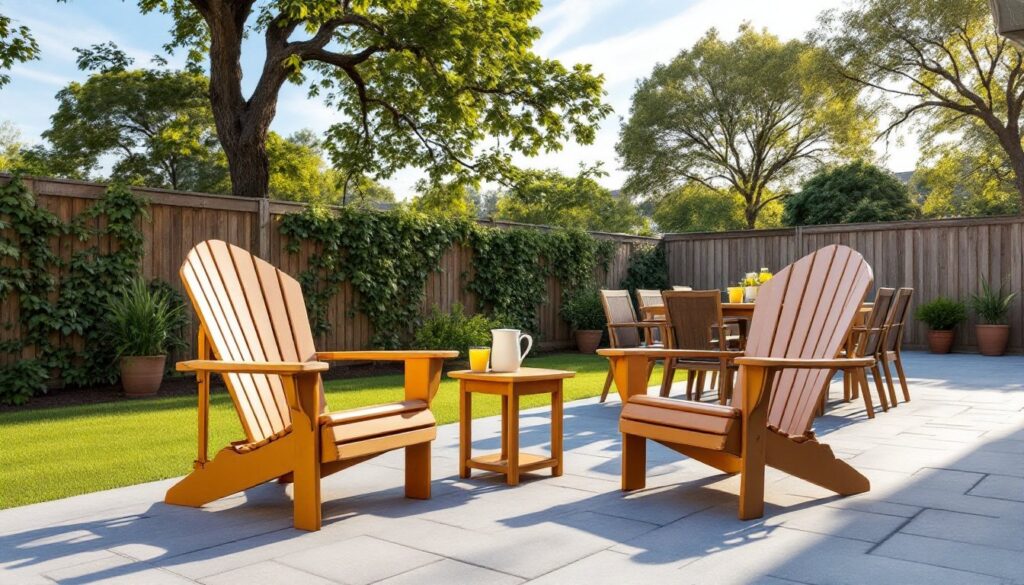
Adirondack chairs dominate polywood catalogs for good reason, the wide armrests and reclined seat angle suit the material’s slightly rigid feel. Standard dimensions run 37″ tall × 31″ wide × 35″ deep. Look for contoured seats: flat-slab designs get uncomfortable after 20 minutes.
Gliders and rockers work well for covered porches. The smooth motion complements polywood’s solid construction. Two-person glider benches typically measure 48″ wide, verify your porch depth before ordering, since these need 40-50″ of clearance for full motion range.
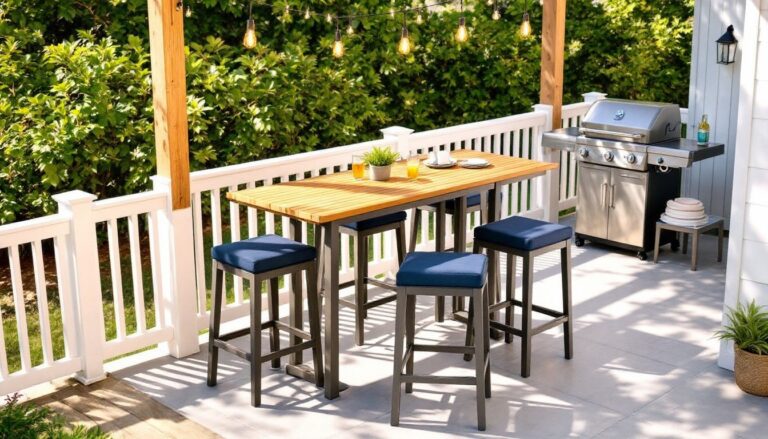
Dining sets come in 36″ and 42″ square or 72″ rectangular tables. The larger tables suit six chairs comfortably. Counter-height sets (36″ table height, 24″ seat height) work better for casual entertaining, while standard dining height (30″ table, 18″ seat) suits formal outdoor meals.
For smaller spaces, bistro sets (24-30″ round tables with two chairs) fit balconies and apartment patios without crowding walkways. When planning patio transformations, measure twice before ordering, polywood furniture has substantial footprints.
Chaise lounges pair well with pools since chlorine and pool chemicals won’t damage the material. Adjustable-back models typically offer 4-5 recline positions. Full-flat chaises measure roughly 78″ long × 27″ wide.
Color options usually include white, black, tan, and various wood-tone browns. White shows dirt fastest but creates a classic coastal look. Dark colors retain heat, sitting on a black polywood chair in July sun isn’t pleasant. Mid-tone browns balance aesthetics with practicality.
How to Choose the Right Polywood Patio Furniture
Check the fasteners. Stainless steel hardware is non-negotiable. If the manufacturer doesn’t specify, assume they’re using cheaper galvanized or zinc-plated screws that’ll rust. Visible hardware should have rounded heads, not sharp edges that snag clothing.
Weight matters. Quality polywood furniture is heavy, an Adirondack chair should weigh 35-50 lbs. Lightweight pieces use thinner material that flexes and wears faster. The heft also prevents wind from flipping furniture during storms.
Inspect joint construction. Mortise-and-tenon or pocket-screw joints with reinforcement blocks outlast simple butt joints with exposed screws. Flip sample chairs at the store, loose joints or gaps indicate poor manufacturing.
For outdoor furniture budgets, expect to pay $150-400 for quality Adirondack chairs, $600-1,200 for dining sets, and $1,000-2,500 for full seating groups (sofa, loveseat, coffee table). Prices below that range usually mean compromises in material thickness or hardware quality.
Measure your space with actual furniture dimensions, not optimistic guesses. Add 24-30″ of clearance around dining tables for chair pull-out. For conversation sets, allow 18″ walkways between pieces.
Sit before you buy. Polywood has less give than wood, so seat angles and armrest heights matter more. Standard Adirondack angles (20-25° recline) suit relaxing but aren’t ideal for reading or laptop work. Upright dining chairs (90-95° back angle) provide better lumbar support for extended sitting.
Compare warranties. Twenty years on the frame and 3-5 years on hardware is standard for premium manufacturers. Anything less suggests the company doesn’t expect their product to last.
Caring for Your Polywood Outdoor Furniture
Seasonal cleaning: Spring and fall washdowns with dish soap and a garden hose handle 90% of maintenance. Use a nylon-bristle brush for textured surfaces where dirt accumulates in grain patterns. Rinse thoroughly, dried soap residue attracts more dirt.
For mildew (rare but possible in constantly damp, shaded areas), mix 1 cup bleach per gallon of water. Apply with a spray bottle, let sit 10 minutes, scrub, and rinse. Wear gloves and eye protection, bleach splashes aren’t fun.
Stubborn stains: Tree sap responds to rubbing alcohol on a cloth. Rust stains (from metal planters or tools) lift with oxalic acid-based cleaners formulated for decks, test in an inconspicuous spot first, since some formulations can slightly dull the finish.
Skip abrasive cleaners, scouring pads, and acetone-based solvents. They’ll mar the surface and remove the smooth finish that makes polywood easy to clean. Those who also maintain natural wood furniture will appreciate the difference in effort.
Touch-ups: Deep scratches are permanent but rarely compromise structure. For aesthetic fixes on white furniture, white vinyl paint pens provide passable coverage. Colored pieces are trickier, manufacturers don’t typically offer touch-up kits since the color is integral to the material.
Winter prep: Optional but beneficial, cover furniture with breathable tarps (not plastic, which traps condensation) or store in an unheated garage or shed. If leaving outside, brush off heavy snow to prevent accumulation weight on joints, though structural failure is unlikely.
Tightening hardware: Once yearly, check all bolts and screws. The material can compress slightly over time under load. A simple walk-through with a socket set takes 15 minutes and prevents wobbly chairs.
Avoid parking polywood furniture directly on soil or grass. Moisture won’t hurt the material, but constant ground contact allows dirt to stain the bottom edges and makes moving furniture harder when grass grows around legs. Use patio pavers or a deck surface for proper support and drainage.