


Table of Contents
ToggleBamboo bedroom furniture has moved from niche eco-product to mainstream design choice, and for good reason. It’s not just about being green, though bamboo’s rapid growth cycle and minimal pesticide requirements make it one of the most renewable materials available. It’s also about durability, aesthetics, and versatility. Bamboo offers the warm tones of traditional hardwood with a unique grain pattern that works across design styles, from minimalist modern to coastal casual. Whether you’re furnishing a new bedroom or replacing worn pieces, understanding what bamboo brings to the table helps you make smarter buying decisions.
Key Takeaways
- Strand-woven bamboo bedroom furniture is harder and more durable than many traditional hardwoods like oak or maple, making it resistant to dents and scratches with a Janka hardness rating around 3,000 lbf.
- Bamboo reaches harvest maturity in 3-5 years versus 20-50 years for hardwoods, regenerates without replanting, and requires no chemical fertilizers, giving it a significantly smaller environmental footprint.
- Quality bamboo furniture features solid construction with dovetailed joints and mortise-and-tenon joinery; avoid cheaper pieces with dowels or cam-locks that fail quickly under regular use.
- Bamboo bedroom furniture naturally pairs well with modern minimalist, coastal, mid-century modern, and Japandi aesthetics, while its yellow-orange tones may clash with cool-toned woods like maple or birch.
- Maintain bamboo pieces by dusting regularly, wiping spills immediately, applying furniture wax or conditioning oil every 6-12 months, and protecting surfaces from heat and direct sunlight to preserve the finish.
- At mid-range pricing ($400-$900 for a queen bed frame), bamboo bedroom furniture costs less than exotic hardwoods but more than laminate, offering exceptional value for durability and design versatility.
Why Choose Bamboo Furniture for Your Bedroom?
Bamboo isn’t technically a wood, it’s a grass, but its structural properties rival many hardwoods. Strand-woven bamboo, the type used in quality furniture, has a Janka hardness rating around 3,000 lbf, which puts it well above red oak (1,290 lbf) and maple (1,450 lbf). That translates to furniture that resists dents, scratches, and daily wear better than most traditional bedroom pieces.
From a sustainability angle, bamboo reaches harvest maturity in 3-5 years compared to 20-50 years for hardwoods like oak or cherry. It regenerates from its root system without replanting, and most commercial bamboo grows without irrigation or chemical fertilizers. If you’re weighing environmental impact, bamboo has a significantly smaller footprint than conventional lumber or composite materials.
Moisture resistance is another practical advantage. Bamboo’s natural density and tight cellular structure make it less prone to warping in humid conditions than pine or particleboard. That doesn’t mean it’s waterproof, standing water will still cause damage, but it handles bedroom humidity fluctuations better than many alternatives. Look for furniture finished with low-VOC sealants or natural oils: these protect the material without off-gassing chemicals into your sleeping space.
Price-wise, bamboo sits in the mid-range. You’ll pay more than for laminate or softwood furniture, but less than solid walnut or teak. Expect a queen-sized bamboo bed frame to run $400-$900 depending on construction quality and joinery methods. Dovetailed drawers and mortise-and-tenon joints indicate better craftsmanship than simple dowel or cam-lock assembly.
Types of Bamboo Bedroom Furniture to Consider
Bed Frames and Headboards
Bamboo bed frames come in two main construction types: solid bamboo and bamboo veneer over engineered cores. Solid frames use bamboo plywood (laminated bamboo strips) or strand-woven boards for all structural components. These handle weight distribution better and last longer. Veneer frames use a thin bamboo layer over MDF or particleboard, they look similar but won’t hold up to repeated moves or adjustments.
Check the slat spacing on platform beds. Slats should be no more than 3 inches apart to support memory foam or latex mattresses without sagging. Some bamboo frames include a center support beam for queen and king sizes: this isn’t optional if you want the frame to last. Without it, the side rails will eventually bow under a mattress and two sleepers.
Headboards range from simple panel designs to elaborate geometric patterns. Vertical bamboo poles lashed together give a more rustic look, while horizontal plank construction reads as contemporary. Make sure any headboard is secured to both the wall and the frame. Bamboo is strong, but a freestanding headboard will shift over time if it’s only attached to the bed.
Dressers, Nightstands, and Storage Solutions
Bamboo dressers handle the same loads as hardwood equivalents if built correctly. Look for full-extension drawer slides rated for at least 75 lbs per drawer. Cheaper side-mount slides stick and wear out quickly. Undermount soft-close slides are worth the upcharge, they reduce stress on the drawer boxes and keep things quiet at night.
Drawer boxes themselves should be dovetailed or box-jointed, not just glued and stapled. Flip a drawer upside down and check the corners. If you see metal brackets or staples holding the sides together, pass. Those joints fail within a few years of regular use, especially in drawers holding heavier items like jeans or sweaters.
Nightstands need stable joinery since they deal with constant opening, closing, and items being set on top. A nightstand with one drawer and one open shelf typically offers the best balance of storage and accessibility. If you charge devices overnight, look for models with integrated cable management, a simple grommet hole in the back panel keeps cords tidy and prevents the nightstand from sitting away from the wall.
For bedrooms short on closet space, bamboo storage benches and trunks work well at the foot of the bed. They’re ideal for extra bedding, off-season clothes, or organizing smaller items. Most use lift-top designs with safety hinges that prevent the lid from slamming shut. Verify the weight capacity if you plan to sit on it while putting on shoes, many decorative benches aren’t built for regular seating.
How to Style Bamboo Furniture in Different Bedroom Aesthetics
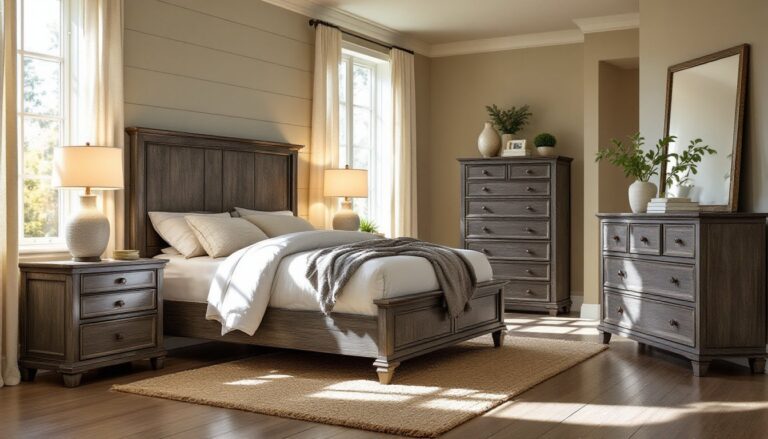
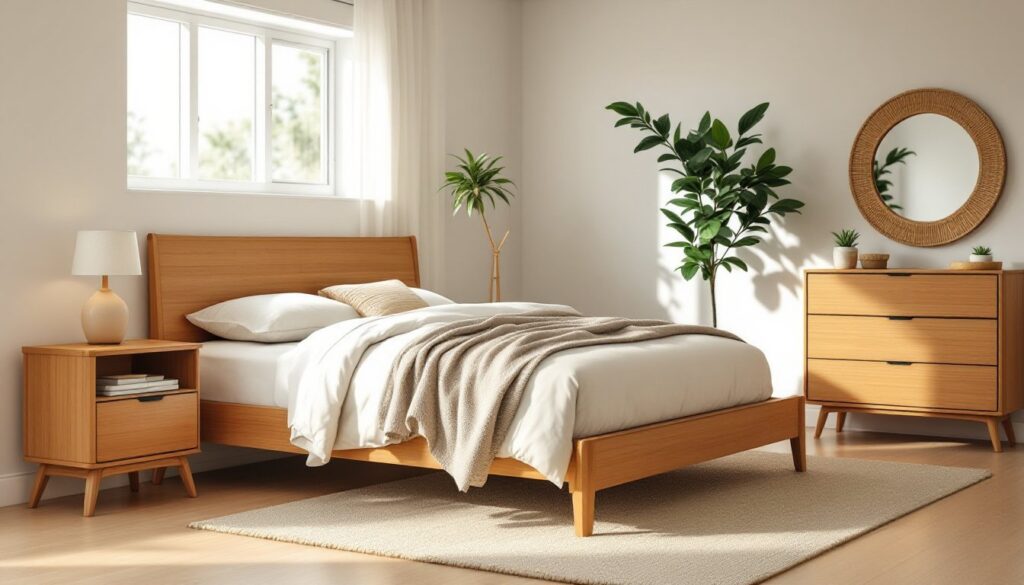
Bamboo’s natural honey and caramel tones pair well with neutral palettes. In modern minimalist bedrooms, stick with clean-lined bamboo pieces and limit decorative hardware. Pair with white or light gray walls and simple linen bedding. The wood grain provides enough visual interest without competing patterns.
For coastal or tropical styles, bamboo is an obvious fit. Combine it with rattan accents, woven jute rugs, and sea-glass blues or sandy beiges. Avoid overdoing the theme, one bamboo dresser and a matching nightstand read as intentional: a full suite can feel like a resort hotel room. If you’re working on DIY furniture projects, bamboo’s workability makes it a good candidate for custom storage builds.
Mid-century modern aesthetics work surprisingly well with bamboo. The straight lines and tapered legs common in MCM furniture translate naturally to bamboo construction. Mix bamboo pieces with walnut or teak accents and add period-appropriate lighting, think arc lamps or Sputnik fixtures. Keep hardware minimal: matte brass or black metal pulls.
In Scandinavian or Japandi bedrooms, bamboo supports the emphasis on natural materials and functional design. Pair light-toned bamboo with white oak or ash flooring, and keep textiles simple, wool throws, cotton duvet covers, and linen curtains. Japandi style specifically values asymmetry and imperfection, so pieces with visible bamboo grain variation fit better than overly uniform finishes.
Avoid pairing bamboo with heavy, ornate styles like traditional Victorian or French provincial unless you’re deliberately going for an eclectic mix. The material’s clean grain and light color clash with dark carved woods and fussy details. If your bedroom already has existing furniture, compare the undertones. Bamboo’s yellow-orange cast can look off next to cool-toned woods like maple or birch. Many furniture manufacturers can share bedroom furniture names and finishes for easier coordination when building out a cohesive look.
Caring for and Maintaining Your Bamboo Bedroom Furniture
Daily maintenance is straightforward: dust with a microfiber cloth and wipe up spills immediately. Bamboo’s finish can handle damp cleaning, but don’t soak it. Use a cloth wrung nearly dry with water and a drop of mild dish soap for sticky spots. Avoid furniture polishes with silicone, they leave buildup that dulls the finish over time.
Every 6-12 months, apply a coat of furniture wax or bamboo conditioning oil. This keeps the finish from drying out and adds a thin layer of protection. Use a natural product like carnauba wax or tung oil, applied sparingly with a clean rag. Work in the direction of the grain, let it sit for 10-15 minutes, then buff with a dry cloth. One thin coat is better than a thick application that sits on the surface.
Protect surfaces from heat and moisture. Use coasters for drinks, trivets for anything warm, and felt pads under lamps or decorative objects. Bamboo resists minor scratches well, but a hot mug will leave a permanent ring if left directly on the finish. If you do get a water ring, try rubbing it gently with a paste of baking soda and water, then re-oil that spot.
Keep bamboo furniture out of direct sunlight if possible. UV exposure fades the natural color unevenly over time, leaving lighter patches where the sun hits consistently. If your bedroom has large windows, use curtains or blinds during peak sun hours, or position bamboo pieces away from the direct path of light.
For deeper scratches or gouges, fine-grit sandpaper (220-grit) can smooth the damaged area. Sand lightly in the direction of the grain, feather the edges into the surrounding finish, then touch up with matching stain or oil. This works for minor damage: deep gouges that go through multiple lamination layers need professional repair or refinishing.
If you’re considering room makeovers or full bedroom refreshes, proper furniture care extends the lifespan of quality pieces and keeps the space looking intentional rather than worn.
Conclusion
Bamboo bedroom furniture delivers on durability, sustainability, and design flexibility without the premium price tag of exotic hardwoods. Focus on construction quality, solid joinery, proper drawer hardware, and adequate support structures matter more than aesthetics. Maintain the finish with regular cleaning and occasional conditioning, and bamboo pieces will outlast most particleboard alternatives by a decade or more. Whether you’re building a full bedroom set or adding a single statement piece, bamboo holds its own against traditional materials in both performance and style.