

Table of Contents
ToggleDragging soggy cushions inside every time it rains gets old fast. So does the annual cycle of fading, mildew, and restuffing. Cushionless patio furniture eliminates all that. It stays put through sudden downpours, dries quickly, and holds up season after season with minimal fuss. The trade-off? A harder seat. But for homeowners who value durability and low upkeep over plush comfort, it’s a straightforward choice. This guide walks through material options, design considerations, maintenance routines, and practical tricks to make cushion-free furniture work for real outdoor living.
Key Takeaways
- Cushionless patio furniture eliminates seasonal storage hassles, prevents fabric fading and mildew, and dries quickly after rain, making it ideal for low-maintenance outdoor living.
- Aluminum and powder-coated steel are the most durable metal choices for cushionless designs, while teak wood offers long-lasting beauty without requiring extensive sealing.
- Slatted chairs, Adirondack designs, and contoured seating naturally improve comfort on cushion-free furniture without sacrificing durability or style.
- Monthly cleaning with a soft brush and mild soap, plus annual inspections for rust or splinters, keeps cushionless patio furniture looking great for years.
- Removable seat pads, outdoor throw pillows, and strategic placement in partial shade let you customize comfort when needed while maintaining the simplicity of furniture without cushions.
Why Choose Cushionless Patio Furniture?
The appeal boils down to maintenance, or rather, the lack of it. Cushions demand constant attention. They fade in UV light, retain moisture, harbor mildew, and need seasonal storage if they’re going to last more than one summer. Even “all-weather” cushions aren’t truly weatherproof: they’re just more resistant.
Cushionless furniture sidesteps all that. Rain? Let it run off. Sun? No fading fabric. Off-season? Leave it outside under a basic cover or don’t cover it at all if the material can handle it. For folks with limited storage space or those who’d rather spend weekends doing something other than furniture maintenance, it’s a practical default.
There’s also the aesthetic angle. Bare metal, wood, or wicker reads cleaner and more modern. It suits minimalist patios, pool decks, and high-traffic outdoor areas where cushions would just get trashed anyway. And in regions with frequent rain or high humidity, cushionless designs are simply the smarter call.
The downside: comfort takes a hit. Hard surfaces don’t conform to your body, and metal can get scorching in direct sun or icy in cooler months. Wood’s a bit gentler, but still firm. Anyone planning to lounge for hours will want to consider whether the trade-off is worth it, or plan to add a thin, portable cushion only when needed.
Best Materials for Cushion-Free Outdoor Furniture
Not every material handles the elements equally. The right choice depends on climate, budget, and how much maintenance someone’s willing to tolerate.
Metal Furniture: Durability Meets Modern Style
Aluminum is the workhorse of outdoor metal furniture. It’s rust-proof, lightweight, and requires almost no upkeep. Cast aluminum pieces can mimic intricate Victorian designs or stay sleek and modern, depending on the finish. Powder-coated aluminum resists scratches and UV damage better than painted steel. It won’t corrode in coastal areas, which makes it a solid pick for humid or salty climates.
Steel (especially powder-coated or galvanized steel) offers more heft and wind resistance, but it’s prone to rust if the coating chips. Touch up any scratches immediately with a rust-inhibiting primer, or expect orange streaks within a season. Steel works well for metal patio furniture in covered patios or dry climates, but it’s higher maintenance near the coast.
Wrought iron is heavy, sturdy, and traditional. It will rust unless properly sealed and maintained. Expect to sand and repaint every few years. The weight is a plus if wind is an issue, but a minus if the furniture needs to be moved regularly.
All metal furniture gets hot in direct sun and cold in winter. Set it in partial shade or under a pergola if possible. Avoid placement on bare concrete: use outdoor rugs or pavers to reduce heat reflection.
Wood and Teak: Classic Options That Age Beautifully
Teak is the gold standard for outdoor wood furniture. Its natural oils repel water and resist rot, even without sealant. Left untreated, teak weathers to a silvery-gray patina. Some folks love the aged look: others prefer to maintain the original honey tone with an annual application of teak oil. Either way, it lasts decades.
Teak is expensive, often two to three times the cost of other woods. If budget’s tight, look at eucalyptus or acacia. Both are durable hardwoods with decent weather resistance, though they require more frequent sealing (every 1–2 years with a penetrating oil or sealant). They’ll rot faster than teak if left untreated, especially in wet climates.
Avoid pine or untreated softwoods unless they’re rated for ground contact and sealed properly. Even then, expect a shorter lifespan, typically 5–10 years versus 20+ for hardwoods.
Wood furniture needs more maintenance than metal but offers a warmer, more tactile surface. It doesn’t heat up as much in the sun, which is a real comfort advantage. Plan to clean it annually with a mild detergent and soft brush, then reseal as needed. Splinters can develop on worn or unsealed edges, so inspect and sand any rough spots before someone gets a surprise.
Top Styles and Designs for Cushionless Patios
Slatted benches and chairs are classic for a reason. The gaps between slats let water drain immediately, and the horizontal lines suit both modern and farmhouse aesthetics. Look for models with contoured slats or a slight recline, they’re noticeably more comfortable than flat benches. Many homeowners pair these with budget-friendly clearance options to stretch their outdoor living budget.
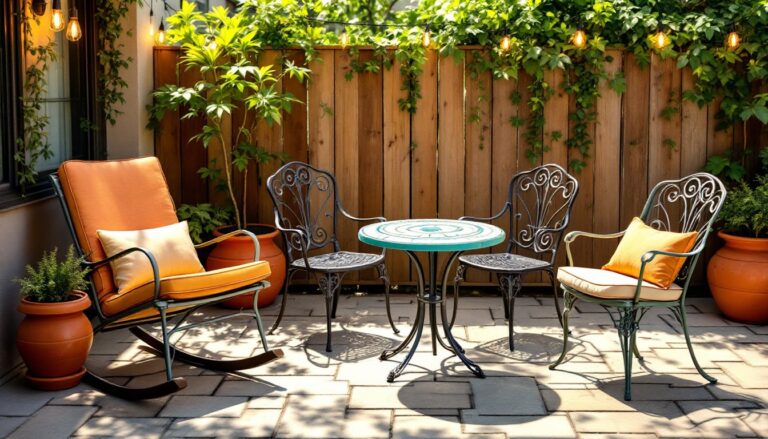
Bistro sets (small round table with two chairs) work well in tight spaces like balconies or courtyard patios. Metal bistro sets with perforated or mesh seats and backs are lightweight and stackable. They’re ideal for quick meals or morning coffee, less so for lingering.
Adirondack chairs have wide armrests and a reclined seat back, which makes them surprisingly comfortable even without cushions. The design originated in the early 1900s and hasn’t changed much because it works. Most are made from wood, poly lumber (recycled plastic), or composite materials. Poly lumber is low-maintenance but pricey: wood is cheaper but requires sealing.
Dining sets with slatted seats or contoured metal chairs handle family meals and gatherings. Choose a table with an umbrella hole if shade’s not already provided by a pergola or tree canopy. Contoured metal dining sets without cushions balance style with easy cleanup after spills.
Benches with backrests serve double duty as seating and visual anchors. Place them against a fence, under a window, or at the edge of a deck. A backrest adds support without cushions, and many models include a slight seat contour for comfort. Teak or eucalyptus benches age gracefully and can stay outside year-round.
Avoid overly ornate designs with tight crevices or complex metalwork. They’re harder to clean and collect leaves, pollen, and dirt. Simpler profiles mean less maintenance.
Maintenance Tips for Cushion-Free Outdoor Furniture
Low-maintenance doesn’t mean no maintenance. A little routine care keeps furniture looking good and extends its life.
For metal furniture:
- Hose it down monthly (or after heavy pollen or dust storms) to prevent buildup.
- Scrub with a soft brush and mild dish soap for stubborn grime. Avoid abrasive cleaners that scratch powder coating.
- Inspect for chips or scratches annually. Touch up bare spots with rust-inhibiting primer and matching paint to prevent corrosion.
- Store lightweight aluminum pieces during severe winter storms if possible, or cover them with breathable tarps (not plastic, which traps moisture).
For wood furniture:
- Clean with a soft brush, water, and a bit of dish soap or dedicated teak cleaner. Don’t use a pressure washer: it can splinter the surface.
- Let the wood dry completely before applying oil or sealant, usually 24–48 hours in dry conditions.
- Reseal annually if maintaining color, or let it weather naturally. Either approach is fine: weathering doesn’t harm the wood structurally.
- Sand any rough or splintered areas with 120-grit sandpaper, then wipe clean before resealing.
- Elevate furniture slightly off the ground (use furniture pads or pavers) to prevent the bottom from sitting in standing water.
General tips:
- Clear leaves, dirt, and debris regularly. Organic matter holds moisture and accelerates decay or corrosion.
- If furniture’s stored uncovered, place it in a spot with good drainage. Pooling water under legs leads to rust or rot.
- Use furniture covers in the off-season if desired, but make sure they’re breathable and secured so they don’t blow off or flap in the wind. Loose covers can scratch finishes.
These tasks take less than an hour per season, far less than dealing with cushion storage, washing, and replacement.
Making Cushionless Furniture Comfortable
Comfort doesn’t have to mean permanent cushions. There are ways to soften the seating experience without sacrificing the low-maintenance advantage.
Thin, removable seat pads offer a middle ground. Keep them inside when not in use, or choose quick-dry foam wrapped in outdoor fabric that can handle occasional rain. Store them in a deck box or mudroom when a storm rolls in. Look for pads with ties that secure them to the chair but are easy to remove.
Outdoor throw pillows (small, lumbar-sized) provide back support without covering the entire seat. They’re easy to grab and bring inside, and two or three pillows are far less bulk than full seat cushions. Skip decorative pillows with delicate fabrics: go for solution-dyed acrylic or polyester labeled for outdoor use.
Furniture design matters. Contoured seats and angled backs make a big difference. Flat, hard surfaces get uncomfortable fast. Before buying, sit in the furniture for a few minutes (not just a quick perch). If it feels tolerable at the store, it’ll likely be fine for a 20–30 minute meal or drink.
Strategic placement also helps. Position seating in partial shade to avoid scorching metal or overly warm wood. Use outdoor rugs underfoot to soften the overall feel and define the seating area, it’s a subtle comfort boost. For homeowners planning a full patio remodel, designing built-in shade structures can enhance comfort year-round.
Lap blankets or throws work for cooler evenings and add a cozy layer without permanent installation. Drape them over chair backs when not in use: they double as casual decor.
If hosting guests, keep a small stash of portable seat cushions in a nearby shed or storage bench. Offer them as needed, then stash them away afterward. That way, everyday maintenance stays simple, but longer gatherings don’t turn into endurance tests.
The key is flexibility. Cushionless doesn’t have to mean uncomfortable, it just means comfort is optional, portable, and on your terms.