



Table of Contents
ToggleMetal bedroom furniture has shifted from factory floors to high-end bedrooms, offering a blend of industrial aesthetics and genuine durability that’s hard to match with other materials. It’s not just about exposed rivets and cold surfaces, modern metal pieces deliver structural stability, design flexibility, and a lifespan that outlasts particleboard alternatives by decades. Whether someone’s drawn to minimalist steel frames or vintage brass-finished dressers, metal furniture brings both form and function without the chipboard headaches. This guide walks through the practical side of choosing, styling, and maintaining metal bedroom pieces that hold up under real use.
Key Takeaways
- Metal bedroom furniture offers superior durability and structural integrity, with properly constructed steel frames supporting 500–1,000 pounds without sagging or splintering over time.
- Modern metal finishes—from powder-coated steel to brushed nickel and antiqued brass—adapt to multiple design styles, including industrial lofts, farmhouse, and contemporary minimalist spaces.
- Choose 14-gauge steel or thicker for bed frames with welded construction, ball-bearing drawer slides rated 75+ pounds, and reinforced corner joints with gussets for long-term stability and safety.
- Layer metal bedroom furniture with textiles, reclaimed wood accents, and diffused lighting to soften industrial edges and prevent cold, flat design.
- Maintenance is straightforward: dust weekly, control humidity between 30–50%, tighten hardware every six months, and apply paste wax to raw steel twice yearly to prevent rust.
- Metal furniture is infinitely recyclable and doesn’t off-gas VOCs like particleboard, making it an eco-friendly, long-lasting investment for environmentally conscious homeowners.
Why Metal Bedroom Furniture Is Making a Comeback
Metal bedroom furniture has reclaimed its spot in modern homes for reasons beyond aesthetics. The primary draw is structural integrity, welded steel joints and solid iron frames don’t sag or splinter over time. A properly constructed metal bed frame can support 500 to 1,000 pounds depending on gauge and design, with no need for center support rails on queen sizes.
Durability translates to value. While solid wood pieces require refinishing and particleboard furniture rarely survives a move, powder-coated steel resists scratches, moisture, and the wear of daily use. Metal doesn’t off-gas volatile organic compounds (VOCs) like formaldehyde-laden composites, making it a cleaner option for enclosed sleeping spaces.
The comeback also stems from design versatility. Metal accepts finishes that mimic aged patina, brushed nickel, or matte black, options that complement industrial lofts, farmhouse bedrooms, and contemporary minimalist spaces. Unlike trends tied to specific wood stains or upholstery fabrics, metal finishes adapt as décor preferences shift.
Sustainability plays a role, too. Steel and aluminum are infinitely recyclable without quality loss, and many manufacturers now source recycled content for frames and hardware. For homeowners prioritizing longevity and environmental impact, metal furniture checks both boxes without compromise.
Types of Metal Bedroom Furniture to Consider
Metal Bed Frames and Headboards
Platform frames are the workhorses of metal beds, flat, slatted surfaces that eliminate the need for box springs. Look for 14-gauge steel or thicker: anything thinner flexes under weight and creates noise. Welded construction beats bolt-together designs for long-term rigidity.
Canopy frames add architectural height with four vertical posts. These require ceiling clearance of at least 8 feet for proportional appearance and typically use 1.5-inch square tubing for posts. Check that corner joints are reinforced with gussets or cross-bracing, tall frames without proper triangulation wobble.
Iron headboards (often actually steel with an iron finish) range from simple horizontal rails to ornate scrollwork. Verify that decorative elements are welded, not just spot-tacked: loose finials and spindles become safety hazards and noise sources. For adjustable beds, choose headboards with bolt-on brackets rather than frames that require specific mattress heights.
Modern metal bedroom furniture now incorporates sustainable materials and sleek profiles that work in tight urban spaces. Designers are pairing raw steel with reclaimed wood accents for warmth without bulk.
Dressers, Nightstands, and Storage Solutions
Metal dressers typically combine steel frames with wood or metal drawer boxes. The frame provides stability, but drawer quality determines usability. Look for ball-bearing slides rated for 75+ pounds: cheap friction slides stick and derail under moderate weight. Full-extension slides let users access the entire drawer, critical for deep units.
Locker-style storage brings industrial flavor with stacked metal compartments. These work well for folded clothes but lack the drawer-glide convenience for heavier items like jeans or sweaters. Ventilated doors prevent mustiness but aren’t ideal for dust-prone environments.
Wire shelving units with metal frames offer flexible bedroom storage, though they read more utilitarian than refined. Powder-coated finishes reduce snags on fabric. For finished looks, consider metal-framed units with wood or laminate drawer fronts that hide contents while maintaining the industrial aesthetic.
Nightstands in metal range from simple C-shaped cantilever designs to multi-drawer units. Pay attention to weight capacity, 15 to 25 pounds is standard for open shelves, but drawer units should handle more. Top surfaces should be at least 18 inches wide for a lamp, phone, and book without overcrowding.
How to Choose the Right Metal Finish for Your Bedroom
Finish selection impacts both appearance and maintenance. Powder coating is the most durable option, electrostatically applied and heat-cured for a chip-resistant surface. It’s available in matte, satin, and gloss, with matte hiding fingerprints best. Powder-coated steel resists rust in humid climates better than painted finishes.
Raw steel with clear coat shows authentic mill marks and slight color variation, which some see as character and others view as inconsistency. Clear coats wear over time, requiring reapplication every few years to prevent surface oxidation. This finish works for industrial or modern styles but looks unfinished in traditional settings.
Brushed or polished finishes on stainless steel, aluminum, or brass create reflective surfaces that brighten rooms but show every smudge. Polished brass tarnishes without regular care: lacquered brass delays tarnish but eventually needs professional refinishing. Brushed nickel offers a middle ground, less glare than polished, fewer visible fingerprints than matte.
Antiqued or distressed finishes apply dark wax or patina chemicals to simulate age. These hide dings and scratches that occur over time, making them practical for high-traffic bedrooms or homes with kids. The trade-off is less color consistency, every piece will vary slightly.
When mixing finishes, stick to warm metals (brass, bronze, copper) or cool metals (steel, chrome, nickel) within one room. Mixing temperatures rarely works unless one finish is a neutral like matte black. For small bedrooms, lighter finishes (white, pale gray, brushed aluminum) reflect light and reduce visual weight.
Styling Your Bedroom with Metal Furniture
Metal furniture reads cold without thoughtful layering. Start with textiles, linen duvet covers, wool throws, and layered rugs soften hard edges. Avoid matching metals exactly: a brass lamp next to a bronze bed frame adds depth, while identical finishes flatten the design.
Contrast with wood to add warmth. A reclaimed wood dresser top on a steel frame, or floating wood shelves above a metal bed, balances industrial and organic. Skip wood tones that are too red or orange with raw steel: stick to weathered grays, walnut, or ebonized finishes.
Managing the broader types of bedroom furniture helps create cohesive spaces, understanding how armoires, chests, and vanities work together prevents overcrowding.
Lighting matters more with metal than wood. Direct light on polished surfaces creates glare: use diffused or indirect lighting to prevent harsh reflections. Edison bulbs in metal cage fixtures reinforce industrial themes without overdoing it.
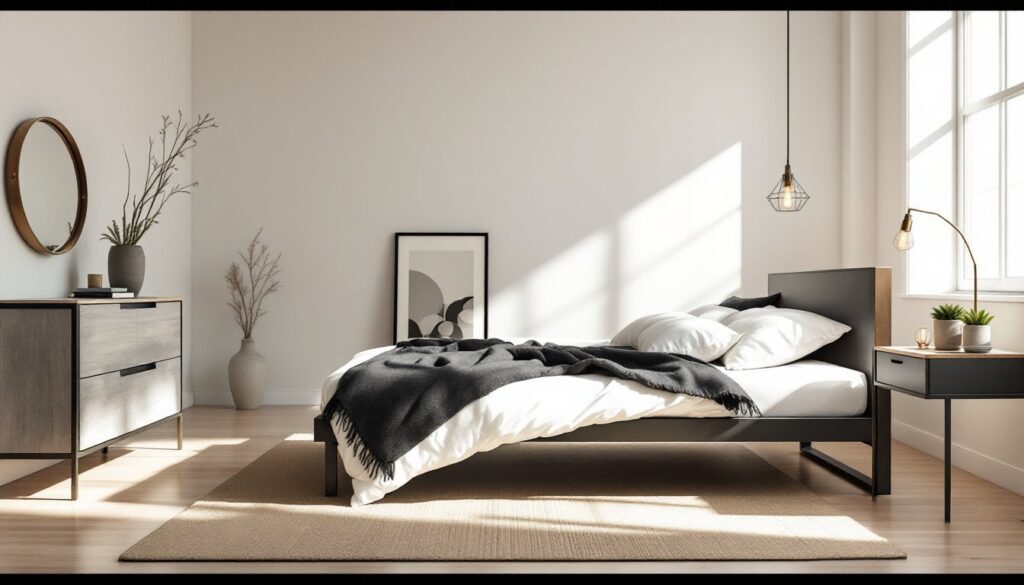
Scale is critical, metal frames often have thinner profiles than upholstered pieces, which can make them look spindly in large rooms. For high ceilings, choose taller headboards or canopy frames. In small bedrooms, low-profile platform beds and open-frame nightstands maintain sightlines without bulk.
Avoid overloading on metal accents. One statement piece, like a scrollwork headboard, should anchor the room, with smaller metal items (mirror frames, picture ledges) supporting rather than competing. Color introduces personality: design experts at Architectural Digest often pair neutral metal tones with bold bedding or accent walls to prevent monotony.
Maintenance and Care Tips for Metal Bedroom Pieces
Metal furniture is low-maintenance but not no-maintenance. Dust weekly with a microfiber cloth, grit acts like sandpaper on finishes. For powder-coated pieces, wipe spills immediately with a damp cloth and dry thoroughly. Avoid abrasive cleaners or scouring pads that scratch protective coatings.
Rust prevention starts with humidity control. Keep bedroom humidity between 30-50% using a dehumidifier in damp climates. For raw or lightly finished steel, apply paste wax (the kind used on cast iron tools) twice yearly to seal the surface. If surface rust appears, remove it with 0000 steel wool and mineral spirits before it spreads.
Tighten hardware every six months. Vibration from daily use loosens bolts on bed frames and drawer pulls. Use a hex key set for socket-head bolts and a screwdriver for Phillips or slotted screws. Don’t overtighten, metal threads strip more easily than wood.
For polished finishes like brass or chrome, use non-ammonia glass cleaner and buff with a soft cloth. Ammonia dulls protective lacquers over time. Tarnished brass can be restored with commercial brass polish, but test in an inconspicuous spot first, some antiqued finishes are intentional and shouldn’t be polished away.
Moving metal furniture requires care to prevent floor damage and bent components. Use furniture sliders or lift pieces entirely, dragging scrapes floors and tweaks joints. Disassemble bed frames before moving to avoid stressing weld points. Store hardware in labeled bags: replacement bolts for specialty frames are often hard to source.
For scratched powder coating, touch-up paint is available from manufacturers or auto supply stores in spray cans. Clean the area with denatured alcohol, apply thin coats, and let cure for 24 hours before use. Deep scratches on raw steel can be abraded with fine sandpaper, then sealed with wax or clear coat.
Inspect vintage or secondhand metal furniture for structural soundness before use. Check welds for cracks, test joints for play, and confirm that decorative elements are secure. If a piece wobbles even though tight hardware, the frame may be bent, don’t load it with weight until repairs are made by a metal fabricator.
Avoid placing metal furniture directly against exterior walls in cold climates, condensation forms where warm interior air meets cold metal, leading to rust and wall damage. Leave a 1-2 inch gap for air circulation, or use foam weatherstripping as a buffer.