

Table of Contents
ToggleWalk into any furniture showroom and you’ll find the same cookie-cutter beds, dressers, and nightstands as the store down the road. They fit most rooms, but they don’t fit your room, not the awkward corner under the sloped ceiling, not the 14-inch gap between the window and the closet, not the specific height you need to slide storage bins underneath.
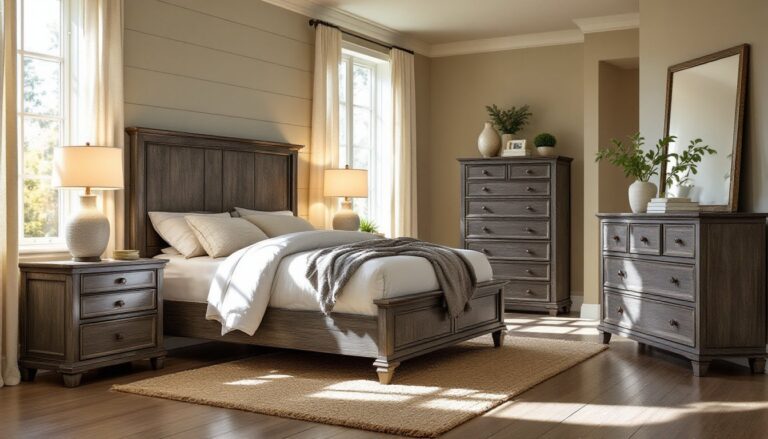
Custom bedroom furniture solves what mass production can’t: space utilization, personal style, and build quality tailored to how you actually live. Whether it’s a built-in wardrobe that maximizes a narrow wall or a bed frame sized for your vintage mattress, custom pieces make every square foot work harder.
Key Takeaways
- Custom bedroom furniture solves space efficiency problems that mass-produced pieces can’t address, maximizing every square foot in awkward layouts and non-standard room dimensions.
- Quality custom builds with solid hardwood and proper joinery last 30+ years, often matching the lifetime cost of multiple cheaper furniture replacements when factoring in disposal and reassembly hassles.
- Popular custom bedroom furniture pieces like built-in wardrobes and custom bed frames with integrated storage deliver the highest return on investment for transforming underused spaces.
- Accurate room measurements, careful layout planning, and realistic skill assessment are critical before starting a custom furniture project to avoid costly mistakes and wasted materials.
- DIY custom furniture projects require specific tools (table saw, track saw, pocket-hole jig) and 40+ hours for complex builds, making professional help worthwhile for intricate wardrobes or high-tolerance installations.
- Proper wood acclimation (48–72 hours), progressive sanding, and careful finish application prevent warping and surface failures, as most furniture problems stem from prep work rather than design flaws.
Why Choose Custom Bedroom Furniture Over Store-Bought Options
Space efficiency tops the list. Standard furniture assumes standard rooms, but homes rarely cooperate. A custom wardrobe can fit wall-to-wall in a 7-foot alcove, while a retail unit leaves unusable gaps or blocks outlets. Custom nightstands can match your exact bed height, eliminating the awkward reach for a phone charger.
Material control matters more than most DIYers realize. Big-box bedroom sets often use particleboard cores with veneer skins that chip at the first bump from a vacuum. Custom builds let you choose solid hardwood, plywood (¾-inch cabinet-grade), or MDF where appropriate. You control joinery too, dovetails and mortise-and-tenon joints outlast cam locks and dowels by decades.
Design flexibility extends beyond dimensions. Need a headboard with integrated reading lights and USB ports? Want a dresser depth of 16 inches instead of the standard 18 to preserve walking space? Custom work accommodates quirks like angled walls, radiator clearances, or matching existing trim profiles.
Long-term value often surprises people. Yes, custom furniture costs more upfront than flat-pack equivalents, but factor in replacement cycles. A well-built custom dresser might cost $1,200 and last 30 years: three $400 particleboard units over the same span cost $1,200 plus the hassle of disposal and reassembly. Quality joinery and finishes hold up to moves, humidity swings, and daily wear.
One honest downside: lead time. Custom projects take weeks or months from design to installation, while you can drive home with store-bought pieces today. Plan accordingly if you’re furnishing on a deadline.
Popular Custom Bedroom Furniture Pieces to Consider
Not every bedroom needs a full custom suite, but certain pieces deliver outsize returns on the investment.
Built-In Wardrobes and Closet Systems
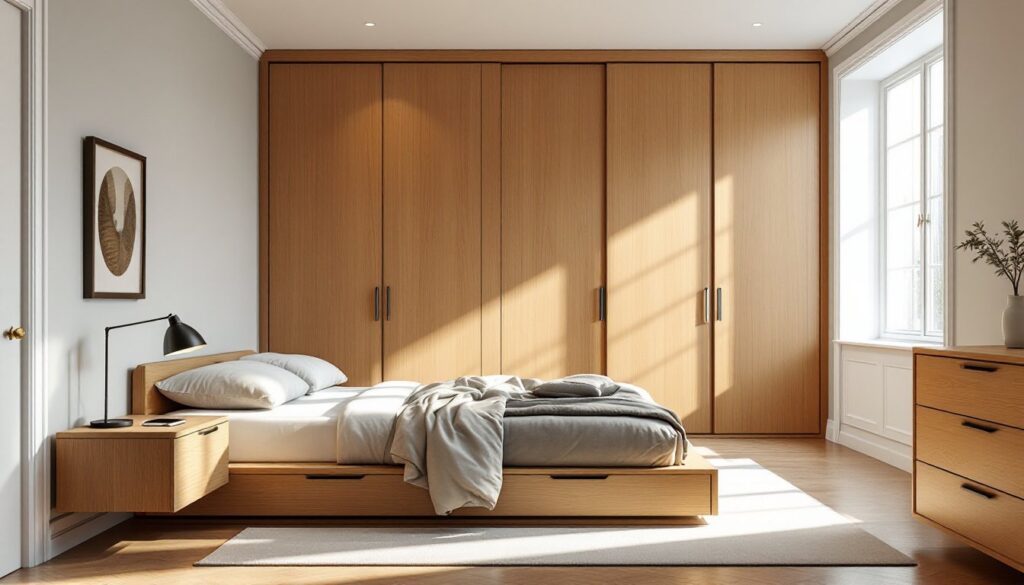
Built-in wardrobes turn wasted space into storage powerhouses. They’re especially valuable in older homes with shallow closets (24 inches deep or less) or rooms with awkward alcoves. A floor-to-ceiling unit maximizes vertical space that freestanding furniture can’t touch.
Construction typically uses ¾-inch plywood for the carcass, with adjustable shelving on standards and brackets or shelf pins. Face frames (1×2 or 1×3 solid wood) add rigidity and provide mounting for doors. Speaking of doors, choose hinged for full access or sliding to save floor space, just note that sliders only reveal half the opening at once.
Integrating closet organizers (hanging rods, pull-out racks, drawer inserts) during the build phase costs less than retrofitting later. Standard hanging rod height is 68 inches for long garments, 40 inches for shirts. Leave 2 inches of clearance between hanging clothes and the back wall to prevent mildew in humid climates.
One code note: built-ins become fixtures in most jurisdictions, which can affect home appraisals (usually positively) but means they stay with the house if you sell.
Custom Bed Frames and Headboards
A custom bed frame solves three common problems: non-standard mattress sizes, under-bed storage needs, and height preferences. Platform beds (solid surface, no box spring needed) work well for contemporary styles and simplify construction. If you’re building one, check out detailed plans from sources like Ana White’s platform bed guide, which covers multiple mattress dimensions.
Headboards range from simple upholstered panels (1×6 frame, foam, batting, fabric) to elaborate designs with integrated nightstands and lighting. If running electrical for reading lights or outlets, consult NEC Article 210 for bedroom receptacle requirements, you’ll likely need a licensed electrician to tie into existing circuits unless you’re comfortable pulling permits yourself.
Frame joinery matters for longevity. Use bed bolts (also called tite-joint fasteners) for connections that need periodic tightening, or pocket screws reinforced with wood glue for permanent assemblies. Avoid relying solely on metal corner brackets: they loosen with the racking forces from getting in and out of bed.
Storage bed frames with drawers or hydraulic lift mechanisms add 8–12 inches to mattress height. Measure carefully, a finished sleeping surface above 26 inches feels awkward for most people.
How to Plan Your Custom Bedroom Furniture Project
Start with accurate room dimensions. Measure wall lengths, ceiling height, door swing clearances, and window trim depths. Note outlet and switch locations, you don’t want a wardrobe blocking the only receptacle. Use a laser measure for speed, but verify with a tape for critical dimensions like alcove widths (drywall isn’t always plumb).
Sketch your layout on graph paper or use free tools like SketchUp. Include walking space: 36 inches minimum for primary pathways, 24 inches for side access to dressers or nightstands. Check drawer and door clearances in your drawing, a 20-inch-deep drawer needs 20+ inches of open floor space to pull out fully.
Material selection depends on the piece and your skill level. Hardwood plywood (birch, oak, maple) offers strength and stability for carcasses. Solid lumber works for face frames, drawer boxes, and visible components, but remember that a 2×4 stud measures 1.5 × 3.5 inches (nominal vs. actual), plan accordingly. MDF takes paint beautifully for painted finishes but lacks the screw-holding power of plywood in hinge and hardware locations.
Hardware and fasteners add up fast. Budget for hinges, drawer slides (side-mount vs. undermount), shelf pins, and finishing materials. Undermount drawer slides cost 3–4× more than side-mount but offer a cleaner look and full extension.
Create a cut list before buying materials. A full sheet of plywood is 4×8 feet (48×96 inches): plan cuts to minimize waste. Most home centers offer panel-cutting services for $1–2 per cut, worthwhile if you lack a table saw.
Finish planning matters more than many DIYers expect. Wood needs to acclimate to your home’s humidity for 48–72 hours before cutting to prevent warping post-assembly. Woodworking project resources often include finishing tips specific to different species and applications. Sand progressively (120, 150, 220 grit), remove dust between coats, and allow proper cure times, rushing finish work shows.
DIY vs. Professional Custom Furniture: Making the Right Choice
Skill-level honesty prevents expensive mistakes. If you’ve successfully built beginner furniture projects like bookcases or simple tables, a dresser or nightstand is a reasonable next step. But tackle a complex wardrobe with inset doors as your first project and you’re setting yourself up for frustration.
Tool requirements vary by project complexity. Basic case goods (dressers, nightstands) need a circular saw or miter saw, drill/driver, random-orbit sander, and assorted clamps. A table saw becomes essential for ripping sheet goods accurately. Wardrobes with face-frame construction benefit from a pocket-hole jig (Kreg makes the standard), while drawer boxes demand precise dado cuts, doable with a circular saw and straight edge but cleaner with a table saw and dado stack.
If you’re missing tools, rent before buying. A track saw rents for $40/day and cuts plywood more accurately than a $200 circular saw you’ll use twice.
Time commitment surprises most DIYers. A basic bed frame might take a dedicated weekend: a built-in wardrobe with doors and drawers can stretch to 40+ hours over several weeks. Factor in learning curves, mistakes, and the reality that you probably can’t work 8-hour days like a pro.
When to hire a professional: Built-ins that require cutting into walls, removing trim, or modifying electrical. Projects where measurements must be perfect (inset cabinet doors have 1/16-inch tolerances). Pieces that need specialty tools you’ll never use again (panel saw, edge bander, spray finishing setup). Work in historic homes where matching existing millwork profiles demands experience.
Cost comparison isn’t always clear-cut. A pro might charge $3,000–6,000 for a custom wardrobe that would cost you $1,200 in materials, but their version installs in two days instead of your three weekends, with zero wobble and perfect reveals. DIY saves money if your time is free and you have the tools already.
Hybrid approaches work well. Hire a cabinet shop to build carcasses to your specs, then install and finish them yourself. Or tackle the bed frame build yourself but hire an upholsterer for the headboard. Buying from local makers who offer unique furniture pieces gives you custom dimensions without full custom pricing.
One safety note: Always wear appropriate PPE, safety glasses when cutting, hearing protection for power tools, and a dust mask (N95 minimum) when sanding or working with MDF, which produces fine particles you don’t want in your lungs.
Conclusion
Custom bedroom furniture transforms underused square footage into storage and style that off-the-shelf options can’t match. Whether you’re building a platform bed yourself or hiring a pro for a wall-to-wall wardrobe, the key is accurate planning, honest assessment of your skills, and choosing materials that match the piece’s function and your budget. Measure twice, account for actual lumber dimensions, and don’t skip the prep work, most furniture failures start with rushed surface prep or poor acclimation, not design flaws.