
Table of Contents
ToggleWest Palm Beach delivers roughly 230 sunny days per year, but that Florida sunshine comes packaged with humidity, salt spray, and occasional hurricane-force winds. Choosing patio furniture here isn’t about aesthetics alone, it’s about selecting pieces that survive the climate without warping, corroding, or fading into oblivion by next season. The right materials and maintenance routine can mean the difference between replacing cushions every spring or enjoying the same setup for a decade. This guide walks through material science, local shopping options, and practical design strategies tailored to coastal South Florida’s unique demands.
Key Takeaways
- Patio furniture in West Palm Beach must withstand year-round UV exposure, salt air, and high humidity (74% average), making material selection crucial for durability beyond a single season.
- Powder-coated marine-grade aluminum, synthetic HDPE wicker, teak, and stainless steel hardware outperform standard big-box furniture and can last 8–10 years in coastal conditions.
- Solution-dyed acrylic cushions (like Sunbrella) paired with quick-dry foam resist mildew and fading better than polyester, while sling-style mesh seating eliminates moisture problems entirely.
- Local specialty retailers in West Palm Beach offer higher-end brands with lifetime warranties, though estate sales and consignment shops can yield vintage teak and wrought iron pieces at significant discounts.
- Monthly garden hose rinsing, twice-yearly hardware inspections, and proper cushion storage inside during rain protect investments and prevent rust, mildew, and material degradation.
- Shade solutions like retractable awnings, cantilever umbrellas, and adjustable pergolas paired with ceiling fans drop perceived temperatures by 8–10°F and extend daytime patio usability in intense Florida heat.
Why West Palm Beach Weather Demands Specific Patio Furniture
South Florida’s subtropical climate creates a three-front assault on outdoor furniture: constant UV exposure, high humidity (averaging 74% year-round), and salt air from the Atlantic. UV radiation breaks down molecular bonds in plastics and fabrics, causing brittleness and color fade. Humidity accelerates rust formation on ferrous metals and encourages mildew growth on textiles. Salt air? It’s corrosive even a mile inland, attacking metal hardware and oxidizing finishes.
Most big-box patio sets are engineered for Midwest summers, not year-round coastal exposure. That’s why a $400 steel-framed set from a national chain often shows rust spots within six months here, while a similar investment in marine-grade aluminum or synthetic wicker can last 8-10 years.
Wind load matters too. West Palm Beach sits in a hurricane zone, so furniture needs either enough weight to stay put during tropical storms or light enough to move quickly into storage. Avoid glass-top tables unless they’re tempered and you’re prepared to remove them seasonally. Consider tie-down straps or in-ground anchors for larger pieces if you’re not planning to shuffle everything into the garage come June.
Temperature swings aren’t extreme, but they’re frequent enough to cause expansion and contraction in lower-quality materials. Cheap resin can crack: poorly sealed wood can split. Plan for furniture that handles daily highs in the low 90s and evening lows in the 60s without degrading joinery or finish.
Best Materials for Patio Furniture in Coastal Florida
Weather-Resistant Options That Last
Powder-coated aluminum tops the list for frames. It’s lightweight, rust-proof, and holds color well under UV assault. Look for marine-grade or 6061 aluminum alloy, it’s what boat builders use. Avoid raw or anodized aluminum unless you enjoy constant polishing: salt pits the surface.
All-weather wicker (synthetic resin wicker) mimics natural rattan but uses high-density polyethylene (HDPE) strands woven over aluminum frames. Quality varies wildly. Check that the weave is tight and UV-stabilized: cheaper versions turn brittle and crack within two seasons. Brands using virgin HDPE (not recycled) typically last longer.
Teak remains the gold standard for wood, thanks to natural oils that repel water and resist rot. It weathers to a silver-gray patina unless sealed annually. Expect to pay $800+ for a solid teak dining chair. Eucalyptus offers similar density at half the cost but requires more frequent sealing. Skip pine, cedar, or pressure-treated lumber, they’re not dense enough for the humidity here and will warp or splinter.
Stainless steel hardware is non-negotiable. Even on aluminum or resin frames, if the bolts and brackets are mild steel, you’ll see rust streaks within months. Look for 316-grade stainless (marine-grade) on any metal fasteners.
For cushions and fabric, solution-dyed acrylic (Sunbrella is the household name) resists fading and mildew better than polyester. The dye permeates the fiber during manufacturing rather than being applied as a coating, so color won’t wash out. Pair it with quick-dry foam cores, standard polyurethane foam holds moisture and breeds mold in this climate. Some homeowners skip cushions entirely and opt for sling-style seating (mesh suspended on frames), which dries in minutes and never mildews.
Where to Buy Patio Furniture in West Palm Beach
Local showrooms let you test frames for wobble and inspect welds before buying, something online photos can’t reveal. Top-rated patio specialists in West Palm Beach often stock brands engineered for coastal exposure and offer white-glove delivery with assembly.
Big-box stores (Home Depot on Belvedere, Lowe’s on Forest Hill) carry budget-friendly sets in the $300–$800 range. Quality is hit-or-miss: examine welds and joints closely. Their clearance events in late August can yield decent deals on overstock, but selection narrows fast.
Specialty outdoor retailers like Patio & Things (off Okeechobee) or Casual Living (Military Trail) stock higher-end lines, Tropitone, Brown Jordan, Kingsley Bate, with lifetime frame warranties. Expect to spend $1,200+ for a four-piece seating set, but these pieces are built for Florida.
Online options work if you know exactly what material specs you need. Wayfair and Overstock ship here, but return logistics for damaged freight can be a headache. If ordering online, confirm the aluminum alloy grade and hardware type before checkout. Read reviews specifically mentioning Florida or coastal use.
Estate sales and consignment (check the West Palm Beach estate sale groups on social media) sometimes turn up older teak or wrought iron pieces at a fraction of retail. Vintage wrought iron can be sandblasted and powder-coated for a second life, budget around $150–$200 per piece for professional refinishing.
Designing Your Outdoor Space for Year-Round Comfort
Shade Solutions and Layout Tips
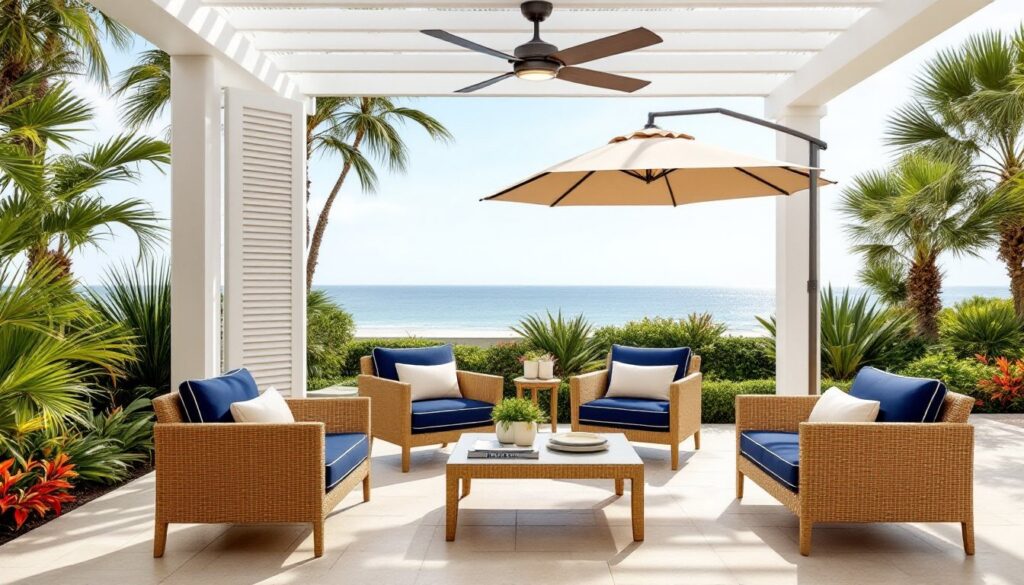
Full-sun patios in South Florida are usable for about 90 minutes per day in summer before the heat index becomes oppressive. Retractable awnings or cantilever umbrellas (9–11 ft span) provide flexible shade without permanent construction. Look for UV-blocking fabric rated SPF 50+. Manual crank mechanisms are simpler and more reliable than motorized versions in salt air.
Pergolas with adjustable louvers offer airflow while blocking direct sun. Paired with outdoor ceiling fans (rated for damp locations per NEC Article 410), they drop the perceived temperature by 8–10°F. If building a pergola, use pressure-treated posts set in concrete footings below the frost line (not applicable here, but code requires 12-inch depth minimum) and galvanized joist hangers. Paint or stain all cuts and drilled holes to seal end grain.
Layout should account for prevailing easterly breezes. Position seating to catch afternoon airflow: avoid blocking it with tall planters or privacy screens. Leave 24–30 inches of clearance around dining tables for chair pullout, same as indoor dining.
Mosquito control isn’t furniture, but it’s non-negotiable for evening use. Ceiling fans help (mosquitoes are weak fliers), as do citronella torches or thermacell devices. Some homeowners install misting systems along pergola beams: these require a dedicated water line and pump.
Consider traffic flow from house to pool or grill. Wet feet and slippery pavers are a liability. Furniture with rounded edges reduces shin-banging incidents in tight spaces. If the patio doubles as a hurricane staging area, keep one corner clear for plywood and shutters.
Maintenance Tips to Protect Your Investment
Even weather-resistant materials need upkeep. Monthly rinsing with a garden hose removes salt residue and pollen before they etch finishes. For aluminum and resin wicker, use mild dish soap and a soft brush, skip abrasive pads that scratch protective coatings.
Teak and eucalyptus can be left to weather naturally or maintained with annual applications of teak oil or sealer. If keeping the original honey tone, clean with teak cleaner (oxalic acid-based) before resealing. Wear nitrile gloves and eye protection: oxalic acid is a skin irritant.
Cushions should come inside during heavy rain or be stored in a deck box with ventilation holes. Even Sunbrella mildews if stored wet. Wash covers in cold water with mild detergent: skip bleach, which degrades UV inhibitors. Hang dry, dryers can shrink fabric and warp zippers.
Hardware inspection twice a year catches problems early. Tighten loose bolts, replace any fasteners showing rust (even surface rust spreads under coastal conditions), and lubricate moving parts (umbrella cranks, recliner mechanisms) with silicone spray, not WD-40, which attracts dust.
Off-season storage isn’t necessary here, but if you’re leaving for summer, cover furniture with breathable covers (not plastic tarps, which trap moisture). For those hunting budget-friendly upgrades, end-of-season sales offer opportunities to refresh pieces before the next cycle. If you’ve got existing indoor-outdoor furniture that’s migrating outside, apply a UV-protectant spray before the first patio season to extend its life.
Check umbrella fabric annually for tears or fraying along seams, small rips become large sails in tropical storms. Replace before hurricane season starts in June.