


Table of Contents
ToggleFurnishing a living room on a tight budget doesn’t mean sacrificing style or comfort. With smart shopping strategies and a clear understanding of what separates a good deal from a regret purchase, homeowners can create inviting spaces without draining their wallets. The furniture market in 2026 offers more options than ever for budget-conscious buyers, from versatile sectionals to classic sofa-loveseat pairings. This guide walks through the essentials of finding, evaluating, and styling affordable living room furniture sets that hold up over time.
Key Takeaways
- Cheap living room furniture sets with kiln-dried hardwood frames, tight-weave fabrics rated above 15,000 double rubs, and high-density foam cushions will last significantly longer than ultra-budget alternatives.
- Sofa-loveseat combinations and three-piece L-shaped sectionals offer the best value for budget shoppers, typically ranging from $500–$1,500 and accommodating 4–6 people comfortably.
- Big-box retailers, discount furniture chains, and online-only platforms like Wayfair and Overstock offer the most competitive pricing, especially during holiday sales and clearance events.
- Transform affordable furniture with affordable upgrades like mid-century style legs ($40–$80), coordinated throw pillows, and proper lighting in the 2700K–3000K range to create a designer appearance.
- Measure your room with painter’s tape before purchasing, verify return policies and warranty coverage, and prioritize frame quality and fabric durability over initial price to avoid costly replacement cycles.
What to Look for When Shopping for Affordable Living Room Sets
Frame construction determines longevity. Look for kiln-dried hardwood or engineered wood frames with corner blocks and doweled joints. Avoid frames made entirely of particleboard or plastic connectors, they’ll wobble within months. Sit on the furniture in-store if possible: the frame shouldn’t creak or flex noticeably under your weight.
Upholstery fabric matters just as much as frame quality. Polyester blends with a tight weave resist pilling and clean easier than loosely woven fabrics. Check the rub count (also called double rubs or Martindale cycles), anything above 15,000 double rubs handles moderate daily use. Leather alternatives like polyurethane (PU) or bonded leather are cheaper upfront but tend to peel after 2-3 years in high-contact areas.
Cushion fill impacts both comfort and durability. High-density foam (1.8 lbs/cubic foot or higher) maintains shape better than low-density foam or polyester fiberfill alone. Many budget sets use a foam core wrapped in polyester batting, a decent middle ground that provides initial softness without complete collapse. Avoid cushions that feel rock-hard or collapse completely when you sit: neither will age well.
Dimensions and scale are often overlooked. Measure your room’s usable floor space before shopping, leave at least 18 inches between the sofa and coffee table for foot traffic, and ensure the furniture doesn’t block doorways or HVAC vents. A 78-inch sofa might look perfect online but overwhelm a 12×14-foot room. Many retailers list actual dimensions, but verify by measuring the floor space with painter’s tape at home.
Best Types of Budget-Friendly Living Room Furniture Sets
Sofa and Loveseat Combinations
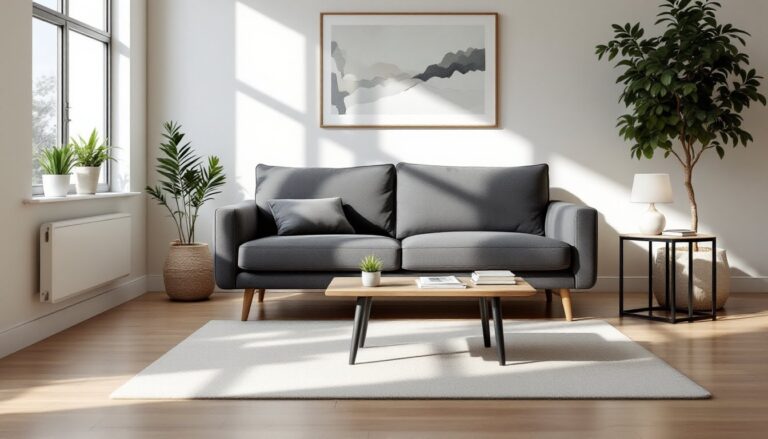
The traditional sofa-loveseat pair remains the most versatile layout for rectangular living rooms. This setup typically seats four to five people comfortably and allows flexible placement, sofa against the longest wall, loveseat perpendicular or angled for conversation. Budget sets in this category range from $500 to $1,200, depending on fabric and frame construction.
Look for sets with removable seat cushions, they’re easier to flip and rotate to distribute wear evenly. Some affordable lines offer matching accent chairs sold separately, which lets homeowners expand seating later without mismatched styles. When comparing affordable furniture options, prioritize models with track arms or English roll arms: they hold up better structurally than pillow-top arms, which tend to flatten and look saggy within a year.
Sofa-loveseat combinations work well in homes where seating needs fluctuate. The smaller loveseat can be moved to a home office or bedroom if space requirements change, making it a practical choice for renters or first-time homeowners who may relocate.
Sectional Sofa Sets
Sectionals offer maximum seating in a compact footprint, ideal for square rooms or open-concept spaces. Budget sectionals typically come in two configurations: L-shaped (three-piece) or U-shaped (four to five pieces). Three-piece L-shaped sectionals usually include a sofa, corner wedge, and chaise, seating five to six people without requiring multiple furniture pieces.
Modular sectionals with reversible chaise lounges provide layout flexibility, the chaise can swap sides if you move or rearrange. Check whether the pieces connect via clips, hooks, or simply rest against each other. Metal or plastic interlocking brackets are more secure than friction-only designs, which tend to slide apart on hardwood or tile floors.
Sectionals sold as complete sets usually cost less than buying individual modular pieces. Expect to spend $600 to $1,500 for a budget three-piece sectional with polyester upholstery and engineered wood framing. Brands using budget-friendly construction methods often feature drop-in seat cushions rather than attached backs, making eventual reupholstering easier if the fabric wears out before the frame does.
One trade-off: sectionals are harder to move through narrow doorways or up stairs. Measure doorways, hallways, and stairwell turns before ordering. Most sectionals ship in separate boxes, but the individual pieces can still be bulky.
Where to Find the Best Deals on Living Room Furniture Sets
Big-box retailers like IKEA, Walmart, and Target stock budget-friendly sets year-round, with steeper discounts during holiday sales (Memorial Day, Labor Day, Black Friday). IKEA’s flat-pack furniture requires assembly, but their frames use solid pine and particleboard combinations that hold up well if assembled correctly. Some enthusiasts even modify IKEA pieces using creative hacks to customize finishes and functionality.
Online-only retailers such as Wayfair, Overstock, and Amazon offer competitive pricing due to lower overhead costs. Filter search results by customer reviews with photos, real-world images reveal how fabric actually looks under household lighting and whether cushions maintain their shape. Watch shipping costs: a $600 sectional with $300 shipping isn’t a bargain. Many online retailers offer free shipping thresholds or periodic promotional codes.
Discount furniture chains (Big Lots, Bob’s Discount Furniture, American Freight) specialize in overstock, floor models, and closeout inventory. These stores often negotiate bulk purchases from manufacturers, passing savings along. Inspect floor models carefully, frame integrity matters more than cosmetic scuffs, which can be touched up. Ask whether the warranty applies to clearance items: some exclude floor models or as-is purchases.
Local classifieds and estate sales yield solid-wood vintage pieces at a fraction of retail pricing. Mid-century modern sofas and loveseats from the 1960s-70s often feature hardwood frames and sturdy joinery that outlasts modern budget furniture. Plan to reupholster or deep-clean secondhand pieces: factor an additional $200-$400 per seat for professional upholstery work. Facebook Marketplace, Craigslist, and estate sale aggregators like EstateSales.net are good starting points.
Outlet stores and factory seconds from established manufacturers sell items with minor cosmetic defects (fabric dye variations, small scratches) at 30-50% off. These pieces carry the same structural quality as first-run inventory. Outlets for brands like Ashley Furniture or Rooms To Go occasionally stock perfectly functional pieces that simply didn’t meet color-matching standards for retail showrooms.
How to Make Cheap Furniture Look Expensive
Legs and hardware upgrades transform generic pieces instantly. Swap out plastic or short wooden legs for tapered mid-century style legs (typically 6-8 inches tall) in walnut or brass finishes. These screw into standard T-nut inserts found on most sofas and chairs. Hardware stores stock furniture legs, or order from specialty retailers like Tablelegsonline.com or Waddell Manufacturing. Budget $40-$80 for a set of four quality legs.
Throw pillows and textured blankets add visual interest without permanent changes. Layer pillows in varying sizes, combine 20-inch, 18-inch, and lumbar pillows in complementary colors and textures (linen, velvet, woven cotton). Stick to two or three coordinating colors rather than mixing too many patterns. Design-focused communities often share seasonal pillow pairings and color schemes that work across different furniture styles.
Slipcovers offer a quick refresh for dated upholstery without reupholstering costs. Measure seat depth, arm height, and overall width before ordering: poorly fitted slipcovers look worse than the original fabric. Stretch slipcovers in jersey-knit fabrics conform better to budget furniture with non-standard dimensions. Heavier twill or canvas slipcovers provide a more tailored look but require precise measurements.
Area rugs anchor furniture groupings and add a layer of intentional design. A rug should extend at least 6-12 inches beyond the front legs of the sofa and chairs, visually tying the seating area together. Budget-friendly options include flatweave cotton rugs, jute, or low-pile synthetics. Avoid tiny rugs that only sit under the coffee table, they make the furniture look disconnected and floating.
Proper lighting reduces the “showroom floor” look of new budget furniture. Position a floor lamp or table lamp to create warm pools of light rather than relying solely on overhead fixtures. LED bulbs in the 2700K-3000K range (soft white) mimic incandescent warmth and make fabrics look richer. Task lighting also draws the eye to styled vignettes instead of scrutinizing upholstery seams.
Common Mistakes to Avoid When Buying Budget Furniture Sets
Skipping in-person testing leads to comfort regrets. Seat depth, back support, and arm height are impossible to judge from photos. If buying online, verify the return policy, some retailers charge restocking fees up to 25% for large furniture returns, plus return shipping costs that can exceed $200. Order from retailers offering free returns or local pickup options when possible.
Ignoring assembly requirements causes frustration and potential damage. Read product descriptions carefully, “ships in multiple boxes, assembly required” often means 2-4 hours of work with basic tools. Some budget sets require two people for assembly, especially sectionals with heavy chaise sections. Missing hardware or unclear instructions are common complaints for ultra-budget imports: check recent reviews for mentions of assembly issues before buying.
Focusing solely on initial price overlooks total cost of ownership. A $400 sofa that needs replacing in two years costs more than a $700 model that lasts six. Compare warranties, reputable budget brands offer at least a one-year frame warranty and 90-day fabric/cushion coverage. Avoid retailers that offer no warranty or “as-is only” terms on new furniture. Stories from DIY renovation projects frequently highlight the false economy of replacing cheap furniture repeatedly versus investing slightly more upfront.
Buying sets that don’t fit the lifestyle creates long-term dissatisfaction. Light-colored fabrics and low-pile upholstery show stains and pet hair immediately: households with kids or pets should opt for darker, tightly woven fabrics or performance fabrics treated with stain resistance. Open-weave linens and chenille look elegant but snag easily. Match the furniture’s maintenance requirements to realistic cleaning habits.
Neglecting scale and proportion results in awkward room layouts. Oversized sectionals make small rooms feel cramped, while petite loveseats look lost in large spaces. Use painter’s tape or cardboard to mock up furniture footprints on the floor before ordering. Account for reclining clearance if choosing recliners or motion furniture, most require 12-18 inches of wall clearance when fully extended. Verify door widths, especially for apartments or older homes with narrow entries: standard doors are 32-36 inches, but some furniture pieces exceed that when boxed.