

Table of Contents
ToggleLas Vegas isn’t just tough on tourists, it’s brutal on patio furniture. With summer temps pushing 115°F, UV radiation that could strip paint off a car, and humidity levels hovering near zero, outdoor furnishings face a test of endurance that would make most materials tap out by Labor Day. Choosing the wrong pieces means watching cushions fade to unrecognizable shades, metal frames hot enough to brand cattle, and wood that cracks like the Mojave floor. This guide cuts through the marketing fluff to show homeowners exactly what materials hold up, where to shop locally, and how to maintain a backyard setup that doesn’t surrender to the desert.
Key Takeaways
- Patio furniture in Las Vegas must withstand extreme UV radiation, temperatures exceeding 115°F, and seasonal wind gusts of 30-40 mph, making material selection critical for durability.
- Powder-coated aluminum and high-density polyethylene (HDPE) resin wicker are the most reliable materials for patio furniture in Vegas, while natural wood and wrought iron require constant maintenance or fail quickly.
- Solution-dyed acrylic fabrics like Sunbrella with fade-resistance ratings of 1,500+ hours, combined with quick-drying foam fill, ensure cushions resist sun bleaching and moisture damage.
- Shade structures, UV-blocking covers, and seasonal cushion storage can double the lifespan of patio furniture by reducing direct UV exposure and heat absorption.
- Local Las Vegas retailers like Patio World and RC Willey understand desert climate demands better than national chains, offering appropriate inventory and warranty support for outdoor pieces.
- Clean furniture every 4-6 weeks using mild soap and thoroughly rinse to prevent mineral deposits, and anchor lightweight pieces during monsoon season to prevent wind damage and loss.
Why Las Vegas Weather Demands Special Patio Furniture Considerations
The Las Vegas Valley sits at roughly 2,000 feet elevation in the Mojave Desert, creating a perfect storm of furniture-destroying conditions. Summer daytime highs routinely exceed 105°F from June through September, with occasional spikes into the mid-teens. But raw temperature tells only part of the story.
UV radiation in the desert Southwest measures significantly higher than coastal or forested regions, the lack of atmospheric moisture and tree canopy means fewer particles to scatter or absorb those rays. Fabrics fade at accelerated rates, and plastics become brittle. Standard outdoor cushions rated for “full sun” in Connecticut might last three seasons: in Vegas, they’re sun-bleached and cracking by year two.
Then there’s the thermal mass problem. Dark metal frames can reach surface temps of 180°F or higher in direct afternoon sun, hot enough to cause second-degree burns on contact. Even lighter-colored materials absorb enough heat to stay uncomfortably warm well into the evening. Stone, concrete, and tile patios radiate stored heat upward for hours after sunset, meaning your furniture is baking from below even when the sun drops behind Red Rock Canyon.
Wind and dust add another layer. Spring winds routinely gust 30–40 mph, turning lightweight chairs into projectiles and scouring finishes with airborne grit. Monsoon season (July–August) brings brief but violent thunderstorms with microbursts that can flip tables. Any furniture that isn’t either heavy or secured will relocate itself, or end up in the neighbor’s pool.
Standard patio furniture sold at big-box retailers nationwide often isn’t engineered for these extremes. Materials that work fine in Ohio or Oregon fail prematurely here. That’s not a defect, it’s physics.
Best Materials for Patio Furniture in the Las Vegas Desert Climate
Not all “outdoor” materials are created equal. What holds up in Vegas won’t just survive, it’ll look decent after five summers of abuse.
Aluminum and Powder-Coated Metal Options
Aluminum checks nearly every box for desert durability. It doesn’t rust (no oxidation issues like steel), stays relatively cool compared to darker metals (though it still gets hot, don’t sit on it bare-legged at 3 PM), and weighs enough to resist wind without requiring a forklift to rearrange.
Look for powder-coated aluminum rather than painted finishes. Powder coating bonds at the molecular level during a heat-curing process, creating a finish far more resistant to UV degradation and chipping than liquid paint. Quality powder coats should carry a warranty of at least five years against fading and peeling, anything less is a red flag.
Avoid wrought iron or steel unless you’re committed to annual maintenance. Steel rusts when exposed to monsoon moisture, and even “rust-resistant” finishes eventually fail. Wrought iron is heavy enough for wind resistance, but maintaining it in the desert is a losing battle.
Stainless steel works but comes with trade-offs. It won’t corrode, but it gets uncomfortably hot and shows every fingerprint and water spot, a cosmetic headache when you’re dealing with hard water. Reserve stainless for accents or modern designs where the aesthetic justifies the inconvenience.
Synthetic Wicker and All-Weather Resin
High-density polyethylene (HDPE) resin wicker has become the go-to for Vegas patios, and for good reason. Quality synthetic wicker resists UV fading, doesn’t absorb moisture, and won’t crack or splinter like natural rattan. The key word is quality, cheap resin wicker uses thinner strands and lower-grade polymer that becomes brittle within two seasons.
Check the strand thickness (at least 2mm for longevity) and whether the manufacturer specifies UV inhibitors in the resin formula. High-end brands often list this in product specs: budget lines skip it entirely. When comparing outdoor furniture options, strand density and weave tightness are reliable indicators of durability.
Marine-grade polymer furniture (the stuff used on yachts and commercial pool decks) represents the top tier. It costs more upfront but tolerates salt, chlorine, UV, and temperature extremes without fading or warping. Brands like Polywood use recycled HDPE lumber that mimics wood grain without the maintenance, no staining, sealing, or sanding required.
Avoid natural wicker, rattan, or woven grass materials. They look great in catalog photos but dry out and disintegrate in low-humidity environments. Same goes for untreated wood, unless you’re prepared to apply UV-protective sealant every 6–12 months, skip it. Teak and eucalyptus hardwoods fare better than pine or cedar, but even premium hardwoods require consistent upkeep in desert conditions.
Fabric and cushions deserve special attention. Look for solution-dyed acrylic fabrics (Sunbrella is the household name, but other brands offer equivalent specs). Solution-dyeing means color is integrated into the fiber during manufacturing, not applied as a coating, so it won’t fade even after years of UV exposure. Check for fade resistance ratings of 1,500+ hours in ASTM testing. Fill should be quick-drying foam or polyester that doesn’t retain moisture from unexpected rain or pool splashes.
Where to Buy Patio Furniture in Las Vegas
Local retailers in Vegas understand the climate demands, their inventory skews toward materials that actually survive here.
Patio World (multiple valley locations) specializes in desert-appropriate outdoor furniture with a heavy emphasis on aluminum and resin wicker. Staff can usually speak to specific UV and wind resistance because they field warranty claims when products fail. Expect mid-to-upper pricing, but you’re paying for curation and local service.
RC Willey (South Las Vegas and Henderson) carries a broad range, from budget sets to higher-end collections. Their advantage is floor space, you can physically test dozens of configurations in one trip. Look for their clearance sections in late September when they’re rotating inventory for fall: that’s when clearance pricing can drop quality pieces by 30–40%.
Living Spaces (multiple valley locations) offers contemporary styling with decent pricing on sectionals and modular sets. Their inventory leans modern and minimalist, great if you’re staging a complete patio remodel with clean lines. Delivery and assembly services are competitively priced.
For budget-conscious shoppers, Costco and Sam’s Club rotate patio inventory seasonally (March through June, typically). Their selection is limited, but what they carry often includes Sunbrella cushions and powder-coated frames at aggressive price points. Kirkland Signature outdoor sets have earned a reputation for lasting multiple seasons without major issues.
HomeGoods and TJ Maxx occasionally stock patio furniture (usually May–July) at steep discounts, but it’s hit or miss. If you spot quality materials at 50% off retail, grab it. Don’t expect consistency or the ability to buy matching pieces later.
Online options like Wayfair, Amazon, and Overstock offer broader selection and competitive pricing, but buy carefully. Read reviews from other Vegas or Arizona buyers specifically, furniture that performs well in the Midwest may not translate. And factor in shipping costs: bulky outdoor sets often carry hefty freight fees that negate advertised savings. When shopping online, understanding material quality standards helps filter out products that won’t last a single summer.
Protecting and Maintaining Your Patio Furniture in Extreme Heat
Even the toughest materials need help. A few proactive steps can double the lifespan of your investment.
Shade structures are non-negotiable if you want furniture to last. A pergola with UV-blocking shade cloth (look for fabrics rated at least 90% UV block) or a retractable awning drops surface temperatures by 20–30°F and shields cushions from direct radiation. Even a large cantilever umbrella makes a difference, but secure it properly. Wind will turn an unsecured umbrella into a spear.
Furniture covers work, but only if used correctly. Choose covers made from breathable, UV-resistant fabric (not cheap vinyl, which traps heat and moisture). Covering furniture during the hottest months (June–August) when you’re not using it daily prevents the worst UV damage. Don’t cover wet furniture, trapped moisture encourages mildew even in the desert.
Cushion storage is the single best way to extend fabric life. Bring cushions inside or store them in a deck box when not in use. Yes, it’s a hassle. Do it anyway. Even Sunbrella fabric lasts longer when it’s not baking 12 hours a day.
Clean furniture every 4–6 weeks during active months. Use mild soap (dish detergent works fine), a soft brush, and a hose. Rinse thoroughly, Vegas tap water is notoriously hard, and mineral deposits will leave white crust if allowed to dry on frames. For stubborn stains or mildew on cushions, a solution of 1 cup bleach per gallon of water does the job: rinse multiple times and air-dry completely.
Re-seal wood annually if you’re using teak or other hardwoods. Apply a UV-protective sealant in early spring before temps spike. Sand lightly (120-grit) to remove weathered surface material, wipe clean, and apply two coats. Skip this step and you’ll have silvered, splitting wood by year three.
Check hardware and joints at the start of each season. Screws and bolts loosen with temperature cycling and wind vibration. A quick once-over with a socket set prevents wobbly chairs from becoming broken chairs.
Finally, anchor lightweight pieces during monsoon season or when leaving town. Even a 40-pound chair will slide across a patio in a 50 mph gust. Furniture straps, bungee tie-downs, or simply stacking and securing pieces in a corner prevents damage, and keeps your furniture out of the neighbor’s yard.
Design Tips for Creating a Stylish Desert Oasis
Durability doesn’t mean sacrificing style. Desert-appropriate design can look sharp without the “survivalist chic” vibe.
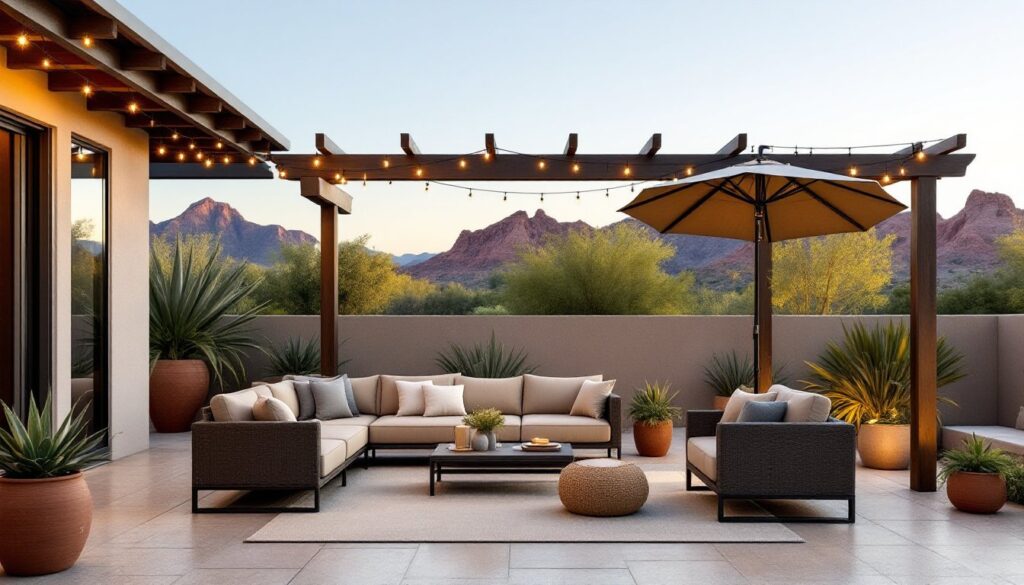
Embrace neutral tones with texture. Taupe, sand, charcoal, and warm grays complement desert landscapes and hide dust better than stark white or black (which also absorbs more heat). Layer in texture through woven materials, ribbed cushions, or mixed-metal accents. When planning outdoor furniture layouts, textural contrast adds visual interest without requiring high-maintenance materials.
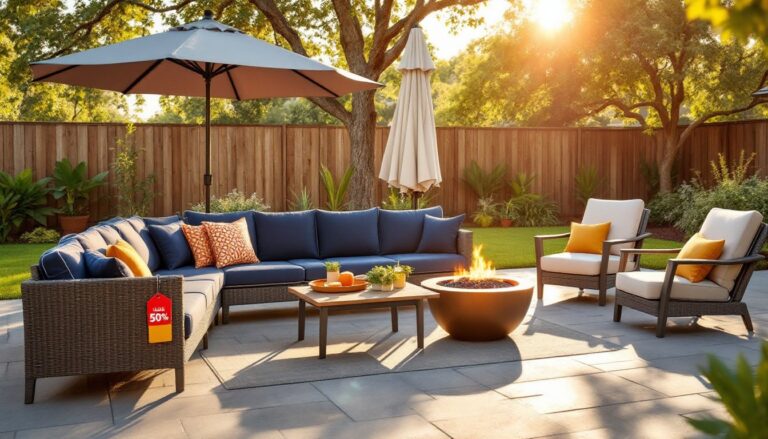
Go modular. Sectional sets with movable components let you reconfigure for different uses, intimate conversation, large gatherings, or lounging. Modular pieces also make it easier to move sections into shade as the sun shifts.
Add shade-loving greenery for softness. Potted plants like sago palms, agave, or desert spoon thrive in Vegas heat and provide sculptural elements that complement modern furniture. Position larger pots to create windbreaks or define seating zones.
Layer lighting for evening usability. String lights, lanterns, or low-voltage LED path lights extend patio hours into cooler night temps. Solar-powered options save on electrical work and hold up well in high-sun environments, just clean panels monthly to maintain efficiency.
Outdoor rugs define spaces and add comfort underfoot, but choose wisely. Polypropylene rugs resist fading and moisture better than natural fibers. Secure edges with rug tape or non-slip pads, wind will flip unsecured rugs like pages in a book.
Invest in a misting system if budget allows. Roof-mounted or freestanding misters drop ambient temps by 15–20°F through evaporative cooling and make daytime patio use tolerable even in July. DIY kits run $150–$300 and connect to standard hose bibs: professional installations with timers and multi-zone control start around $1,000.
Match scale to space. Oversized sectionals look great in showrooms but overwhelm small patios and block pathways. Measure your usable patio area (accounting for door swings and traffic flow) before shopping. A good rule: leave at least 24–30 inches of clearance around seating for comfortable movement.
Finally, don’t over-furnish. Desert design benefits from breathing room and clean sightlines. A few well-chosen, durable pieces look better, and last longer, than a crowded patio crammed with furniture that won’t survive two seasons. Focus on quality over quantity, and let the desert landscape do some of the aesthetic heavy lifting.