

Table of Contents
ToggleA quality patio umbrella is often the difference between a scorching afternoon and a comfortable outdoor gathering. It protects furniture from sun damage, keeps guests cool, and extends the usable hours of a deck or patio. But walk into any home improvement store and you’ll face dozens of options, different sizes, mechanisms, fabrics, and price points. This guide cuts through the noise. It covers umbrella types, sizing, materials, and the installation details that keep umbrellas standing through summer storms instead of ending up in a neighbor’s yard.
Key Takeaways
- A quality patio umbrella protects outdoor furniture from UV damage, reduces temperature by 10–15°F, and lasts five to ten years compared to budget models that need annual replacement.
- Market umbrellas with center poles work best for dining tables with umbrella holes, while cantilever (offset) umbrellas provide flexible shade for lounge seating and furniture arrangements without intrusive poles.
- Size your patio furniture umbrella generously, extending at least 2 feet beyond table edges; a 48-inch table needs a 7.5 to 9-foot canopy, and sectional seating may require a 10 or 11-foot cantilever.
- Solution-dyed acrylic fabrics (like Sunbrella) with UPF 50+ ratings block 98% of UV rays and resist fading and mildew far better than untreated polyester, making them worth the higher upfront cost.
- Use a base weight of at least 50–75 pounds for market umbrellas and 100–200 pounds for cantilevers to prevent tipping, and always close the umbrella when wind exceeds 20–25 mph.
- Maintain your umbrella by cleaning the canopy twice yearly, inspecting hardware annually, and storing it off-season or under a fitted cover to extend its lifespan significantly.
Why Your Patio Needs a Quality Umbrella
A patio umbrella isn’t just about comfort, it’s a practical investment in the longevity of outdoor furniture and the usability of outdoor spaces. Direct sun fades cushions, warps plastic, and makes metal furniture too hot to touch. UV exposure degrades fabric and weakens wood finishes over time.
Beyond protecting furniture, a well-placed umbrella creates microclimates. It drops the temperature underneath by 10–15°F on bright days, making outdoor dining or lounging feasible during peak afternoon heat. For families with young children or anyone concerned about sun exposure, shade coverage reduces UV exposure significantly.
Cheap umbrellas fail fast. Thin fabric tears in moderate wind, plastic mechanisms crack after a season, and flimsy poles bend or snap. A quality umbrella with a durable frame and fade-resistant canopy lasts five to ten years with basic maintenance, while budget models often need replacement annually. That upfront cost difference pays for itself.
Types of Patio Furniture Umbrellas
Not all patio umbrellas operate the same way. The two dominant styles, market and cantilever, serve different spaces and furniture layouts.
Market Umbrellas vs. Cantilever Umbrellas
Market umbrellas are the classic center-pole design. The pole runs through the middle of the canopy and typically fits into a table hole or a freestanding base. They’re straightforward, affordable, and stable when properly weighted. Standard diameters range from 6 to 11 feet. These work best with dining sets that have a center umbrella hole.
The downside? That center pole takes up table real estate and limits flexibility. You can’t shift shade coverage without moving the entire setup.
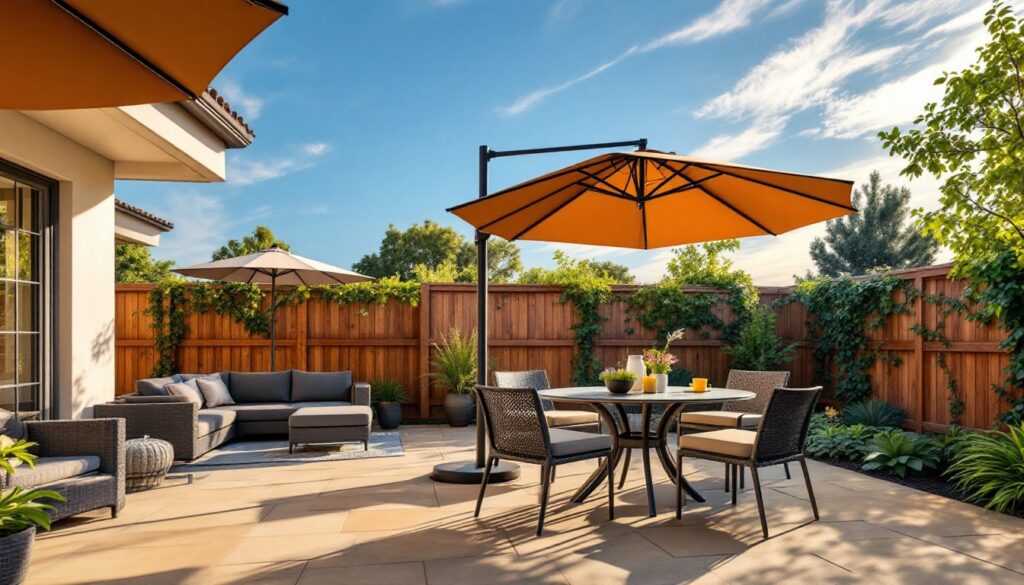
Cantilever umbrellas (also called offset or side-post umbrellas) mount the pole to the side, leaving the area underneath completely open. The canopy hangs over the seating area on an arm, and most models rotate 360 degrees and tilt to follow the sun. They’re ideal for lounge furniture, poolside setups, or any situation where a center pole would be intrusive.
Cantilevers cost more, often two to three times the price of a comparable market umbrella, and require heavier bases (typically 75–150 pounds depending on canopy size). Setups for outdoor furniture arrangements often benefit from the flexibility cantilever designs provide. The trade-off is worth it for furniture layouts that don’t accommodate a center pole.
There’s also the tilting market umbrella, a hybrid that keeps the center pole but adds a crank-and-tilt mechanism. It’s a budget-friendly way to angle shade without going full cantilever.
Choosing the Right Size and Shape for Your Space
Undersized umbrellas are a common mistake. The canopy needs to extend at least 2 feet beyond the edges of the table or seating area to provide meaningful shade as the sun shifts.
For a standard 48-inch round table, a 7.5 to 9-foot umbrella works. A 60-inch table calls for a 9 to 11-foot canopy. Rectangular tables need similar overhangs: a 72-inch table pairs well with a 9 x 12-foot rectangular umbrella or an 11-foot round.
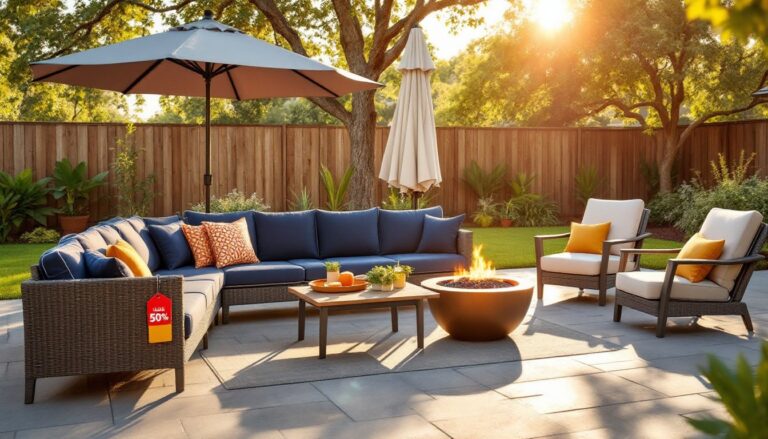
If the umbrella is for lounge furniture without a table, measure the footprint of the seating arrangement and add 3–4 feet to account for sun angle. A sectional sofa might need a 10 or 11-foot cantilever to cover the entire seating area during late afternoon.
Canopy shape matters less than most marketing suggests. Round canopies are standard and provide even coverage. Square and rectangular umbrellas fit better over rectangular tables and maximize shade along the long axis. Hexagonal and octagonal shapes split the difference and look slightly more traditional.
One critical spec: canopy height. Most umbrellas have adjustable pole heights, but the lowest setting should clear heads when seated (6.5 to 7 feet minimum clearance under the ribs). Taller setups, 8 to 9 feet, allow for standing room but catch more wind.
Materials and Features That Matter
The frame and fabric determine how long an umbrella lasts and how much maintenance it requires.
Frame materials:
- Aluminum: Lightweight, rust-proof, and easy to move. Most mid-range umbrellas use powder-coated aluminum poles and ribs. It won’t corrode in coastal environments, but thin-walled aluminum can bend in high wind.
- Fiberglass: Flexible ribs made from fiberglass resist breaking in gusts. When wind hits, fiberglass bends and bounces back instead of snapping. It’s common in higher-end models and patio furniture designed for durability.
- Wood: Hardwoods like teak, eucalyptus, or bamboo look sharp and feel substantial, but they require annual sealing or oiling to prevent weathering. Wood umbrellas are heavier and pricier. They suit traditional or upscale outdoor spaces.
- Steel: Sturdy and inexpensive but prone to rust unless galvanized or powder-coated. Avoid bare steel in humid or coastal climates.
Canopy fabric:
- Polyester: Budget-friendly and available in countless colors. Untreated polyester fades within a season or two. Look for solution-dyed polyester, which resists UV degradation better.
- Acrylic (Sunbrella and similar): The gold standard. Solution-dyed acrylic fabrics block 98% of UV rays, resist mildew, and maintain color for years. They cost more upfront but last significantly longer. Coverage per umbrella depends on weave density, typically listed as 280–320 GSM (grams per square meter), higher is denser and more durable.
- Olefin: A newer synthetic that rivals acrylic in UV resistance and costs less. It’s hydrophobic (sheds water quickly) and resists staining. Good middle-ground option.
Check the UPF rating if sun protection is a priority. Quality canopies rate UPF 50+, blocking over 98% of UV radiation. Many outdoor shade structures now list UPF ratings clearly.
Mechanisms and hardware:
- Crank lift: A small crank handle winds a cable to raise and lower the canopy. Much easier than a manual push-up, especially on larger umbrellas.
- Pulley lift: Traditional rope-and-pulley system. Simple, reliable, but requires two hands and some effort on umbrellas over 9 feet.
- Tilt mechanism: Push-button or crank-operated tilt lets you angle the canopy as the sun moves. Auto-tilt (push-button) is faster: crank-tilt is more precise.
- Vents: A vented canopy (double-layered with a gap at the top) allows hot air to escape and wind to pass through, reducing uplift. Vents improve stability noticeably in breezy locations.
Base weight is non-negotiable. Umbrella manufacturers list minimum base weights, but those are often optimistic. For market umbrellas, use at least 50 pounds for a 9-foot canopy, 75+ pounds for 11 feet. Cantilevers need 100–200 pounds depending on arm length and canopy size. Concrete-filled resin bases, cast iron, or steel plate bases all work. Avoid hollow plastic bases filled with water, they’re too light and prone to tipping.
Installation and Maintenance Tips
Installation:
- Measure the table hole if using a center-pole umbrella. Standard holes are 2 inches in diameter: umbrella poles range from 1.5 to 2 inches. Adapters (plastic or rubber rings) are available to fit smaller poles into larger holes.
- Assemble the base. If using a weighted base, ensure it’s on level ground. Uneven surfaces cause umbrellas to lean and stress the pole joint.
- Insert the pole into the base or table hole. Some bases have a tightening knob or setscrew to lock the pole in place. Don’t skip this, unsecured poles can rotate or lift out in wind.
- Open the canopy slowly the first time. Check that all ribs extend evenly and the fabric is taut. If the canopy bunches or ribs stick, inspect for shipping damage or tangled cords.
- Test the tilt and rotation (if applicable) before the first use. Cantilever umbrellas often have a foot pedal for rotation and a crank or lever for tilt. Familiarize yourself with the controls.
Safety note: Always close and secure umbrellas when not in use or when wind speeds exceed 20–25 mph. Even heavy bases can’t prevent tipping in strong gusts if the canopy is open.
Maintenance:
- Clean the canopy twice a season with mild soap and a soft brush. Rinse thoroughly and let it air-dry fully before closing to prevent mildew. For acrylic fabrics, occasional treatment with a fabric protector (like 303 Fabric Guard) restores water repellency.
- Inspect hardware annually. Tighten loose screws, lubricate moving parts (crank gears, tilt joints) with silicone spray, and check cables for fraying.
- Store off-season. If you live in a region with harsh winters, take the umbrella down and store it in a shed or garage. If storage isn’t feasible, use a fitted umbrella cover. Covers should have tie-downs and vents to prevent wind damage.
- Wood frames need re-sealing or oiling once a year, typically in spring before heavy use. Teak oil or marine-grade sealers work well. Southern-style outdoor setups often feature wood umbrellas, and owners in humid climates know yearly maintenance is essential.
Replacement parts: Most quality umbrellas offer replacement canopies and hardware. If the fabric fades but the frame is solid, a new canopy costs 30–50% of a full umbrella. Check with the manufacturer before discarding a perfectly good frame.
Wind damage prevention: Besides closing the umbrella, consider adding a stabilizer strap or anchor kit if the patio is exposed. Some homeowners secure cantilever bases to the deck with lag bolts or use ground anchors for freestanding bases on grass or pavers. For homes with frequent wind, ideas from country and farmhouse outdoor living often include low-profile or retractable shade solutions as alternatives.
Conclusion
Choosing a patio umbrella comes down to understanding the space, the furniture layout, and how much sun protection is needed. Match the umbrella type to the setup, center-pole for tables with holes, cantilever for flexible coverage. Size it generously, invest in quality fabric and frame materials, and don’t skimp on the base weight. With proper installation and seasonal maintenance, a well-chosen umbrella will provide comfortable, shaded outdoor living for years.