


Table of Contents
ToggleSectionals have become the go-to solution for homeowners who want maximum seating without cramming multiple pieces into a room. They anchor a living space, define conversation zones, and offer flexibility that traditional sofas can’t match. But choosing the right sectional isn’t as simple as picking the biggest couch that fits, dimensions, configuration, fabric, and layout all play critical roles. This guide walks through the decisions that matter: understanding sectional types, measuring your space accurately, selecting durable materials, and arranging the layout so the room works instead of fights you.
Key Takeaways
- Furniture sectionals maximize seating and space efficiency while offering modular flexibility that traditional sofas cannot match, making them ideal for modern living rooms.
- L-shaped sectionals work best in rooms 12 × 14 feet or larger, while U-shaped models require at least 14 × 16 feet and are better suited for open-concept layouts or dedicated family rooms.
- Accurate measurements are critical—measure your clear floor area, account for traffic patterns (24-36 inches minimum), and test seat depth in person before purchasing, as sectionals are expensive investments.
- Performance fabrics engineered for high-traffic households resist stains and liquids better than standard polyester, with durable options rated 15,000+ double rubs providing long-term value despite higher upfront costs.
- Floating your sectional away from walls creates better traffic flow and visual interest, while pairing it with a grounded rug and balanced accent pieces prevents the room from feeling furniture-heavy.
- Prioritize solid hardwood frames, high-density foam cushions (1.8 lbs/cubic foot or higher), and removable covers for durability and maintenance, as quality sectionals typically cost $1,500 and above and should last for years.
Why Sectionals Are the Ultimate Living Room Furniture Choice
Sectionals solve two problems at once: seating capacity and spatial efficiency. A standard three-seat sofa plus a loveseat eats up floor space and creates awkward gaps. A sectional fills corners, wraps around walls, and seats more people in the same footprint.
They’re also modular by nature. Many models let you rearrange components, swap the chaise from left to right, add or remove a center section, or separate pieces when you move. That adaptability matters when floor plans change or you relocate.
Sectionals define zones in open-concept layouts. In a combined living-dining area, a sectional acts as a visual divider without blocking sightlines. Place it perpendicular to a wall, and you create a boundary that feels intentional, not crammed.
From a practical standpoint, sectionals distribute wear more evenly than a single sofa. When one cushion sags, you can rotate or flip sections, assuming removable covers and reversible cushions. They also accommodate different activities simultaneously: one person reclining on the chaise, another sitting upright, kids sprawled on an ottoman.
Finally, sectionals work in rooms where traffic flow matters. Floating a sectional away from the wall opens up walkways behind it, which is useful in narrow or irregularly shaped spaces. Just make sure to leave at least 18 inches of clearance for comfortable passage.
Types of Sectional Sofas and Which One Fits Your Space
Not all sectionals are created equal. Configuration affects both function and footprint, so understanding the basic types helps narrow your search.
L-Shaped Sectionals
The most common layout: two perpendicular sections forming a right angle. One arm extends into a chaise (a long seat with leg support) or a simple return (a shorter extension without the chaise depth).
L-shaped sectionals fit neatly into corners, making them ideal for square or rectangular rooms. The chaise side typically measures 60 to 75 inches, while the main sofa section runs 80 to 100 inches. Check actual dimensions, not just “seats five”, manufacturers measure differently.
These work well in rooms roughly 12 × 14 feet or larger. In smaller spaces, opt for a compact L-shape with a narrower chaise (around 36 inches deep instead of the standard 40 to 42 inches).
L-shaped sectionals are easier to move through doorways than U-shapes. If you’re buying online or live in a walk-up, that matters. Most break into two or three pieces, but measure your narrowest doorway and stairwell beforehand.
U-Shaped and Curved Sectionals
U-shaped sectionals add a third section, creating a horseshoe layout. They seat more people, typically seven to nine, but demand serious floor space. Plan for at least 14 × 16 feet of usable area, and even then, you’ll want to float the sectional away from walls.
These dominate a room, so they’re best for open-concept layouts or dedicated family rooms. They excel at creating a central gathering zone, especially around a large coffee table or media console.
Curved sectionals soften angular rooms but complicate placement. They don’t sit flush against walls, which wastes space in smaller areas. They’re also harder to reconfigure, most curved pieces don’t modularize like straight sections.
U-shaped and curved sectionals often weigh 300+ pounds assembled. Moving them solo isn’t realistic. Budget for professional delivery and setup, or recruit help if you’re assembling yourself.
How to Choose the Right Size Sectional for Your Living Room
Measure twice, buy once. Sectionals are expensive mistakes if they don’t fit.
Start with the room’s clear floor area, the space not occupied by baseboards, radiators, or doorways. Measure wall-to-wall, then subtract 6 to 12 inches per side for breathing room. A sectional jammed against walls looks and feels cramped.
Next, map traffic patterns. Leave at least 30 to 36 inches between the sectional and a coffee table for comfortable legroom. Pathways through the room need 24 to 30 inches minimum, more if you’re navigating with laundry baskets or kids’ toys.
Consider seat depth. Standard sectionals run 38 to 42 inches deep, but if you’re under 5’6″ or prefer sitting upright, a shallower depth (34 to 36 inches) prevents that feet-dangling feeling. Conversely, if you want full-recline lounging, deep-seat models go up to 48 inches.
Account for the chaise orientation. A left-facing chaise means the chaise is on your left when you face the sectional. Double-check this when ordering, returns on custom sectionals are rarely free.
If your room has windows, mantles, or built-ins, ensure the sectional doesn’t block them. A 90-inch sofa section will cover a standard 36-inch window if centered poorly.
Finally, test ceiling height visually. In rooms with 8-foot ceilings, a sectional with a tall back (over 36 inches) can feel oppressive. Low-profile designs with backs around 30 to 32 inches maintain proportions.
Styling Your Sectional: Layout Ideas and Design Tips
Placement dictates how the room functions. A sectional against two walls anchors a corner but limits flexibility. Floating it away from walls opens up flow and adds visual interest, but only if you have the square footage.
In rectangular rooms, position the sectional perpendicular to the longest wall. This breaks up the tunnel effect and creates distinct zones. Pair it with a rug that extends 12 to 18 inches beyond the sectional’s footprint to ground the arrangement.
For open-concept spaces, use the sectional’s back as a room divider. Face it toward the TV or fireplace, leaving the back exposed to the dining area. Add a console table behind it, sofa table height is 28 to 30 inches, for lamps, plants, or storage baskets.
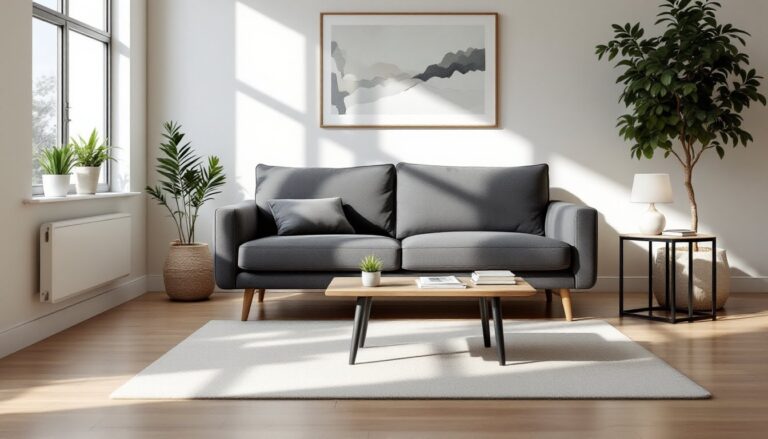
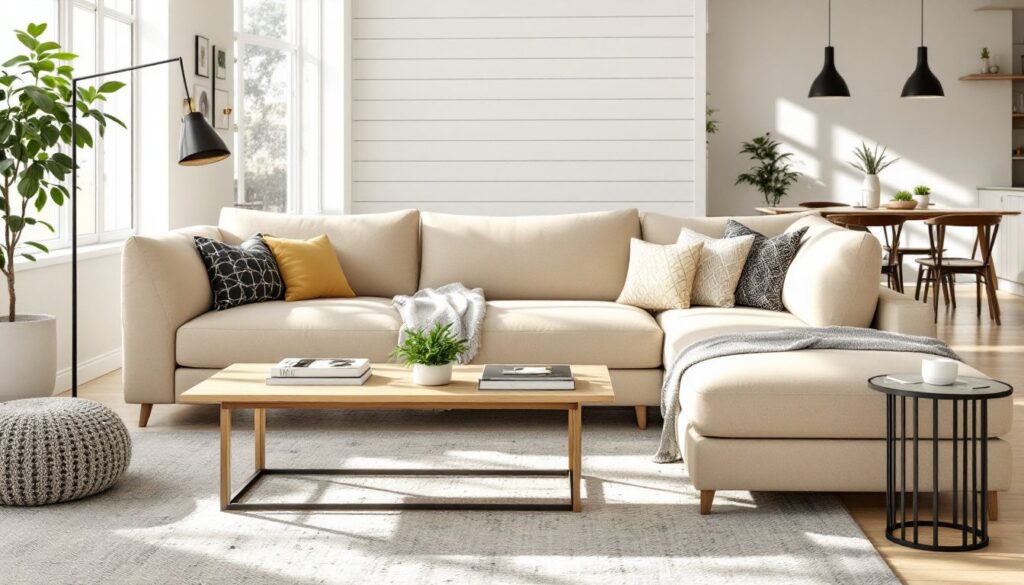
Balance the sectional’s bulk with lighter accent pieces. A glass coffee table, open-legged side tables, or a slim floor lamp prevent the room from feeling furniture-heavy. Avoid matching everything to the sectional’s color, contrast in textures and tones adds depth.
Pillows and throws soften the look, but don’t go overboard. Three to five pillows in varying sizes (18-inch, 20-inch, and 22-inch covers) provide comfort without clutter. Stick to odd numbers, it’s a design trick that feels more organic.
If your sectional has a chaise, use it to define a reading nook. Add a floor lamp and side table on that end. The chaise becomes a mini retreat instead of just extra seating.
For families with kids or pets, consider stylish slipcovers that handle spills and fur without sacrificing aesthetics. Washable fabrics are a lifesaver.
Material and Fabric Considerations for Durability and Comfort
Fabric choice affects longevity, maintenance, and comfort. There’s no one-size-fits-all answer, your lifestyle dictates priorities.
Polyester blends dominate the mid-range market. They resist fading and wear better than cotton alone, and most are treated with stain repellents. Look for fabrics rated 15,000+ double rubs (the industry abrasion test). Anything under 10,000 won’t hold up to daily use.
Performance fabrics like Crypton or Sunbrella are engineered for high-traffic households. They repel liquids, resist stains, and clean with water and mild soap. Expect to pay 20 to 30% more than standard upholstery, but the trade-off is worth it if you have kids, pets, or entertain frequently.
Leather ages well but demands upkeep. Top-grain leather develops a patina over time: bonded leather (leather scraps glued to a backing) peels and cracks within a few years. If you’re investing in leather, go for full-grain or top-grain and budget for periodic conditioning, twice a year minimum.
Microfiber mimics suede but cleans easier. It’s soft, budget-friendly, and hides wear. But, it attracts pet hair like a magnet. Keep a lint roller handy.
Velvet looks luxe but shows every fingerprint and crease. It’s best for low-traffic formal spaces, not family rooms where snacks are consumed.
Frame construction matters as much as fabric. Solid hardwood or engineered wood frames outlast particleboard. If buying online, check specs, frames should be kiln-dried hardwood with corner blocks and doweled joints. Avoid anything listing “composite wood” without details.
Cushion fill impacts comfort and shape retention. High-density foam (1.8 lbs/cubic foot or higher) holds up better than low-density polyurethane. Down-blend cushions feel plush but require regular fluffing. Some sectionals offer customizable firmness, which helps if household members have different preferences.
Finally, ask about removable covers. Zip-off cushion covers let you wash or replace them without reupholstering the entire sectional. Not all sectionals offer this, especially leather or tightly upholstered models, but it’s a game-changer for maintenance.
When shopping, sit on the sectional for at least five minutes. If it’s uncomfortable in the showroom, it won’t improve at home. Test the seat depth, back support, and armrest height. Design inspiration galleries can help visualize how different styles work in real spaces, but nothing replaces a physical test.
Sectionals are an investment, most quality models start around $1,500 and climb past $5,000 depending on size, fabric, and brand. Prioritize durability over trends. A neutral base in a performance fabric outlasts a bold color that dates in two years. You can always swap pillows, throws, and rugs to refresh the look without replacing the entire piece.