

Table of Contents
ToggleGlamorous living room furniture isn’t reserved for penthouses and design magazines. With the right mix of materials, silhouettes, and finishes, any living room can channel luxury, whether working with a four-figure budget or picking up secondhand finds. The trick lies in understanding what makes a piece read as “glamorous” and knowing where to invest versus where to save. This guide breaks down the essential furniture, materials, and styling strategies that deliver high-end impact without requiring a contractor’s invoice or a trust fund.
Key Takeaways
- Glamorous living room furniture is defined by clean lines, rich textures, reflective metallics, and materials like velvet, brass, and mirrored surfaces that create high-end impact on any budget.
- Invest in a statement sofa or accent chair as your focal point, then layer affordable accessories like throw pillows, rugs, and lighting to complete the glamorous aesthetic without overspending.
- Strategic upgrades—reupholstering existing furniture, refinishing legs with metallic spray paint, and swapping hardware—deliver luxury results for a fraction of replacement costs.
- Stick with timeless jewel tones (emerald, sapphire) and neutral colors rather than trendy pastels, ensuring your glamorous living room furniture choices remain stylish for years.
- Lighting is essential to achieving glamorous living room design; swap builder-grade fixtures for a chandelier or arc lamp and add dimmer switches to control ambiance and showcase metallic finishes.
What Defines Glamorous Living Room Furniture?
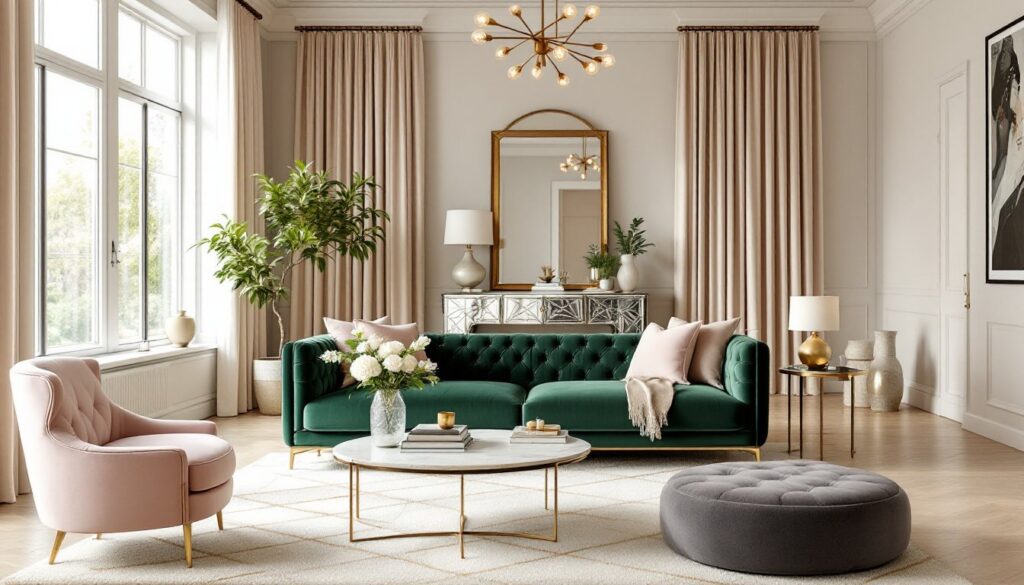
Glamorous furniture shares a few hallmark traits: clean lines with curves, rich textures, and reflective or metallic accents. Think tufted velvet sofas, brass-legged coffee tables, mirrored consoles, and sculptural lighting. These pieces command attention without relying on size alone.
The glamorous aesthetic draws from Art Deco, Hollywood Regency, and mid-century modern influences. It favors symmetry, jewel tones, and materials that catch light, lacquer, glass, polished metals, and high-sheen fabrics. But glamour doesn’t mean fussy. The best pieces balance opulence with livability.
Key characteristics to look for:
- Upholstery: Velvet, silk blends, high-thread-count linen, or faux leather with a polished finish
- Legs and frames: Tapered legs, hairpin legs, or metal bases in brass, chrome, gold, or brushed nickel
- Details: Button tufting, nailhead trim, channel stitching, or carved wood accents
- Scale: Furniture with presence, low-slung sofas, oversized mirrors, and substantial ottomans
Many luxury furniture designs share these DNA markers. If a piece looks like it could have lived in a 1940s film set or a modern hotel lobby, it likely fits the bill.
Essential Glamorous Furniture Pieces for Your Living Room
Statement Sofas and Sectionals
The sofa anchors the room, so it’s worth prioritizing here. Look for deep seating (22–26 inches from front to back), low profiles (seat height around 16–18 inches), and bold upholstery. Velvet in emerald, sapphire, blush, or charcoal delivers instant drama. Tufted backs, especially Chesterfield or biscuit tufting, add texture and dimension.
Frame construction matters. Hardwood frames (kiln-dried oak or maple) last decades. Avoid particleboard or softwood if the sofa will see daily use. Check that cushions use high-density foam (1.8 lbs/cubic foot or higher) wrapped in down or polyester batting for comfort and shape retention.
For sectionals, curved or modular designs soften angular rooms and encourage conversation. Metal or acrylic legs create a floating effect and make cleaning underneath easier. If the room lacks natural light, skip dark upholstery and opt for champagne, ivory, or dove gray to keep the space open.
Elegant Accent Chairs and Ottomans
Accent chairs offer flexibility and visual interest. Wingback chairs, barrel chairs, and slipper chairs all work in glamorous settings. Choose contrasting upholstery to the sofa, if the sofa is solid velvet, try a patterned chair in geometric or floral jacquard.
Ottomans serve triple duty: extra seating, footrests, and coffee table substitutes when topped with a tray. Round tufted ottomans in velvet or leather add softness. Square ottomans with storage compartments (lift-top or hinged designs) keep throws and remotes out of sight.
Pay attention to leg finish. Brass and gold tones read warmer: chrome and nickel skew cooler. Match metal finishes across the room (or intentionally mix two, brass and black, for example, for a curated look). Incorporating unique furniture pieces as accents can elevate the overall design without overwhelming the space.
Materials and Finishes That Add Instant Glamour
Certain materials punch above their weight when it comes to perceived luxury. Here’s what works, and what to avoid.
Velvet remains the gold standard for glamorous upholstery. It’s durable (especially polyester-blend velvets), catches light beautifully, and feels substantial. Cotton velvet crushes easily: look for performance velvet treated for stain resistance if the room gets heavy use.
Brass and gold-tone metals warm up a space and pair well with jewel tones. Unlacquered brass develops a patina over time, which adds character but requires maintenance (polish with a paste of lemon juice and baking soda). Lacquered brass stays shiny with minimal upkeep.
Mirrored and glass surfaces reflect light and make small rooms feel larger. Mirrored coffee tables, console tables, and cabinet fronts work well in moderation. Too much mirror can feel cold, balance with textiles and wood.
Lucite and acrylic furniture (side tables, chairs, console bases) provides structure without visual weight. It’s impact-resistant and easy to clean but scratches over time. Use felt pads under decor items to prevent scuffing.
Marble and stone (real or composite) bring natural luxury. White Carrara marble shows stains and etching from acidic drinks: sealed or honed finishes resist damage better than polished. Faux marble or quartz composite offers similar aesthetics with lower maintenance.
Avoid laminate finishes trying to mimic high-end materials, they rarely age well. If budget is tight, solid wood with a high-gloss lacquer finish delivers more longevity than printed veneers.
According to design resources like Architectural Digest, mixing textures, pairing velvet with metal and glass, creates layered, sophisticated interiors.
How to Mix Glamorous Furniture with Your Existing Decor
Integrating glamorous pieces into an existing room doesn’t require a full remodel. Start with one or two statement items and let them coexist with current furniture.
If the existing sofa is neutral and serviceable, add a velvet accent chair and a brass floor lamp to shift the tone. Swap out a wood coffee table for one with a mirrored or marble top. Layer in metallic throw pillows, a faux fur throw, or a high-pile rug in a jewel tone.
Balance proportions. Pair a heavy, tufted sofa with lighter side tables (glass or metal) to avoid a cluttered look. If the room already has ornate furniture, choose glamorous pieces with clean lines to prevent visual overload.
Color coordination matters. Glamorous doesn’t mean matchy-matchy, but tones should relate. Navy blue pairs well with brass and blush: emerald works with gold and cream. Rooms featuring navy blue furniture often benefit from metallic accents and neutral walls.
If existing furniture is wood-heavy (traditional or farmhouse style), introduce metal and glass gradually. A gold-framed mirror, a lucite side table, or chrome lamp bases create bridges between styles without clashing.
Lighting is non-negotiable. Swap builder-grade fixtures for a chandelier, sputnik pendant, or arc floor lamp with a brass or black finish. Dimmer switches let you control ambiance, glamorous spaces need layered lighting, not just overhead floods.
Keep window treatments simple. Floor-length linen or velvet curtains in solid colors frame the room without competing with furniture. Avoid heavy florals or country-style patterns that pull the aesthetic off-target.
Budget-Friendly Tips for Achieving a Glamorous Look
Glamour doesn’t require a blank check. Strategic upgrades and DIY tweaks deliver high-end results on a modest budget.
Reupholster or slipcover existing furniture. A tired sofa can be transformed with new velvet upholstery or a custom slipcover in a luxe fabric. Professional reupholstery for a standard three-seater runs $800–$1,500 depending on fabric and region, less than replacing the piece. If sewing skills allow, DIY slipcovers using performance velvet or linen cut costs further.
Paint or refinish legs and frames. Spray paint wooden or metal furniture legs in metallic gold, brass, or matte black (Rust-Oleum Universal Metallic works well). Sand lightly, prime with a bonding primer, and apply two coats. Seal with a clear topcoat for durability. This works on chairs, coffee tables, and side tables.
Thrift and resale shops often carry mid-century and vintage pieces with good bones. Look for solid wood frames and classic silhouettes: ignore dated upholstery. Recover a $50 thrift-store chair in new fabric and swap the legs for tapered wood or hairpin legs (available online for $20–$60 per set).
DIY tufting adds texture to plain headboards, benches, or ottomans. Use a button kit, upholstery needle, and foam. Mark a grid, drill holes, thread buttons through, and secure on the back. Tutorials abound online, and materials cost under $100 for a twin headboard.
Mirrors and metallics amplify light without major investment. A large mirror ($50–$200) on one wall visually doubles the space. Gold or silver adhesive mirror tiles ($30 for a pack) applied to a side table or cabinet door create custom mirrored furniture.
Swap hardware. Replace drawer pulls and cabinet knobs with brass, crystal, or acrylic options ($3–$10 per pull). This small change updates dressers, media consoles, and built-ins.
Layer affordable textiles. Faux fur throws ($30–$60), velvet pillow covers ($15–$25 each), and high-pile rugs ($100–$300) introduce texture and color. Stick to two or three coordinating tones to avoid a chaotic look.
Focus on focal points. If budget allows only one splurge, invest in a statement sofa or accent chair. Surround it with budget-friendly accessories. Shoppers exploring affordable home furnishings can often find transitional pieces that bridge budget and style.
Many design experts, as seen on Home Bunch, recommend investing in timeless silhouettes and updating accessories seasonally to keep the look fresh without constant furniture replacement.
Skip trendy colors that date quickly. Jewel tones (emerald, sapphire, ruby) and neutrals (charcoal, champagne, ivory) stay relevant longer than millennial pink or trendy pastels.
If painting walls, choose matte or eggshell finishes in deep tones (navy, forest green, charcoal) or soft neutrals (greige, warm white). High-gloss or satin finishes on trim and moldings add subtle sheen. One gallon covers roughly 350–400 square feet: most living rooms need 2–3 gallons. Brands like Benjamin Moore Aura or Sherwin-Williams Emerald offer better coverage and durability than budget lines, worth the extra $10–$15 per gallon.
Rugs ground the space. A large area rug (8×10 or 9×12 for most living rooms) in a solid or subtle pattern anchors furniture groupings. Wool or wool-blend rugs last longer than polypropylene and resist matting. Expect $300–$800 for quality rugs in standard sizes: sales and discount retailers (Overstock, Wayfair, Rugs USA) offer frequent markdowns.
Lighting upgrades deliver outsized impact. Swap basic fixtures for a chandelier or modern pendant ($100–$400). Many plug-in pendant kits eliminate the need for hardwiring, hang from a ceiling hook and drape the cord along the wall. Add a dimmer switch ($15–$30) for adjustable ambiance.
For those combining stylish and affordable options, focusing on these high-impact changes keeps projects manageable and budgets intact.