

Table of Contents
ToggleFort Collins sits at 5,000 feet elevation, where summer sun beats down at 10,000 feet of UV intensity and winter freezes can crack lesser materials like eggshells. That swing between 90°F July afternoons and January lows near zero makes patio furniture selection less about aesthetics and more about survival. Homeowners who treat their outdoor spaces like Denver’s milder Front Range cousins end up replacing cushions every season or hauling entire sets to the curb after one winter. This guide walks through what actually works in Northern Colorado’s high-altitude climate, where to find it locally, and how to make your investment last more than a single summer.
Key Takeaways
- Fort Collins’ high-altitude climate (5,000 feet elevation) with intense UV radiation, extreme temperature swings, and freeze-thaw cycles demands specialized patio furniture that won’t crack, fade, or rust within a single season.
- Powder-coated aluminum frames and UV-stabilized HDPE resin wicker are the best materials for patio furniture in Fort Collins, while untreated softwoods, thin glass, and lightweight fabrics should be avoided entirely.
- Mid-range patio furniture in Fort Collins ($800–$2,000) offers the best value for homeowners, providing 8–10 years of durability with welded aluminum frames and performance cushions, compared to budget sets that require replacement every 2–3 seasons.
- Local retailers like Boho Home and Garden, Nebraska Furniture Mart, and Mum’s Garden Center offer climate-appropriate patio furniture selections pre-vetted for Northern Colorado conditions, with knowledgeable staff to guide material and durability decisions.
- Proper maintenance—including off-season cushion storage, annual frame inspection, powder-coating touch-ups, and winter preparation—extends patio furniture life significantly and protects your investment year-round in Fort Collins’ challenging climate.
- Earth-tone colors and modular designs work best for Fort Collins patios, with layered styling using weatherproof rugs, fire pits, and shade structures creating functional outdoor living spaces that complement regional architecture.
Why Fort Collins’ Climate Demands Smart Patio Furniture Choices
Fort Collins experiences roughly 300 days of sunshine annually, but that sunlight carries serious UV punch at elevation. UV radiation increases about 10-12% per 3,300 feet of elevation gain, which accelerates fading, brittleness, and material degradation in outdoor furniture. Fabrics rated for coastal climates won’t cut it here, look for UV-resistance ratings of 500+ hours in accelerated weathering tests.
Temperature swings present the second challenge. Summer nights can drop 30-40°F from afternoon highs, creating expansion-contraction cycles that stress joints, warp wood, and crack powder coatings. Winter brings sustained freezes (Fort Collins averages 155 freeze days per year) plus occasional Chinook winds that can gust over 60 mph. Furniture needs to handle both the static load of snow accumulation and dynamic wind loads without tipping or separating.
Moisture isn’t as simple as “it’s dry here.” Fort Collins gets about 15 inches of precipitation yearly, but summer thunderstorms dump intense rain in minutes, pooling water in seat cushions and frames. Winter snowmelt cycles add freeze-thaw action. Materials that trap moisture, untreated wood, low-density foam, hollow steel without drainage holes, will fail faster than in true arid climates. Drainage design matters as much as water resistance.
Top Patio Furniture Stores and Showrooms in Fort Collins
Fort Collins offers a mix of national chains and local shops with inventory suited to the region’s climate. Ashley HomeStore on South College Avenue stocks outdoor collections with warranty programs that cover UV fade and frame integrity, ask specifically about coverage terms for Colorado’s elevation. Their showroom lets you test seat depth and cushion firmness before buying, which matters for pieces you’ll use May through October.
Nebraska Furniture Mart in nearby Johnstown (about 20 minutes east) carries a broader range, from budget resin sets to high-end teak collections. Their outdoor section runs year-round, and sales staff can pull weather-resistance specs for materials. The warehouse model means you can often take pieces home same-day instead of waiting on shipping.
Local Specialty Shops and Boutiques
Boho Home and Garden on North College specializes in curated outdoor living pieces with a design focus. They stock metal furniture with powder-coated finishes rated for 1,000+ UV hours and carry replacement cushions in Sunbrella and similar performance fabrics. Prices run higher, but pieces are pre-selected for durability in Front Range conditions.
Mum’s Garden Center (multiple locations) carries patio furniture seasonally alongside plants and hardscaping materials. Their selection skews practical, resin wicker, aluminum frames, and solution-dyed acrylic fabrics. Staff can recommend pieces that pair with local landscaping projects and handle Northern Colorado’s soil and sun exposure.
Best Materials for Fort Collins Outdoor Furniture
Powder-coated aluminum tops the list for frames. It won’t rust, handles temperature swings without warping, and weighs little enough to move indoors or anchor against wind. Quality powder coating should be 2-3 mils thick (about twice the thickness of spray paint) and baked at 400°F for adhesion. Check welds and joints, furniture designed for outdoor living spaces often uses robotic welding for consistent penetration.
High-Density Polyethylene (HDPE) resin wicker beats natural wicker by miles in Fort Collins. It’s UV-stabilized throughout (not just surface-coated), won’t crack in freezes, and sheds water. Look for 8mm or thicker strands, thinner weaves sag and split faster. Quality resin furniture uses aluminum frames underneath: cheaper versions use hollow steel that can rust from the inside out if moisture enters through drainage holes.
Teak and Ipe work if you’re committed to maintenance. Both woods contain natural oils that resist rot, but Fort Collins’ UV exposure will turn them gray within one season without treatment. Plan on sanding and oiling annually with a product like teak oil or marine-grade sealers. Ipe is denser (it sinks in water) and harder on saw blades, but outlasts teak in weather exposure. Both need stainless steel hardware, regular screws will stain the wood as they corrode.
Avoid untreated softwoods (pine, cedar, fir) unless you’re building a project piece you’ll seal properly. Avoid sling fabrics lighter than 18 oz per square yard, they’ll sag and tear. Skip glass tabletops thinner than ½ inch tempered, hail storms are real here.
Styling Your Fort Collins Patio: Design Ideas for Every Space
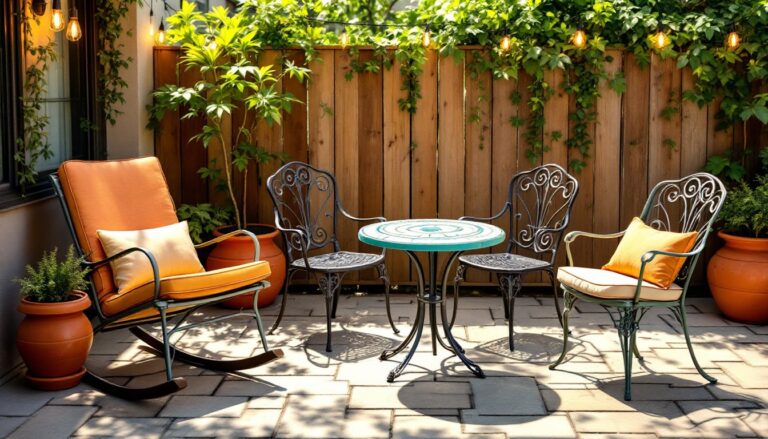
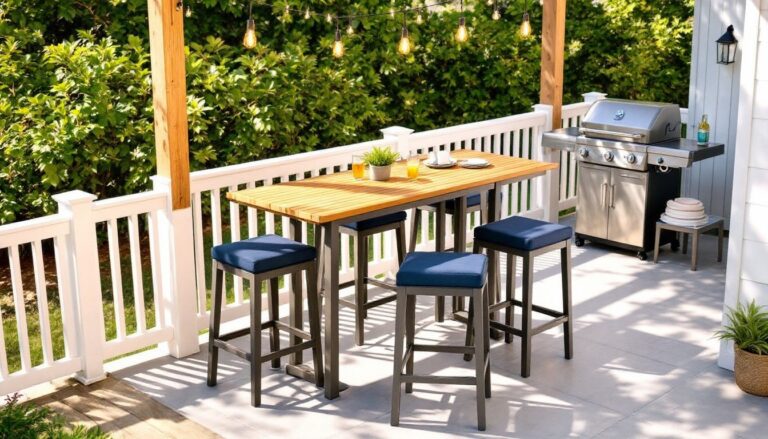
Fort Collins patios range from compact apartment balconies to sprawling backyard hardscapes backing onto trails. For smaller spaces under 100 square feet, folding bistro sets in powder-coated steel or aluminum maximize flexibility. Look for designs with slatted seats instead of solid surfaces, they dry faster after rain and don’t collect pine needles.
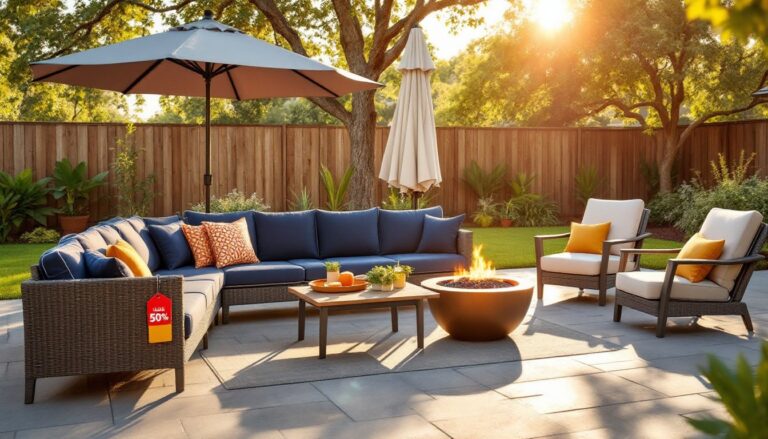
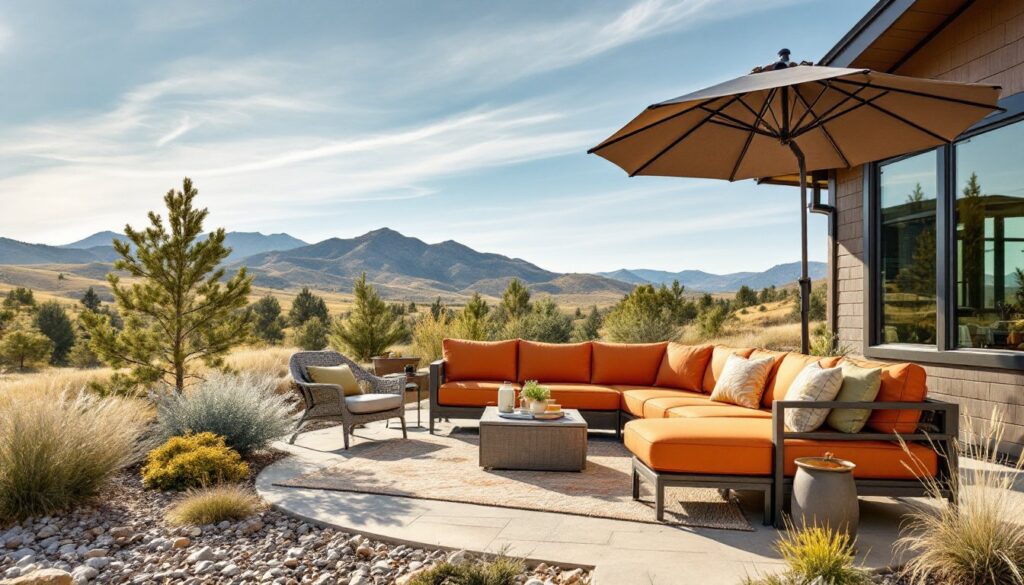
Mid-sized patios (150-300 square feet) can handle sectional seating, but proportions matter. Standard sectionals designed for covered California patios often overwhelm Colorado outdoor rooms. Measure your space, then subtract 24 inches on all sides for walkways, you need clearance to move around furniture and access doors. Modular pieces let you reconfigure for sun position as seasons shift.
For design cohesion with regional home styles, consider Fort Collins’ architectural mix. Older neighborhoods lean Craftsman and Ranch: newer developments favor modern farmhouse and contemporary mountain styles. Metal furniture with clean lines suits modern builds, while wood and wicker combinations complement traditional homes. Earth tones (terracotta, sage, charcoal) blend with Colorado’s natural palette better than coastal brights, which can look out of place against native landscaping.
Layering helps: a weather-resistant outdoor rug defines the seating zone, fire pits rated for 7,000+ BTU output extend the season into October, and shade structures (pergolas, cantilever umbrellas with 250 gsm or heavier fabric) protect furniture and occupants from UV. String lights add ambiance but choose LED options rated for -20°F to 120°F, standard bulbs fail in winter temperature extremes.
Maintenance Tips to Protect Your Investment Year-Round
Cushion storage makes or breaks longevity. Even performance fabrics degrade faster when left out year-round. Bring cushions indoors October through April, or invest in a waterproof deck box with ventilation holes to prevent mildew. Before storing, clean with mild soap and water, then let dry completely, trapped moisture grows mold even in low-humidity climates.
Frame cleaning varies by material. Aluminum and resin wicker need just soap, water, and a soft brush monthly during use season. For stubborn grime, use oxygen bleach (not chlorine) diluted per package instructions. Teak and wood require annual sanding with 120-grit sandpaper to remove gray oxidation, followed by two coats of teak oil or marine sealer. Apply in shade when wood temperature is below 90°F, hot surfaces cause uneven absorption.
Winter prep prevents most damage. If leaving furniture outside, remove cushions and covers, tip chairs upside-down or stack them to shed snow, and secure lightweight pieces with nylon straps or bungee cords anchored to deck screws or railing. For tables, cover with breathable tarps (not plastic), solid covers trap condensation. Weighted furniture can stay put, but check joints and hardware in spring for stress cracks.
Inspect powder-coated frames annually for chips. Touch up with automotive touch-up paint or appliance epoxy before bare metal oxidizes. Replace worn glides and levelers on chair legs, uneven contact points stress frames and scratch decking. Tighten bolts on modular furniture each spring: freeze-thaw cycles can loosen fasteners even without visible movement.
Budget-Friendly vs. Premium: What Fort Collins Homeowners Should Consider
Budget sets under $500 (often resin wicker with thin-gauge steel frames) typically last 2-3 seasons in Fort Collins before frames rust or weave cracks. That’s not necessarily bad math if you’re staging a home for sale or furnishing a rental. But for primary residences, the per-season cost often exceeds mid-range furniture that lasts 8-10 years. A $500 set replaced every three years costs more over a decade than a $1,200 set that survives ten seasons.
Mid-range options ($800-$2,000) hit the value sweet spot for most homeowners. Look for welded aluminum frames, HDPE wicker, and solution-dyed acrylic cushions. Brands in this tier often offer 5-year frame warranties and 2-year fabric warranties, which matter in climate-driven failure modes. Homeowners seeking clearance options can find quality pieces at this price point during end-of-season sales.
Premium furniture ($2,500+) makes sense for daily users or those planning extensive patio remodeling projects where furniture is a design anchor. Grade-A teak, marine-grade stainless hardware, and Sunbrella Reserve fabrics define this category. The materials will outlast the homeowner, but require committed maintenance. Premium doesn’t mean “set and forget”, it means better materials that reward proper care.
Don’t overlook used and refurbished options. Fort Collins has active Facebook Marketplace and Craigslist furniture sections. Aluminum and resin pieces clean up well: inspect frames for cracks and welds for separation. Factor in new cushions at $50-150 per piece when budgeting used furniture. Avoid used wood furniture unless you can assess joint integrity and wood condition, hidden rot or insect damage isn’t worth the savings.