

Table of Contents
ToggleContemporary bedroom furniture isn’t about chasing fleeting trends, it’s about creating a functional, uncluttered space that feels current without a constant need for updates. Think clean lines, intentional material choices, and pieces that do their job without unnecessary ornamentation. In 2026, the contemporary aesthetic has evolved past stark minimalism into something more livable: warm neutrals, mixed textures, and furniture scaled for real bedrooms, not just studio lofts. Whether you’re starting from scratch or swapping out dated pieces, understanding what makes furniture “contemporary” will help you build a cohesive, comfortable bedroom that stands the test of time.
Key Takeaways
- Contemporary bedroom furniture emphasizes clean lines, mixed materials, and integrated storage solutions that prioritize function over ornamentation, creating uncluttered spaces that feel current without constant updates.
- Platform beds and low-profile frames are foundational to contemporary style, sitting 18-24 inches from floor to mattress and providing visual space, with proper slat spacing of 3 inches or less crucial for mattress warranty coverage.
- Streamlined dressers should feature flat-panel drawer fronts, quality joinery (dovetail or dowel construction), and either durable metal pulls or well-engineered push-latch mechanisms to ensure longevity in your contemporary bedroom.
- Material choices like walnut and white oak veneer, low-VOC lacquer finishes, and powder-coated steel create an authentic contemporary aesthetic while offering superior durability and stability compared to budget alternatives.
- Cohesive contemporary bedroom design relies on one or two unifying elements—matching wood tones, repeated metal finishes, or consistent color temperature—rather than matched sets, allowing creative mixing while maintaining visual restraint.
- Proper scale and spacing with 24-36 inches of clearance around the bed and 36-48 inches in front of dressers, combined with strategic lighting and minimal textiles, ensures your contemporary bedroom functions beautifully while feeling intentionally designed.
What Defines Contemporary Bedroom Furniture?
Contemporary furniture refers to what’s current now, distinct from “modern,” which technically refers to mid-century design from the 1950s-60s. The confusion is understandable, since contemporary often borrows heavily from modernist principles: geometric forms, minimal ornamentation, and an emphasis on function.
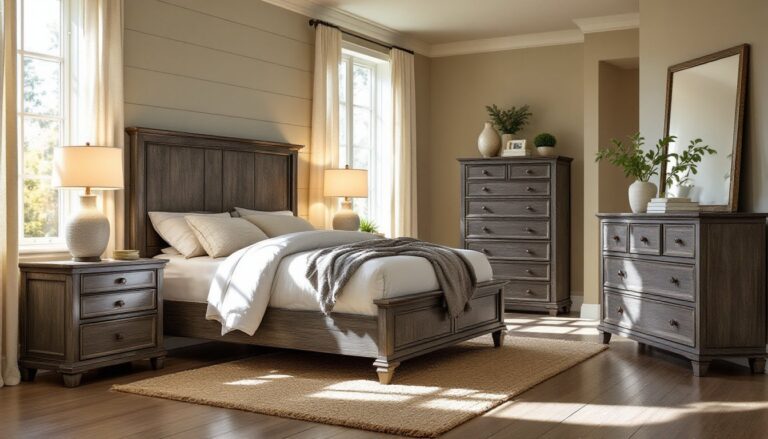
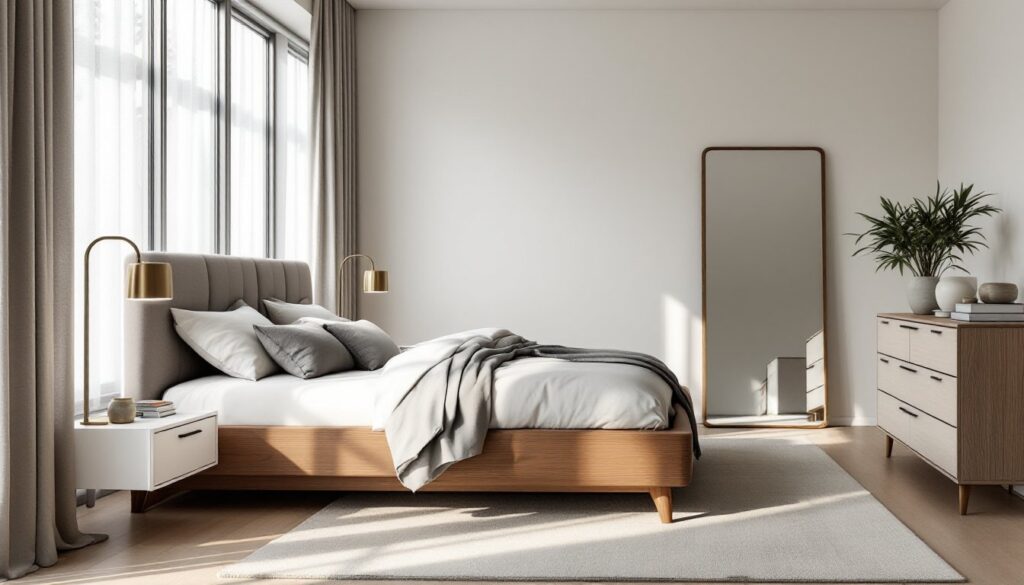
Key characteristics include low-profile silhouettes (beds sit closer to the floor, dressers have streamlined proportions), neutral palettes (whites, grays, blacks, taupes, with occasional bold accent colors), and mixed materials like wood paired with metal hardware, upholstered headboards combined with lacquered nightstands, or glass tabletops on wood bases. Unlike traditional furniture with carved details and heavy molding, contemporary pieces celebrate the material itself, think book-matched walnut veneer, powder-coated steel frames, or smooth upholstery without tufting.
Another defining trait: integrated storage. Contemporary design abhors clutter, so dressers feature clean drawer fronts (often handleless with push-to-open mechanisms), bed frames include built-in storage compartments, and nightstands incorporate hidden charging stations. This isn’t ornamental, it’s problem-solving wrapped in good proportions.
The style’s flexibility is also key. Because contemporary isn’t tied to a specific era, it easily absorbs influences, a touch of Scandinavian warmth here, Japanese simplicity there, or industrial edge when appropriate. This makes it forgiving for DIYers who want to mix pieces from different sources without clashing.
Essential Contemporary Bedroom Furniture Pieces
Platform Beds and Low-Profile Frames
The bed anchors any contemporary bedroom. Platform beds, frames with built-in support slats that eliminate the need for a box spring, dominate this style. They sit lower than traditional beds (typically 18-24 inches floor to mattress top versus 25-30 inches for standard frames), creating visual space and a grounded feeling.
Look for frames in solid wood (walnut, oak, or ash are popular) with simple joinery, upholstered frames in linen or performance fabrics, or metal frames with welded construction. Headboards, when present, are usually straight panels, wood slats, padded fabric, or even leather, without curves or scrollwork. Many contemporary beds skip headboards entirely.
If you’re building or modifying a platform bed, note that proper slat spacing matters for mattress warranty coverage: most manufacturers require slats no more than 3 inches apart for memory foam or hybrid mattresses. Hardwood slats (1×4 actual dimensions work well) provide better support than pine, though they cost more.
For smaller bedrooms, consider frames with integrated drawers along the base. Quality examples use full-extension drawer slides rated for 75-100 pounds, anything less and you’ll fight with sticky drawers loaded with bedding.
Streamlined Dressers and Storage Solutions
Contemporary dressers prioritize horizontal lines and understated hardware. Six-drawer and nine-drawer configurations remain standard, but the aesthetic leans toward wide, low profiles rather than tall chests. Drawer fronts are often flat-panel or slab-style, sometimes with horizontal grain orientation for visual interest.
Material-wise, expect engineered wood with veneer (perfectly acceptable if it’s quality veneer properly applied, look for edge-banding without gaps), solid hardwood, or lacquered MDF for high-gloss finishes. Check drawer construction: dovetail or dowel joinery at corners indicates better longevity than stapled particleboard boxes. Drawer bottoms should be at least 1/4-inch plywood, not flimsy hardboard.
Hardware splits into two camps: minimal metal pulls (bar pulls in brushed nickel, matte black, or brass) or recessed/handleless designs. The latter uses either routed grooves along drawer edges or push-latch mechanisms. Be aware that push-latches can fail over time and aren’t always easy to replace, metal pulls offer more durability.
Floating nightstands (wall-mounted) are increasingly popular in contemporary spaces. If you’re installing one, mount it to studs using appropriate hardware, a loaded nightstand (lamp, books, phone) can weigh 30-40 pounds. Use at least two 3-inch #10 wood screws into each stud, or toggle bolts rated for 50+ pounds if studs aren’t conveniently located. Mount height is typically 24-28 inches floor to top, allowing clearance above mattress height.
Choosing Materials and Finishes for a Modern Look
Material selection dramatically affects whether furniture reads as contemporary or generic. Real wood veneer over plywood or MDF isn’t a compromise, it’s standard in quality furniture, offering stability and consistent appearance that solid wood panels can’t always provide (solid wood expands and contracts with humidity). Walnut, white oak, and ash dominate contemporary designs, with walnut offering rich brown tones and white oak providing lighter, grainier texture.
For painted finishes, look for low-VOC or zero-VOC lacquer or catalyzed conversion varnish, both provide durable, smooth surfaces. Avoid furniture described simply as “painted” without finish details: bare paint chips easily. White, black, gray, and taupe remain standard, but warm off-whites (creamy rather than stark) have gained ground as contemporary design trends continue emphasizing livability over showroom sterility.
Metal accents, legs, handles, frame elements, should feel substantial. Powder-coated steel resists chipping better than spray paint. Brushed or matte finishes hide fingerprints and wear better than polished chrome in daily use. When shopping online or through catalogs, check metal gauge if listed: 18-gauge steel is standard for furniture legs, while 20-gauge feels flimsier.
Upholstered pieces (headboards, benches) benefit from performance fabrics, essentially stain-resistant treated textiles originally developed for commercial use. They cost 20-30% more than standard upholstery fabric but clean up dramatically easier. Leather and faux leather work too: genuine leather develops patina and requires conditioning, while quality polyurethane “leather” (don’t call it pleather) resists stains but can crack after 5-7 years depending on use and climate.
Glass elements, tabletops, shelving, should be tempered glass minimum 1/4-inch thick for nightstands and 3/8-inch for larger surfaces. Tempered glass shatters into small, relatively safe pieces rather than dangerous shards. If you’re adding glass to a DIY piece, most glass shops will cut and temper custom sizes: expect $50-100 depending on dimensions and edge finishing (polished edges cost more than seamed).
Creating a Cohesive Contemporary Bedroom Design
Cohesion doesn’t require buying matched sets, actually, too much matching reads dated. Instead, establish one or two unifying elements: matching wood tones, repeated metal finishes, or a consistent color temperature (warm vs. cool neutrals).
Start with the bed frame, as it’s the largest piece. Let it set your wood tone or upholstery color, then select case goods (dressers, nightstands) that complement rather than match exactly. Mixing a walnut bed with white lacquer nightstands and a natural oak dresser creates visual interest while maintaining contemporary restraint, but mixing walnut, cherry, and dark espresso usually looks jumbled unless you really know what you’re doing.
Pay attention to scale and negative space. Contemporary design relies on breathing room, furniture shouldn’t crowd walls or each other. Standard bedroom layout allows 24-36 inches of clearance around the bed for making it and walking. Dressers need 36-48 inches of clear space in front for opening drawers comfortably.
For rooms with smaller footprints, prioritize multi-function pieces: beds with storage drawers, dressers that can double as TV stands, or wall-mounted nightstands to free floor space. Mirrors are legitimate tools, not decorative afterthoughts, leaning a large floor mirror (minimum 65-70 inches tall) against a wall opposite windows bounces light and visually expands the room.
Lighting deserves real attention. Contemporary bedrooms often use multiple light sources at different heights: recessed ceiling fixtures or flush-mount LED panels for general illumination, articulating wall sconces at 60-66 inches to center (beside the bed or flanking a dresser), and table lamps on nightstands. Avoid ornate lamp bases, cylinder or geometric forms in ceramic, metal, or wood with simple drum or linen shades fit the aesthetic. Brass and matte black finishes continue trending in 2026, though brushed nickel remains a safe, timeless choice.
Textiles add warmth without cluttering the visual field. Layer bedding in similar tones, white duvet with gray or taupe accents, for instance. Skip excessive throw pillows (two to four maximum) and heavy drapery. If you need selecting coordinating colors for accent pieces, consider how they interact with your largest furniture items first.
Window treatments lean toward simple panels in natural linen or blackout fabric, often hung ceiling to floor on minimal rods. Cellular shades or roller shades work too, especially for those who prefer clean window frames. If privacy isn’t an issue, leaving windows bare is perfectly contemporary, just ensure exterior views warrant it.
Conclusion
Contemporary bedroom furniture succeeds when it balances aesthetic restraint with everyday function. Focus on quality construction, cohesive material choices, and scaled-appropriate pieces rather than chasing specific trends. Investing in well-built core pieces, a solid bed frame, durable dresser, practical nightstands, creates a foundation you can refresh with textiles, lighting, and unique statement pieces as your taste evolves.