


Table of Contents
ToggleShopping for a queen bedroom furniture set isn’t just about buying a bed and calling it done. It’s about creating a cohesive space that balances storage, style, and functionality, all while fitting your room’s footprint and budget. A well-chosen set eliminates the guesswork of matching finishes and scales, but only if you know what to look for. This guide walks through the components, materials, layout considerations, and price ranges you’ll encounter, so you can make an well-informed choice without the buyer’s remorse.
Key Takeaways
- A queen bedroom furniture set should include essential pieces—a queen bed frame, two nightstands, and a dresser—with specific dimensions and storage options to maximize functionality.
- Choose a bedroom furniture set style that matches your home’s architecture (traditional, modern, rustic, mid-century modern) and accounts for actual room dimensions to avoid overcrowding.
- Material choice between solid wood, engineered wood, metal, and upholstered options affects durability, maintenance, and cost—solid wood lasts decades while engineered wood resists warping but can’t be refinished.
- Proper space planning requires at least an 11′ × 12′ room to maintain comfortable clearance, with strategic placement of the bed against the longest wall and accounts for drawer and door openings.
- Budget expectations range from under $1,000 for starter sets with engineered wood to above $5,000 for heirloom-quality pieces, with mid-range options ($1,000–$2,500) offering the best value for 10–15 years of use.
- Plan major purchases during furniture sales events (Presidents’ Day, Memorial Day, Black Friday) when floor models drop 30–50%, and always verify return policies and delivery damage before accepting.
What’s Included in a Queen Bedroom Furniture Set?
Most manufacturers bundle pieces differently, so it pays to check exactly what you’re getting before you buy.
Essential Pieces
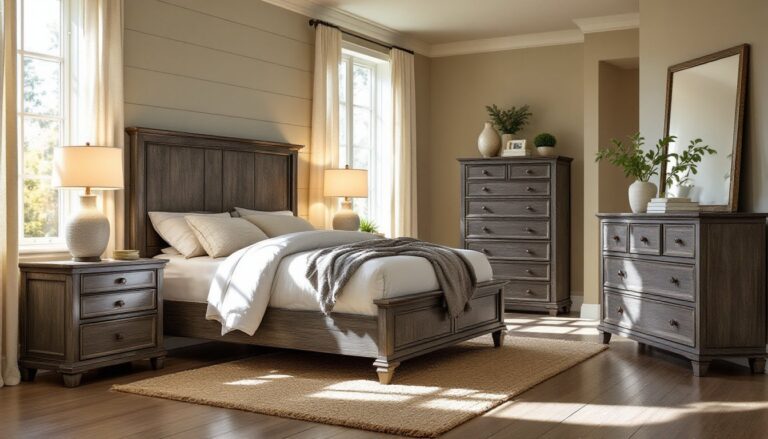
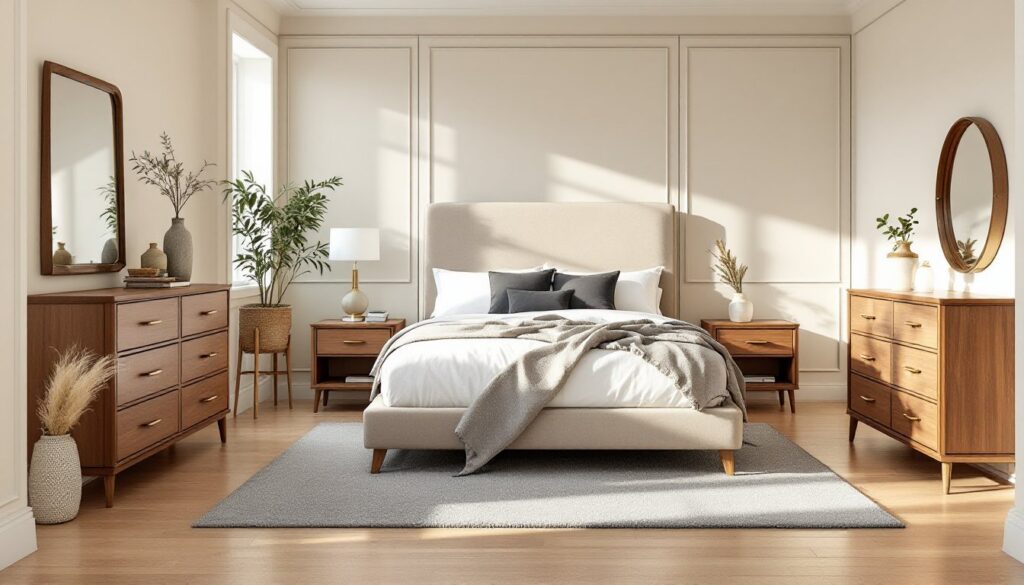
The core of any queen set starts with a queen bed frame (or headboard and footboard combo) sized for a standard 60″ × 80″ mattress. Actual frame dimensions run slightly larger to accommodate the mattress and bedding, expect an overall footprint around 62″ wide by 82″ long, though platform bases can add another inch or two.
Next come two nightstands. Standard nightstand dimensions hover between 18″ and 24″ wide and 24″ to 28″ tall, high enough to reach from a mattress top (typically 18″ to 24″ off the floor with frame and box spring) without awkward stretching. Look for at least one drawer or shelf per stand for phone chargers, reading glasses, and remotes.
Finally, most sets include a dresser (six to nine drawers, roughly 60″ wide) or a chest of drawers (narrower, five to six drawers tall, around 30″ to 36″ wide). Some sets offer both. Dresser depth typically runs 18″ to 20″, so account for that when planning walkway clearance.
Optional Add-Ons Worth Considering
Mirrors are often bundled or sold separately to mount above dressers. Standard dresser mirrors measure 36″ to 48″ wide: make sure yours doesn’t overwhelm the dresser width or block electrical outlets.
Benches or upholstered storage ottomans fit at the foot of the bed and double as seating or extra linen storage. They’re particularly useful in rooms without a closet bench.
Armoires or wardrobes appear in larger sets and work well in older homes lacking built-in closets. Expect widths from 36″ to 48″ and depths around 24″. Confirm ceiling height, many armoires exceed 72″ and won’t fit under standard 8-foot ceilings once you account for baseboard and crown molding.
How to Choose the Right Style for Your Space
Style should follow function and room architecture, not just Pinterest boards.
Traditional sets feature ornate molding, turned legs, and rich wood stains (cherry, mahogany, walnut). They suit homes with crown molding, wainscoting, or other period details. Expect substantial profiles, rails and posts often exceed 4″ thick, which eats into floor space in smaller rooms.
Modern and contemporary designs favor clean lines, minimal hardware, and low-profile platforms. Many skip the box spring entirely, using slat systems instead. This drops overall bed height by 6″ to 9″, which changes nightstand scale and can make getting in and out harder for anyone with mobility concerns.
Rustic and farmhouse styles lean on reclaimed or distressed wood, chunky posts, and visible wood grain. Interior designers recommend balancing heavy wood tones with lighter textiles and wall colors to avoid a cave-like feel. These sets often run deeper front-to-back due to thicker framing.
Mid-century modern brings tapered legs, walnut veneers, and mixed materials (wood with metal or cane accents). Pieces tend to sit lower and wider, with dresser lengths reaching 72″. Verify your wall space before committing.
Upholstered or tufted headboards add softness and sound dampening, helpful in condos or shared walls. Fabric options range from linen (breathable, casual) to velvet (formal, shows wear faster). Leather and faux leather resist stains but can crack with dry heat. Button tufting collects dust: plan to vacuum it monthly.
Material Matters: Wood, Metal, and Upholstered Options
Material choice drives durability, maintenance, and price.
Solid wood (oak, maple, cherry, walnut) lasts decades with proper care. Joinery matters, dovetail drawer construction holds up better than stapled particleboard. Solid wood expands and contracts with humidity, so avoid placing dressers against exterior walls in climates with big seasonal swings. Expect to re-tighten bed bolts annually.
Engineered wood (MDF, particleboard with veneer) costs less and resists warping, but can’t be sanded or refinished if damaged. High-quality veneers look nearly identical to solid wood: budget versions peel at edges over time. Check weight ratings, engineered drawer boxes often max out around 30 to 40 pounds per drawer, while solid wood handles 50-plus.
Metal frames (steel or wrought iron) suit industrial and minimalist spaces. Powder-coated finishes resist rust, but watch for chips that expose bare metal. Metal conducts cold, so bedding near the headboard may feel cooler in winter, a plus or minus depending on climate. Metal frames typically weigh less, making moving easier.
Upholstered pieces add texture but require more upkeep. Polyester and microfiber blends resist staining better than cotton or linen. Storage solutions with upholstered headboards often include hidden compartments, but zippers and seams can gap over time. Test cushion firmness before buying, overly soft padding compresses and looks lumpy within a year.
Space Planning and Layout Tips for Queen Sets
A queen mattress fits many rooms, but the full set might not.
Start with the minimum bedroom dimensions: a 10′ × 10′ room technically accommodates a queen bed, but once you add nightstands and a dresser, you’re left with narrow walkways. Aim for at least 11′ × 12′ to maintain 24″ to 36″ of clearance on three sides of the bed, the minimum for comfortable movement and making the bed without contortions.
Place the bed against the longest wall, centered if possible. This leaves balanced space for nightstands and prevents a lopsided look. If your room has a single window, centering the bed under it works only if you don’t need blackout treatments or if the window sits high enough (sill at least 30″ above the mattress top) that the headboard doesn’t block it.
Dresser placement depends on door swing and closet location. A dresser opposite the bed foot creates symmetry but may crowd the walkway in smaller rooms. Positioning it perpendicular on a side wall frees up the view but makes drawer access awkward if you’re not leaving 24″ of clearance. Understanding bedroom furniture placement helps avoid traffic jams and wasted square footage.
Account for drawer and door clearances. A six-drawer dresser with 18″ deep drawers needs at least 42″ of space in front (18″ drawer + 24″ standing room). Hinged dresser mirrors add another 12″ to 18″ when open. Closet doors, especially bifold or sliding types, should open fully without hitting the bed footboard or nightstand corners.
Avoid placing beds or dressers over HVAC vents or returns. Blocking airflow reduces system efficiency and can cause moisture issues on wood furniture.
Budget Breakdown: What to Expect at Different Price Points
Queen bedroom sets span a wide price range, and knowing what you’re paying for prevents overspending, or under-buying.
Under $1,000 (three-piece set: bed, dresser, nightstand)
Expect engineered wood with laminate or printed veneer finishes. Drawer boxes use stapled corners and side-mounted metal glides. These sets assemble with cam locks and dowels, which loosen over time, especially with moves. Suitable for rentals, guest rooms, or starter homes, but plan to replace within five to seven years. Affordable furniture collections now offer updated designs that look pricier than they are, making budget options more stylish than ever.
$1,000 to $2,500 (four- to five-piece set)
Mid-range sets mix solid wood frames with engineered panels (solid wood legs and face frames, MDF or plywood panels). Drawer glides upgrade to ball-bearing full-extension types rated for heavier loads. You’ll see dovetail joinery on better models and real wood veneers instead of photo prints. Finishes include multi-step staining and lacquer topcoats that resist minor scratches. These sets hold up 10 to 15 years with normal use.
$2,500 to $5,000 (five- to seven-piece set)
High-end sets feature solid hardwood construction, hand-applied finishes, and premium hardware (soft-close drawer glides, felt-lined top drawers). Designs include intricate inlays, live-edge details, or custom upholstery options. Expect kiln-dried lumber that minimizes warping and warranties covering five years or more. Suitable for long-term homes where furniture becomes a lasting investment.
Above $5,000
Custom or luxury brands offer heirloom-quality pieces with hand-cut joinery, exotic hardwoods, and bespoke sizing. Delivery includes white-glove service and in-home assembly. Unless you’re furnishing a primary suite in a forever home, diminishing returns set in above this threshold. Design inspiration sites showcase how even mid-range sets can look high-end with the right styling and room layout.
Sales timing: Major furniture sales hit Presidents’ Day (February), Memorial Day (May), July 4th, and Black Friday. Floor models and discontinued styles often drop 30% to 50%, though selection is limited. Online retailers run clearance events at quarter-end (March, June, September, December). Always confirm return policies and inspect for damage before accepting delivery, DIY repairs on furniture rarely look factory-fresh.